Focus on Infrastructure, Safety, Welfare, and Transportation
Key Priorities of the 8th Administration
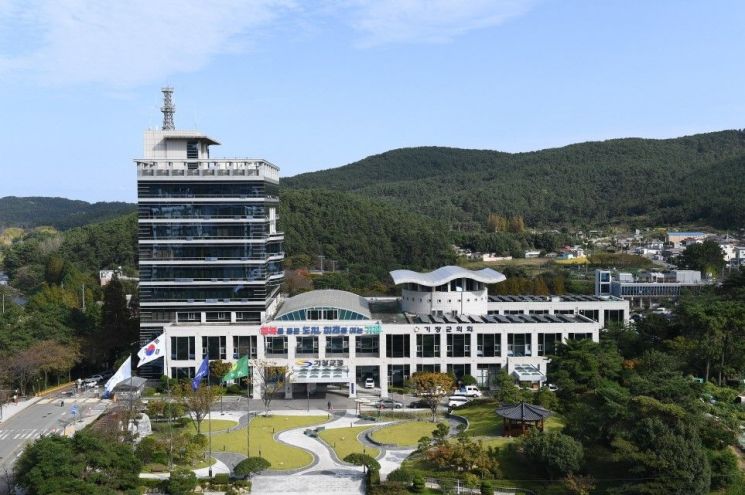
Gijang County (Governor Jeong Jongbok) announced on December 22 that it has finalized its main budget for 2026 at 802.2 billion won.
The main budget for next year has been structured with a focus on successfully concluding the 8th popularly elected administration and achieving tangible results that residents can truly feel. Gijang County has allocated its budget primarily to ensure the smooth completion of large-scale priority projects, expand transportation networks, strengthen the welfare safety net, secure future growth engines, and revitalize the local economy. The county has also actively incorporated resident participation budgets directly proposed by citizens to address everyday inconveniences in the community.
The budget has increased by 22.5 billion won compared to the previous year, with 755.5 billion won allocated to the general account and 46.7 billion won to the special account. Based on this, Gijang County plans to actively pursue major projects aligned with the six key administrative directions of the 8th administration, aiming to realize the vision of "A City Embracing Happiness, Gijang Opening the Future."
First, to "build premium infrastructure that enhances the value of Gijang County," the budget includes 2.1 billion won for the construction of the Korea Baseball Museum (Baseball Hall of Fame) and 4 billion won for the development of the Ilgwang Amusement Park Baseball Theme Park (Baseball Square). The county has also allocated funds for the opening of new administrative welfare centers in Jang-an and Ilgwang, which are nearing completion, as well as for the opening and operation of Jeonggwan Edu Park and Ilgwang Education Happiness Town, thereby expanding educational, cultural, and administrative infrastructure.
To "make Gijang a safe city through proactive disaster prevention systems," the budget includes 2 billion won for the installation of stormwater detention facilities in Jeonggwan Central Park, 1 billion won for improvements to the Banggok District Natural Disaster Risk Improvement Zone, 460 million won for breakwater repair work at Woljeon Port, and 300 million won for wave damage prevention work at Dongbaek Port, prioritizing the protection of residents' lives and property.
In the area of "comprehensive welfare covering all generations from children to seniors," the budget provides 2.2 billion won for childcare vouchers for families with multiple children, 2 billion won for senior citizen bath vouchers, 1.1 billion won for public late-night children's hospital support, 200 million won for artificial knee joint surgery subsidies for seniors, and 160 million won for transportation subsidies for low-income individuals with severe disabilities, thereby strengthening customized welfare tailored to Gijang.
Significant funds have also been allocated to revitalize the local economy. The budget includes 15.2 billion won for senior employment and social activity support, 3.6 billion won for self-sufficiency work programs, 4.4 billion won for the Mundong Living Area Fishing Village New Vitality Project, 770 million won for youth welfare support such as the operation of the Gijang Youth Center, and 680 million won for revitalization projects around Gijang Market, all aimed at creating sustainable jobs and reinforcing the economic foundation.
Investments to enhance residents' leisure and cultural experiences have also been expanded. The budget includes 1 billion won for the operation of the Gijang County Ssireum Team, 1 billion won for the creation of eco-friendly play facilities in Ara Park, 700 million won for improvements to Jang-an Healing Forest, 400 million won for the construction of a screen park golf course in Cheolma-myeon, 200 million won for the discovery and support of wellness content, and 50 million won for the establishment of a master plan for a 36-hole park golf course.
Additionally, to establish "Gijang as a central transportation hub with seamless connectivity," the budget includes 2.6 billion won for the construction of the Daebyeon-Jukseong Intersection Road, 10 billion won for the expansion of the Jang-an Jwacheon Samgeori-East Busan Nonghyup Road, 1.7 billion won for the construction of the Ilgwang Munjung-Jwacheon Road, 5.3 billion won for the installation of a roundabout overpass at the entrance to Ilgwang New Town, 8 billion won for the construction of an urban planning road from Ilgwang New Town to Hoenggye Village, and 5.9 billion won for the expansion of Cheolmaro (Jangjeon Village area), thereby improving regional accessibility and balanced development.
Governor Jeong Jongbok stated, "Next year's main budget is a valuable resource to successfully complete the projects promised to residents by the 8th administration," adding, "With the mindset of designing Gijang's future for the next 10 or 20 years, we will ensure transparent and efficient fiscal management to realize 'A City Embracing Happiness, Gijang Opening the Future.'"
© The Asia Business Daily(www.asiae.co.kr). All rights reserved.
![Clutching a Stolen Dior Bag, Saying "I Hate Being Poor but Real"... The Grotesque Con of a "Human Knockoff" [Slate]](https://cwcontent.asiae.co.kr/asiaresize/183/2026021902243444107_1771435474.jpg)











