Nontuberculous Mycobacteria Thrive in Showers and Water Pipes
Extra Caution Needed for Those With Weakened Immunity or Chronic Lung Disease
Medical experts have issued a warning that the habit of rinsing your mouth with water from a showerhead after brushing your teeth can increase the risk of bacterial infection under certain conditions. In particular, they point out that people with chronic lung diseases or weakened immune systems should reassess even their everyday hygiene habits.
On December 12, the YouTube channel 'Seoul National University Hospital TV' released a video titled "Stop Immediately. Rinsing Your Mouth with Shower Water," delivering this message.
According to the video, rinsing your mouth directly with water from a showerhead can increase the risk of infection by nontuberculous mycobacteria (NTM). Nontuberculous mycobacteria are in the same family as tuberculosis bacteria, but are mainly contracted through environmental exposure rather than person-to-person transmission. Cases of infection have been reported not only in natural environments such as lakes, rivers, and soil, but also in water-related household and medical environments, including showerheads, water pipes, and humidifiers.

This bacterium is relatively resistant to chlorine disinfection and tends to adhere to surfaces, allowing it to survive and multiply by forming biofilms (water slime) inside showerheads or hoses. In particular, the structure of shower hoses, where water can easily stagnate, is considered an environment favorable for bacterial growth. When you rinse your mouth with water from a showerhead, your mouth and upper respiratory tract are directly exposed to the water, increasing the likelihood of inhaling the bacteria.
Professor Lim Jaejun of the Department of Pulmonology at Seoul National University Hospital recently stated, "If a showerhead is old, bacteria can stick inside it and spread when you shower," and emphasized, "The habit of rinsing your mouth with shower water is something you should stop immediately." He advised replacing the showerhead at least once every six months and paying special attention to hygiene management for showerheads used for a long time.
However, medical professionals explain that nontuberculous mycobacterial diseases do not usually occur simply from taking a shower or using tap water. In most cases, even if healthy individuals are exposed to the bacteria, their immune systems eliminate it without symptoms. On the other hand, people with chronic obstructive pulmonary disease (COPD), bronchiectasis, lung damage from previous tuberculosis, or those receiving immunosuppressive treatment are at a relatively higher risk of developing lung disease.
In fact, cases have been reported overseas where such daily habits were identified as the cause. According to Vietnamese media, a Chinese woman suffering from a chronic cough was diagnosed with nontuberculous mycobacterial lung disease, and it was confirmed that she had been using the same showerhead for over ten years without replacement. Medical staff suggested that the old showerhead and the habit of rinsing her mouth may have been the source of the infection.
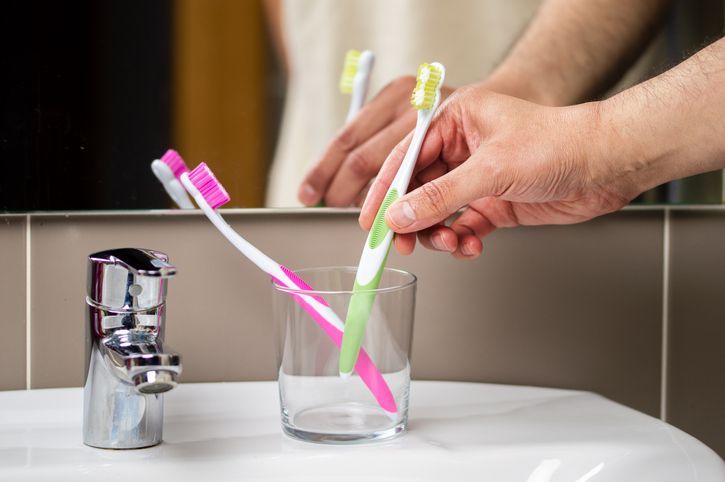
Experts recommend regularly detaching and cleaning showerheads and hoses, and ensuring that water does not remain stagnant inside for long periods to reduce the risk of infection. In addition, it is safer to use tap water from the sink for brushing your teeth and to avoid the habit of rinsing your mouth directly during a shower for better hygiene management.
© The Asia Business Daily(www.asiae.co.kr). All rights reserved.
![Clutching a Stolen Dior Bag, Saying "I Hate Being Poor but Real"... The Grotesque Con of a "Human Knockoff" [Slate]](https://cwcontent.asiae.co.kr/asiaresize/183/2026021902243444107_1771435474.jpg)

















