Attack on Key Hub for Ukraine's Grain Exports
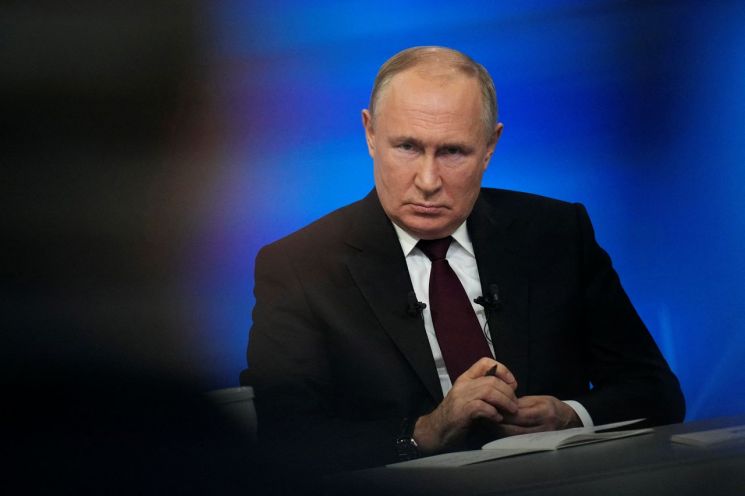
On December 19 (local time), Russian President Vladimir Putin took immediate retaliatory action in response to Ukraine's drone attack on an oil tanker. The target of this attack was the port facilities in Odesa, a key hub for Ukraine's grain exports. As the armed conflict between the two countries intensifies, delegations from the United States and Russia are scheduled to hold discussions on ending the war in Florida, United States.
According to Reuters and the Kyiv Independent, Russia launched a retaliatory missile strike on the port facilities in the southern port city of Odesa on the same night.
Oleksii Kuleba, Ukraine's Deputy Prime Minister for Restoration, stated via Telegram that "Russia attacked the port facilities in the Odesa region with ballistic missiles." The attack reportedly resulted in seven deaths and fifteen injuries.
Odesa is a crucial hub for Ukraine's grain exports and has been a major target of Russian attacks since the outbreak of the war. On December 12, more than one million households suffered power outages, and heating and water supplies were cut off due to a Russian attack.
Prior to the missile strike, President Putin reportedly expressed his intention to retaliate, stating that Russia had already responded to Ukraine with "much stronger attacks."
This Russian counterattack came after Ukraine used aerial drones to strike the oil tanker "Kendil," which was in neutral waters of the Mediterranean Sea. Ukrainian authorities identified this tanker as part of the so-called "shadow fleet."
The "shadow fleet" refers to vessels that circumvent international sanctions to transport Russian oil and serve as a financial lifeline for Russia's war effort. The fleet is estimated to number as many as 1,000 ships. These vessels frequently change their national registration and often have unclear ownership structures.
According to maritime information service MarineTraffic, the Kendil, registered in Oman, was en route from Sikka Port in India to Ust-Luga Port in Russia's Baltic Sea and was in waters near Libya at the time of the incident.
In recent weeks, Ukraine has repeatedly attacked shadow fleet oil tankers in the Black Sea. Some vessels have been spotted sailing along the Turkish coast, which Bloomberg analyzed as an attempt to avoid Ukrainian attacks.
The U.S.-led ceasefire negotiations will continue over the weekend. According to the White House, Steve Whitcoff, U.S. Special Envoy for the Middle East, and Jared Kushner, the eldest son-in-law of former President Donald Trump, are scheduled to meet with Russian delegates, including President Putin's envoy Kirill Dmitriev, in Miami this weekend. However, it appears that there will be no direct meeting between the Russian and Ukrainian delegations.
The ceasefire negotiations remain deadlocked over key issues, such as the territorial dispute in Ukraine. U.S. Secretary of State Marco Rubio stated, "There has been progress, but there is still a long way to go," adding, "Ultimately, any agreement depends on Ukraine and Russia."
The United States has been pushing for a ceasefire agreement between Russia and Ukraine by Christmas. However, with many sensitive issues such as territorial disputes remaining unresolved, the likelihood of the two countries reaching an actual agreement appears limited.
© The Asia Business Daily(www.asiae.co.kr). All rights reserved.
![Clutching a Stolen Dior Bag, Saying "I Hate Being Poor but Real"... The Grotesque Con of a "Human Knockoff" [Slate]](https://cwcontent.asiae.co.kr/asiaresize/183/2026021902243444107_1771435474.jpg)
















