Emphasizing the Prevention of Contact with Wild Birds
and Strengthened Management of Pets
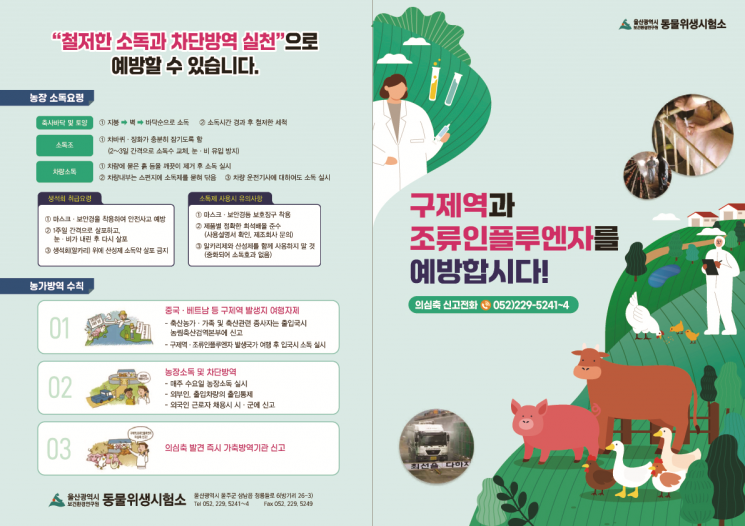
The Ulsan Institute of Health and Environment is distributing promotional materials for the prevention of disaster-related livestock infectious diseases, following recent outbreaks of highly pathogenic avian influenza (HPAI) and African swine fever (ASF) among domestic livestock farms and wild animals in Korea.
The materials include information on the clinical symptoms of major livestock infectious diseases such as avian influenza and foot-and-mouth disease, guidelines for blocking and preventing outbreaks, and essential biosecurity rules that must be followed to prevent the introduction of viruses into farms.
The promotional materials will be distributed to local livestock farms through district offices and producer organizations.
Since disaster-related livestock infectious diseases are highly likely to be introduced to farms through contact with wild animals or contaminated environments, farm workers are required to exercise particular caution.
Accordingly, the institute urged strict adherence to basic biosecurity rules, including prohibiting contact with wild birds and bird carcasses, thoroughly managing hygiene after pets go outside, strengthening the management of feed and drinking water in livestock facilities, and immediately reporting any abnormal symptoms in livestock.
An official from the Institute of Health and Environment stated, "The winter season is favorable for the survival and spread of viruses, so farms must establish a thorough biosecurity system and maintain disease-free status through rigorous disinfection, taking a responsible approach."
© The Asia Business Daily(www.asiae.co.kr). All rights reserved.

















