Presenting Strategies for Advancing Regional Industrial Competitiveness
From Secondary Batteries to Innovative Startups: Building a Business-Friendly Ulsan
UNIST joined hands with companies to push technology into the market, driving the local economy forward with this momentum.
UNIST brought together the outcomes of strengthening regional industrial competitiveness, ranging from secondary battery technology to startup achievements, in a single event.
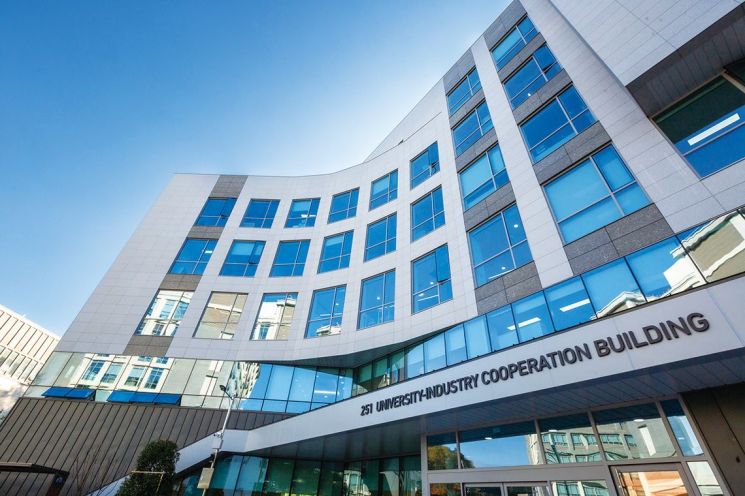
The UNIST Industry-Academic Cooperation Foundation, led by President Chong Rae Park, held the "2025 UNIST Industry-Academic Cooperation Achievement Sharing Week" at the Industry-Academic Cooperation Building for two days starting on December 18. The event aimed to spread the achievements of corporate support initiatives carried out over the past year and to present directions for advancing regional industrial competitiveness.
The event was divided into sessions for technology discussions and sharing of startup achievements. The first day focused on secondary battery technology, while the second day highlighted startup achievements and cooperation strategies. The entire process from technology development to commercialization, along with its results, was showcased.
The "2025 Next-Generation Secondary Battery Technology Conference," held on the first day, centered on key industrial issues. UNIST shared core challenges for each process in secondary battery recycling and explored future cooperation directions. This was aimed at strengthening the competitiveness of secondary battery technology, a specialized field of the Ulsan-Ulju Innopolis Zone.
The event was attended by representatives from secondary battery companies, universities, research institutes, and investment organizations. Discussions bridged the gap between industrial sites and research achievements.
In the keynote speech, Jaebeom Park, Senior Research Fellow at POSCO Research Institute, addressed material technology challenges for advancing the battery industry and emphasized the importance of collaboration among industry, academia, research, and government.
The subsequent technology presentations focused on the recycling of used electric vehicle (EV) batteries. Jeongsoo Son, Principal Researcher at the Korea Institute of Geoscience and Mineral Resources, explained the current status and research trends in recycling. Ui-Hyuk Kwon, Director of Cosmo Chemical Research Institute, introduced the lithium secondary battery recovery process, while Jihyun Hong, Professor at Pohang University of Science and Technology, presented direct regeneration technology for spent cathode materials.
After the official sessions, a networking opportunity was provided for institutions. Companies, research institutes, and investment and support organizations discussed possibilities for collaboration and sought policy links for joint research and development (R&D) and technology commercialization.
The second day focused on sharing startup achievements. The UNIST Startup Support Program Joint Achievement Report and Networking Day were held to introduce the outcomes of government and local government projects.
About 100 participants, including representatives from participating companies, investors, and related organizations, attended the event. One-on-one consultation booths and prototype exhibitions were also operated, allowing companies to address both challenges and achievements simultaneously.
During the government project achievement presentation, teams participating in the Public Technology-Based Market-Linked Startup Exploration Support Program took the stage. Ubico, Ttobakttobak, and HurriUp shared their achievements over the past year. This program supports graduate students in developing public technology into startups, assisting with customer validation and business model advancement. Based on these achievements, Ubico is preparing to participate in CES 2026.
Pojin and High Junction Solution, teams from the Ulsan-Ulju Innopolis Campus, introduced their growth stories. In particular, High Junction Solution, leveraging its patents and achievements in startup competitions, began collaborating with Incheon International Airport Corporation on a hydrogen station project.
In the afternoon, achievements in global expansion were presented. Pharos Marine, Revoltics, and EOM Tech took the stage in turn. Pharos Marine received both a top award and the popularity award at the Startup Tech Week 2025 IR competition in Washington, DC, United States.
Revoltics was selected as a defense venture company and also obtained an eco-friendly certification. EOM Tech won the grand prize at the Ulsan-UN City Problem-Solving Startup Competition. Quantize Labs was selected for the 2025 TIPS program through UNIST Holdings.
On the same day, the regular meeting of the Innopolis R&D Zone Promotion Council was also held. Twenty-one institutions from Ulsan participated to discuss support measures for zone companies and strategies for supporting early-stage growth. Cooperation strategies for advancing the secondary battery industry were also reviewed.
Kim Youngsik, Head of the Industry-Academic Cooperation Foundation, said, "We will continue to expand our leading role in driving a virtuous cycle of regional technology based on UNIST's technologies," adding, "We will strengthen our support so that research achievements can lead to startups and commercialization, thereby enhancing the competitiveness of local industries."
© The Asia Business Daily(www.asiae.co.kr). All rights reserved.
![Clutching a Stolen Dior Bag, Saying "I Hate Being Poor but Real"... The Grotesque Con of a "Human Knockoff" [Slate]](https://cwcontent.asiae.co.kr/asiaresize/183/2026021902243444107_1771435474.jpg)
















