Pusan National University Team Tests Household Appliances
Ultrafine Particle Emissions Detected from Toasters and Hair Dryers
Researchers Warn: "Greater Risk of Exposure for Children"
A new study has found that everyday household appliances such as toasters, air fryers, and hair dryers can affect indoor air quality. The analysis indicates that large quantities of ultrafine particles (UFPs), including heavy metals, are released during the use of these home electronics and can enter the human body through the respiratory system.
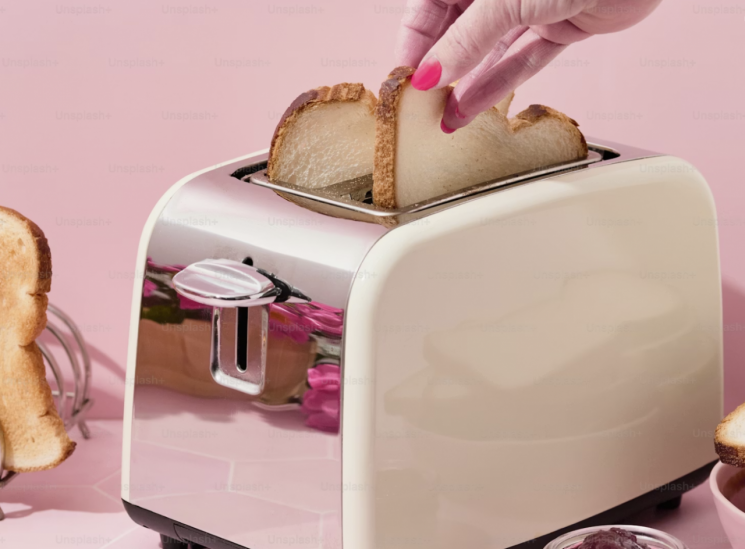 The toaster was found to emit approximately 1.73 trillion ultrafine particles per minute even without bread inserted. Pexels
On December 18 (local time), ScienceAlert, a science-focused media outlet, reported that a research team from Pusan National University published the results of a study measuring indoor air pollutants emitted by household appliances in the international journal Journal of Hazardous Materials.
The research team measured the concentration of ultrafine particles emitted by various household electronic devices in a specially designed sealed laboratory for air pollution measurement. Ultrafine particles are smaller than 100 nanometers in diameter, making them small enough to penetrate deep into the human body.
The experiment included several types of toasters, air fryers, and hair dryers. Most devices emitted large amounts of ultrafine particles, with pop-up toasters-those that automatically eject bread-releasing the highest number of particles. The toaster was found to emit approximately 1.73 trillion ultrafine particles per minute even without bread inserted.
While this study did not directly measure the health effects of ultrafine particles on the human body, simulation results conducted by the research team indicated that ultrafine particles can pass through the nasal filtration system and penetrate deep into the lungs of both adults and children. The team explained that the risk could be higher for children, whose airways are smaller, as the particles may remain in their bodies for a longer period.
Kim Changhyuk, Professor of Environmental Engineering at Pusan National University, who led the study, said, "This research demonstrates the need to consider emission reduction at the product design stage and highlights the importance of age-specific indoor air quality standards." He added, "In the long term, reducing ultrafine particles generated by everyday electronic devices will help improve indoor environments and lower the risk of chronic exposure, especially for children."
 Hair dryers using brushed motors emitted 10 to 100 times more ultrafine particles compared to products with brushless motors. Paeksel
The research team identified electric heating coils and brushed DC motors as the main sources of ultrafine particle emissions. Electric heating coils and brushed motors generate heat and friction during operation. Experimental results showed that hair dryers using brushed motors emitted 10 to 100 times more ultrafine particles compared to products with brushless motors.
The team also detected traces of heavy metals such as copper, iron, aluminum, silver, and titanium within the ultrafine particles. These metals are believed to be emitted directly from heating coils or motors.
Professor Kim explained, "Particles containing these heavy metals can increase the risk of cytotoxicity and inflammatory responses if they enter the human body."
The researchers emphasized that this study did not directly verify the health effects of ultrafine particles generated by electronic devices. However, they noted that previous studies have reported associations between ultrafine particles and conditions such as asthma, cardiovascular disease, hypertension, diabetes, and cancer.
The research team stressed the need for further improvements to enhance the safety of household electronic devices. While design and efficiency improvements at the manufacturer level are important, they pointed out that stricter regulations may be necessary to achieve meaningful change.
Professor Kim said, "Understanding the sources of pollutant emissions is an important starting point for developing preventive measures and policies to maintain healthy indoor air quality."
© The Asia Business Daily(www.asiae.co.kr). All rights reserved.
![Clutching a Stolen Dior Bag, Saying "I Hate Being Poor but Real"... The Grotesque Con of a "Human Knockoff" [Slate]](https://cwcontent.asiae.co.kr/asiaresize/183/2026021902243444107_1771435474.jpg)

















