Research Project Completed Last Month, Expert Opinions to Be Gathered
Lithium Batteries to Be Added to Appendix 2 of the Fire Prevention Act Enforcement Decree
Separate Fire Facility Regulations Planned Based on Battery Characteristics
Only Lithium Primary Batteries Included, Secondary Batteries Excluded
Following the Hwaseong Aricell disaster, the government's initiative to designate lithium batteries as special combustible materials is set to be effectively finalized within this month. The plan is to designate lithium primary batteries as special combustibles, allowing separate fire safety regulations to be applied to their storage and handling.
According to The Asia Business Daily's coverage on the 19th, the National Fire Agency completed a research project last month titled "Research Service for the Designation and Management of Special Combustibles with High Risk, Including Lithium Batteries," and has begun work on amending the Enforcement Decree of the Fire Prevention Act. The goal is to revise the Enforcement Decree within the first half of next year to designate lithium batteries as special combustibles. The agency plans to gather expert opinions on the research results this month and establish a plan for amending the decree.
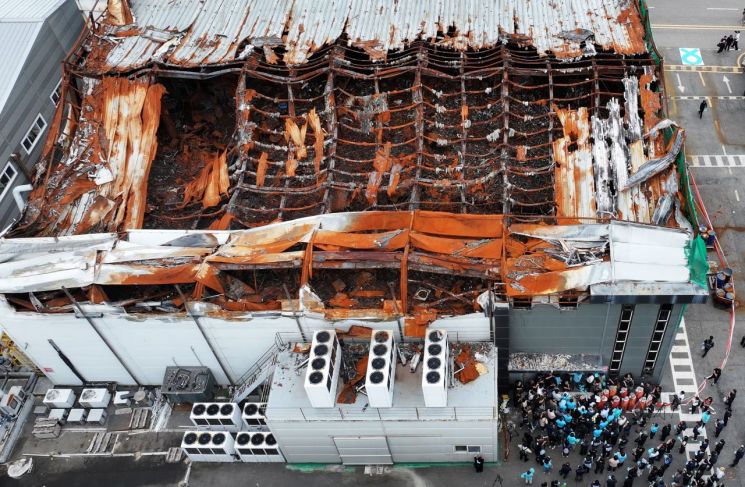
In June last year, a chain-reaction battery explosion and fire at the Aricell primary battery manufacturing plant resulted in the deaths of 23 people. In response, the National Fire Agency developed "Measures to Prevent Recurrence of Battery Plant Fires" and began pursuing the designation of lithium batteries as special combustibles.
Appendix 2 of the Enforcement Decree of the Fire Prevention Act specifies the names and quantities of special combustibles. Currently, 10 items are designated as special combustibles, including cotton products (200 kg or more) and flammable solids (3,000 kg or more). For lithium batteries, the threshold for designation as a special combustible has been set at 200 kg.
Once designated as a special combustible, separate standards for stacking, storage, and handling will be established, and violations will result in fines. For lithium batteries, the plan includes separate fire facility regulations distinct from those for other special combustibles. This is because, while small quantities of lithium batteries pose little fire risk, large quantities can rapidly escalate into thermal runaway and cause severe fires. A National Fire Agency official stated, "Sprinkler systems will be mandated, and further specific regulations will require detailed discussions with experts."
However, only lithium "primary batteries" will be designated as special combustibles. Secondary batteries are excluded. Primary batteries are single-use, non-rechargeable batteries, similar to standard disposable batteries, and are mainly used in military and weaponry applications. Secondary batteries are rechargeable and reusable, commonly used in everyday life. "Lithium-ion batteries," which are used in smartphones, laptops, and electric vehicles, are classified as secondary batteries.
Regarding the exclusion of secondary batteries from the special combustible designation, a National Fire Agency official explained, "Secondary batteries are so deeply embedded in daily life that the scope of regulation would be too broad." The official added, "Experts also pointed out that since secondary batteries are a core industry in Korea, regulating them could impact the national industry."
© The Asia Business Daily(www.asiae.co.kr). All rights reserved.

![Clutching a Stolen Dior Bag, Saying "I Hate Being Poor but Real"... The Grotesque Con of a "Human Knockoff" [Slate]](https://cwcontent.asiae.co.kr/asiaresize/183/2026021902243444107_1771435474.jpg)














