Designation of Songgwangsa, Bongjeongsa, and Yongjusa Pavilions as Treasures Announced
National Heritage Administration: "Central Spaces for Rituals and Sermons"
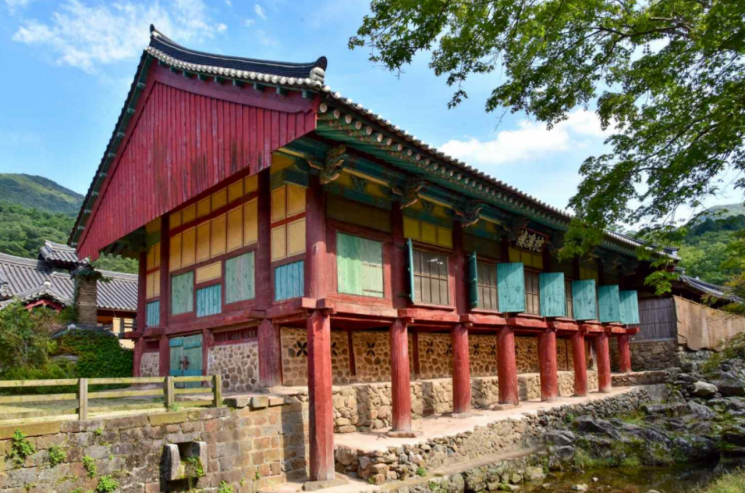
Pavilions in Buddhist temples from the Joseon Dynasty will be designated as treasures all at once.
The National Heritage Administration announced on December 19 that it plans to designate "Suncheon Songgwangsa Chimgyeru," "Andong Bongjeongsa Manseru," and "Yongjusa Cheonboru, Hwaseong" as treasures. The agency will collect opinions from various sectors for a month and finalize the designation after a review by the Cultural Heritage Committee.
Pavilions located in front of the main Buddhist hall serve as spaces for rituals and sermons. In the layout of a Buddhist temple, their importance is highlighted by the sequence: Iljumun Gate → Sacheonwangmun Gate → Pavilion → Main Buddha Hall. However, only four such pavilions have been designated as treasures so far.
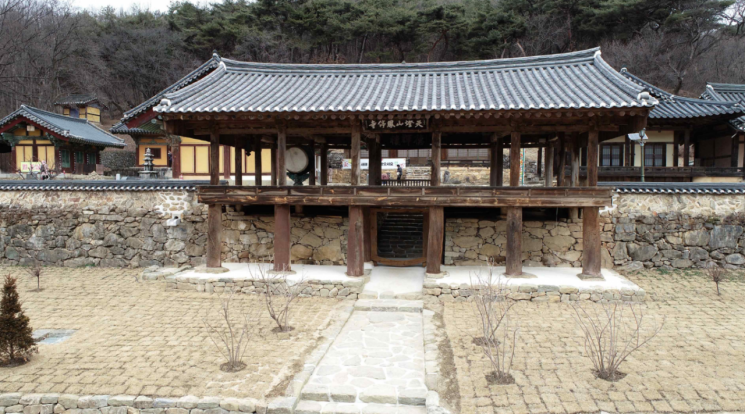
Since 2023, the National Heritage Administration has collaborated with local governments and the Buddhist community to survey thirty-eight temple pavilions nationwide. Among these, three pavilions from the late Joseon Dynasty, built or rebuilt in the 17th and 18th centuries, were selected.
Suncheon Songgwangsa Chimgyeru was rebuilt in the 14th year of King Sukjong's reign (1668). Dendrochronological analysis of the main wooden members confirmed that the timber was felled in 1687. This large pavilion, with seven bays at the front and three bays on the side, was used as a study space for monks. The arrangement of its columns is similar to the pavilion construction techniques found along streams in Gyeongsang Province, demonstrating architectural exchange between Jeolla and Gyeongsang provinces.
Andong Bongjeongsa Manseru was built in 1680 and was originally called "Deokhwiru." It was renovated in 1818 and has been preserved without significant damage. The interior plaque records the construction and renovation process, providing insight into the building's history.
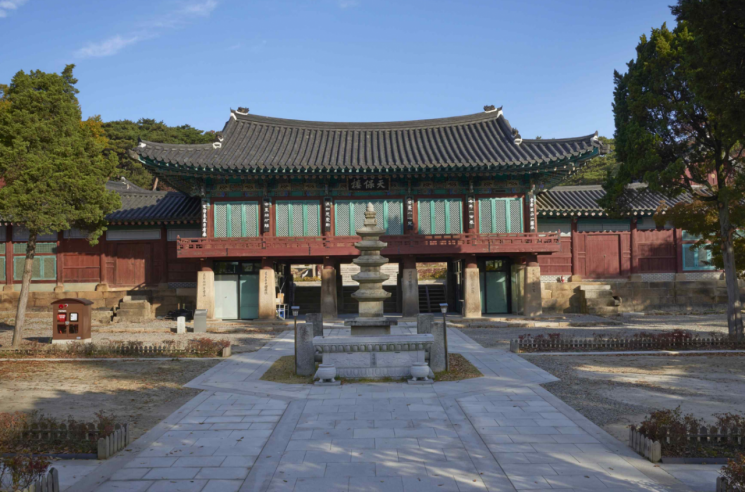
Yongjusa Cheonboru, Hwaseong, was constructed in the 4th year of King Jeongjo's reign (1790). It was built when King Jeongjo moved the tomb of Crown Prince Sado to Hwaseong in Suwon and established Yongjusa Temple. This two-story pavilion, with five bays at the front and three bays on the side, has an upper floor that serves as a lecture hall. The structure, in which the upper lecture hall is connected to side wings (iknang), reflects palace architectural elements and highlights the characteristics of a temple with royal patronage.
© The Asia Business Daily(www.asiae.co.kr). All rights reserved.



















