NYT Reports on USCIS Guidelines
Monthly Quota of 100 to 200 Citizenship Revocations
"Will Cause Fear and Anxiety Among Naturalized Citizens"
Foreign media outlets have reported that the administration of President Donald Trump, which has been strengthening its anti-immigration policies, is planning to conduct large-scale crackdowns even on individuals who have already obtained U.S. citizenship through the naturalization process.
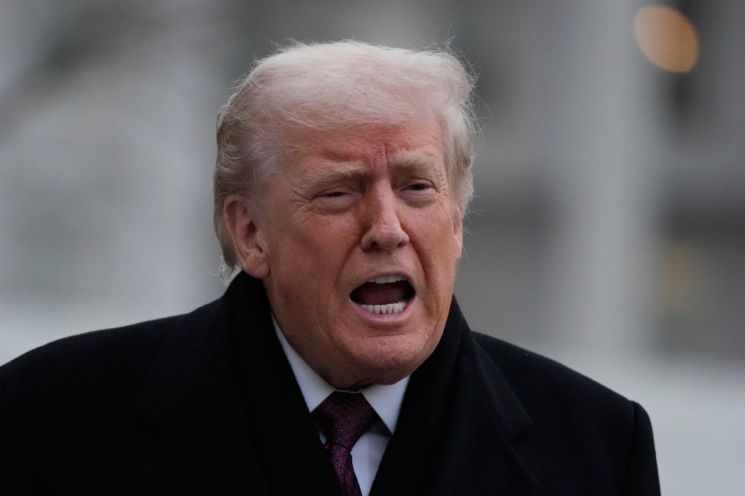
On December 17 (local time), The New York Times reported that it had obtained internal guidelines from U.S. Citizenship and Immigration Services (USCIS) showing that the Trump administration is planning a large-scale operation to strip some naturalized Americans of their citizenship.
According to the report, on December 16, USCIS instructed its field offices to identify 100 to 200 cases of citizenship revocation each month during the 2026 fiscal year and refer them to the immigration litigation department.
According to the U.S. Department of Justice, from the beginning of President Trump's first term in 2017 through this year, the total number of citizenship revocation cases has amounted to only about 120. The new monthly quota demands more cases than have been identified over several years.
The New York Times stated, "The targeted crackdown to increase the number of citizenship revocations demonstrates that the already ambitious immigration enforcement efforts are intensifying even further."
The New York Times also pointed out that if enforcement on this scale is carried out, it would be an unprecedented attempt to revoke citizenship in modern American history. U.S. federal law stipulates that citizenship obtained through naturalization can only be revoked in cases of fraud during the application process or in other extremely limited circumstances.
In addition, revoking the citizenship of an "illegal naturalized citizen" requires either civil or criminal court proceedings. The U.S. Supreme Court has defined citizenship as a fundamental value of democracy, making the process for the government to revoke an individual's citizenship highly stringent. According to a 2017 Supreme Court ruling, the government must prove not only that there was a false statement during the naturalization process, but also that the falsehood had a material impact on the basis for obtaining citizenship.
According to the U.S. Census Bureau, there are currently about 26 million people in the United States who have obtained citizenship through naturalization. Of these, more than 800,000 became new U.S. citizens last year alone, with most coming from Mexico, India, the Philippines, the Dominican Republic, and Vietnam.
The New York Times noted that this plan symbolizes a new phase in President Trump's anti-immigration policy, which has included large-scale crackdowns on undocumented immigrants and expanded entry restrictions.
Concerns have also been raised about this plan. Sarah Pierce, a former USCIS official, pointed out, "Requiring a monthly quota that is ten times higher than the annual total of citizenship revocations could turn a tool meant to be used cautiously and exceptionally into a blunt instrument, causing unnecessary fear and anxiety among millions of naturalized citizens."
Margie O'Herron, a senior fellow at the bipartisan Brennan Center for Justice, also expressed concern, stating, "There have been previous cases where giving arbitrary targets to Department of Homeland Security employees led to the apprehension and deportation of individuals who should not have been targeted. I am worried that something similar could happen again this time."
© The Asia Business Daily(www.asiae.co.kr). All rights reserved.

















