Half Allocated for High Inflation Countermeasures
Government to Issue 110 Trillion Won in Bonds Amid Fiscal Deterioration Concerns
Next Year’s Main Budget Also Set to Reach Record High
The Japanese government's supplementary budget bill has passed the House of Councillors (Upper House) and has been finalized.
According to reports from Kyodo News and the Nihon Keizai Shimbun (Nikkei) on December 16, the ruling Liberal Democratic Party, Japan Innovation Party, and opposition parties including the Democratic Party for the People and Komeito passed the supplementary budget bill totaling 18.3034 trillion yen (approximately 174 trillion won) during the House of Councillors plenary session on this day. The supplementary budget bill for the 2025 fiscal year, approved on this day, is the largest since the COVID-19 pandemic. Compared to the 2024 fiscal year, it has increased by 31%.
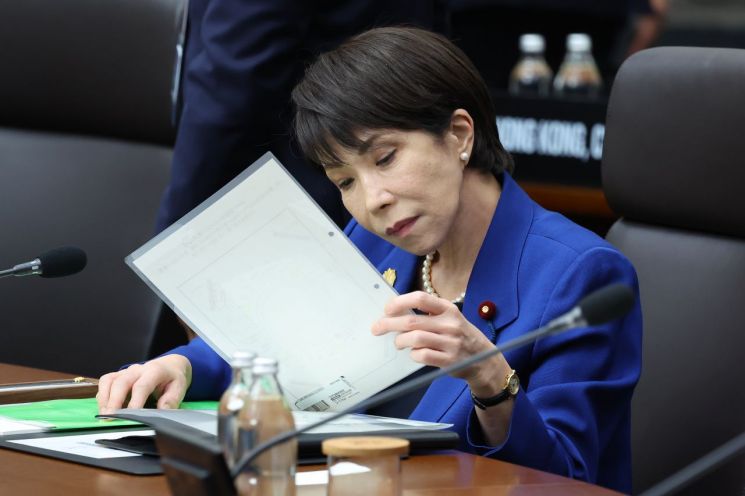
About half of the supplementary budget, or 8.9041 trillion yen (approximately 84.9 trillion won), will be used for high inflation countermeasures, including grants that local governments can use freely and support for electricity and gas bills. The budget for "crisis management investment and growth investment," a policy emphasized by Chief Cabinet Secretary Sanae Takaichi, amounts to 6.433 trillion yen (approximately 61.3 trillion won). This will be invested in the revival and strengthening of the shipbuilding industry, as well as research and development in artificial intelligence (AI).
The budget for strengthening defense and diplomatic capabilities is 1.656 trillion yen (approximately 15.8 trillion won), of which about 1.1 trillion yen (approximately 10.5 trillion won) is allocated specifically for defense. The Japanese government plans to finance part of the supplementary budget with increased tax revenues, and to cover the shortfall, it will issue an additional 11.6 trillion yen (approximately 110.5 trillion won) in government bonds.
According to Nikkei, the Japanese government, through this supplementary budget, will raise its annual defense spending to about 11 trillion yen (approximately 105 trillion won), thereby moving up the timeline for defense spending to reach 2% of GDP from the 2027 fiscal year to the 2025 fiscal year, two years earlier than previously planned. Kyodo News also reported that the main budget bill for the 2026 fiscal year is planned to exceed 120 trillion yen (approximately 1,144 trillion won), marking the largest budget in history.
© The Asia Business Daily(www.asiae.co.kr). All rights reserved.
![Clutching a Stolen Dior Bag, Saying "I Hate Being Poor but Real"... The Grotesque Con of a "Human Knockoff" [Slate]](https://cwcontent.asiae.co.kr/asiaresize/183/2026021902243444107_1771435474.jpg)















