"Digital Empire Pyeongchon Biz Valley" Optimizes Logistics with Wide-Area Transportation Network
Innovative Design and Reasonable Pricing Offer Potential for Reduced Corporate Operating Costs
Today, the most significant topics in corporate management are "cost reduction" and "maximizing efficiency." This is due to the rising prices of raw materials, as well as increased transportation and labor costs, all compounded by the restructuring of global supply chains and unstable economic conditions.
Logistics is a core expense that accounts for a significant portion of corporate sales and is a key factor in determining competitiveness. Beyond simply producing goods, how efficiently and affordably a company distributes its products has become a decisive factor in its success or failure.
According to the 2022 Corporate Logistics Cost Survey released by the Ministry of Trade, Industry, and Energy, the average ratio of domestic logistics costs to domestic sales for manufacturing companies was 6.2%. For large enterprises, this figure was lower at 4.9%, while for small and medium-sized enterprises, it was higher at 6.4%.
Among logistics costs, transportation expenses accounted for the largest share at 56.7%, followed by storage costs (14.9%), packaging costs (8.5%), and logistics management costs (8.3%). In particular, within transportation expenses, the breakdown by mode was as follows: road (75.2%), shipping (17%), air (6.9%), and rail (0.9%).
The main internal reason for the increase in corporate logistics costs was sales growth (53.5%). Externally, the primary factors were increased transportation costs (37.9%) and rising oil prices (32%). In short, even as sales grow, transportation costs are increasing as well.
As a result, companies are now moving beyond traditional criteria for selecting locations and are seeking areas equipped with wide-area transportation networks that can maximize logistics efficiency. This has become an essential strategy for survival and growth.
A company representative stated, "It is no exaggeration to say that corporate competitiveness comes from logistics efficiency. Recently, knowledge industry centers that optimize logistics routes, reduce transportation times, and cut logistics costs through wide-area transportation networks are attracting attention. Choosing a complex with strong transportation and location competitiveness is now the best strategy for long-term corporate growth."
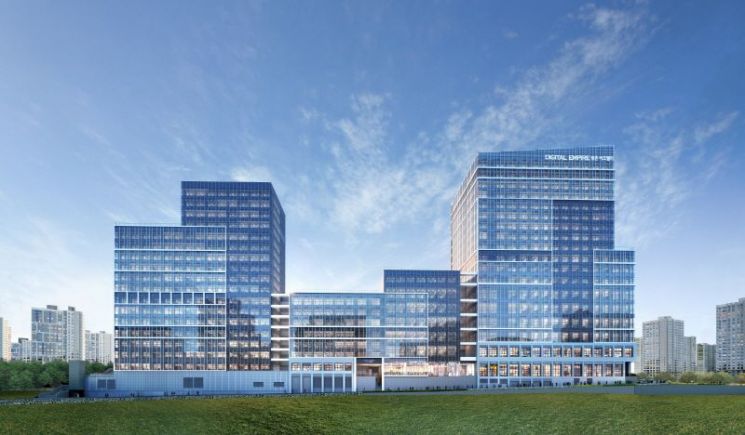
The knowledge industry center "Digital Empire Pyeongchon Biz Valley" provides the answer to companies seeking logistics innovation and strategic locations. Located on the former Anyang LG Research Institute site in the Pyeongchon area of Anyang, Gyeonggi Province, this complex is situated at the heart of the transportation network, offering optimal conditions for maximizing corporate logistics efficiency.
It boasts direct access to major arterial roads such as Gwacheon-daero and Gyeongsu-daero, as well as easy entry to the Pyeongchon Interchange on the Seoul Metropolitan Area 1st Ring Expressway and the Second Gyeongin Expressway, ensuring exceptional accessibility to the entire Seoul metropolitan area, including Gangnam. Geumjeong Station, within walking distance, serves subway lines 1 and 4, and when the planned GTX-C line and the planned Dongtan-Indeogwon Line (Hogye Station) are connected in the future, the area will achieve the status of a quadruple transfer station, covering the entire metropolitan region.
From a design perspective, elements that maximize operational efficiency for companies stand out. The knowledge industry center "Digital Empire Pyeongchon Biz Valley" is being developed by DL Construction (as the builder) and KT&G, offering four basement levels and up to 18 floors above ground, with a total floor area of 99,168 square meters. There are 838 parking spaces in total, with some floors featuring a maximum floor height of 5.7 meters, a drive-in system for certain units, and flexible unit layouts-all designed to enhance logistics movement and work efficiency.
In addition, the sale price has been set at a reasonable level. Despite the current market conditions, where soaring construction costs have made price increases inevitable, the average price starts from 8 million KRW per 3.3 square meters. Furthermore, various financial benefits are offered on a first-come, first-served basis, including interest-free down payment loans, contract bonuses, and balance payment support.
Ultimately, the knowledge industry center "Digital Empire Pyeongchon Biz Valley" is the optimal choice for companies seeking not only to reduce logistics costs but also to lower overall operating expenses. For companies considering establishing, relocating, or expanding their offices, this complex-which offers advantages in transportation, design, pricing, and benefits-deserves close attention.
Detailed information on the sale of "Digital Empire Pyeongchon Biz Valley" is available on the official website. Prospective buyers can also receive in-depth consultations by visiting the sales promotion center, which operates by appointment across from LS Tower in Hogye-dong, Dongan-gu, Anyang, Gyeonggi Province.
© The Asia Business Daily(www.asiae.co.kr). All rights reserved.