Chinese Gaming Tycoon’s Custody Request Rejected by Court
Claims Emerge on Social Media of “More Than 100 Children”
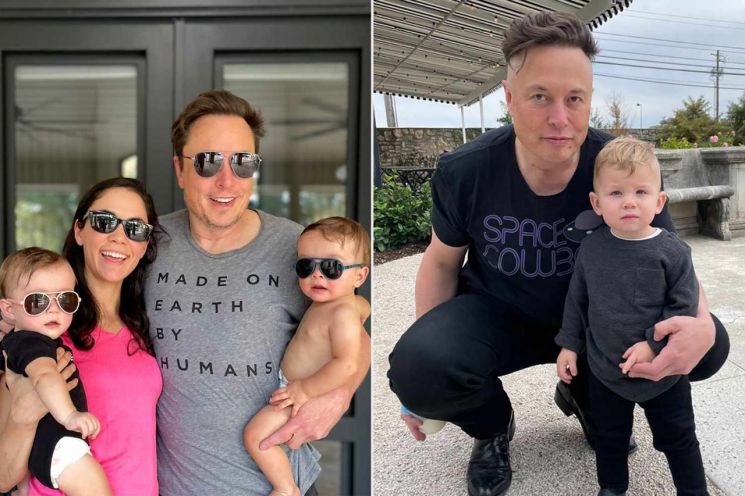
Controversy is growing over citizenship policies and ethical issues as Chinese billionaires hire American surrogates and have dozens, or even more than 100, U.S.-born children. What was once a way to circumvent China's birth control policies has now, according to some observers, transformed into a desire to emulate the "wealthy family empires" of figures like Elon Musk, CEO of Tesla.

On December 15, Yonhap News cited the Wall Street Journal (WSJ) in reporting that Chinese tycoons have recently emerged as major clients of the U.S. surrogacy industry, introducing several cases. In 2023, Xu Bo, founder of the Chinese online gaming company Duoyi Network, applied for custody of four children born via surrogacy at the Los Angeles family court, but the court denied his request.
During the court investigation, it was revealed that Xu Bo had already fathered more than eight children through surrogacy or had ongoing surrogacy arrangements, and that his goal was to have 20 sons with U.S. citizenship for family business succession. Appearing via video in a closed hearing, Xu Bo reportedly stated through an interpreter, "I want about 20 U.S.-born children to inherit my business in the future," adding that he preferred boys over girls. Some of his children were being cared for by nannies while awaiting documents to enter China, and Xu Bo explained, "I have not yet met the children in person because I am busy with work." The presiding judge determined that Xu Bo's plan was closer to "collecting" children than to conventional parenting.
Previously, Xu Bo's former girlfriend, with whom he is engaged in a legal dispute, claimed via social media that Xu Bo has 300 children in various countries. In response, Duoyi Network issued an official statement denying the figure but acknowledged that, after years of effort, Xu Bo has "just over 100 children," sparking further controversy.
Evolving into a Sophisticated Industry, Up to 300 Million Won Per Child
The case of Xu Bo is just the tip of the iceberg. The WSJ reported that Wang Huiwu, an executive at a major education conglomerate based in Sichuan Province, China, is also known to have purchased eggs from American models and had 10 daughters through surrogacy. Company insiders stated that "Wang Huiwu aimed to marry his daughters to powerful men in the future."
In addition, a diverse range of clients-including female executives, elderly parents, and same-sex couples from China-are turning to the U.S. surrogacy market. Many of them possess the substantial financial resources needed to circumvent China's ban on surrogacy while managing potential legal and political risks. Bringing a newborn from a U.S. hospital to China involves a complex process, including surrogacy arrangements, legal counsel, medical services, childbirth, hiring nannies, and obtaining visas. However, a vast "surrogacy ecosystem" has already developed in the United States to professionally support these procedures, and there are now cases where Chinese parents acquire U.S.-born children without ever traveling to the United States. The cost for this process can reach up to $200,000 (approximately 295 million won) per child.
The primary reason China's wealthy prefer the United States is that children born on U.S. soil are granted citizenship under the 14th Amendment to the U.S. Constitution, and the process allows them to avoid China's ban on surrogacy. However, as these practices have become excessive, concerns are growing within the United States as well. Senator Rick Scott has introduced a bill to ban surrogacy services for certain foreign nationals, including Chinese citizens, and both the Federal Bureau of Investigation (FBI) and the Department of Homeland Security (DHS) have launched investigations into surrogacy cases involving Chinese parents.
© The Asia Business Daily(www.asiae.co.kr). All rights reserved.
![User Who Sold Erroneously Deposited Bitcoins to Repay Debt and Fund Entertainment... What Did the Supreme Court Decide in 2021? [Legal Issue Check]](https://cwcontent.asiae.co.kr/asiaresize/183/2026020910431234020_1770601391.png)

















