Risk of Virus Exposure... Avoid Storing Near the Toilet
Standing Upright, Air Drying, and Regular Replacement Are Essential
Experts have issued a warning that toothbrushes, which are used daily for oral hygiene, can actually become breeding grounds for various bacteria and viruses. They unanimously emphasize that proper storage methods are crucial for maintaining toothbrush hygiene.
"Between 10 and 120 million bacteria and fungi can inhabit a single toothbrush"
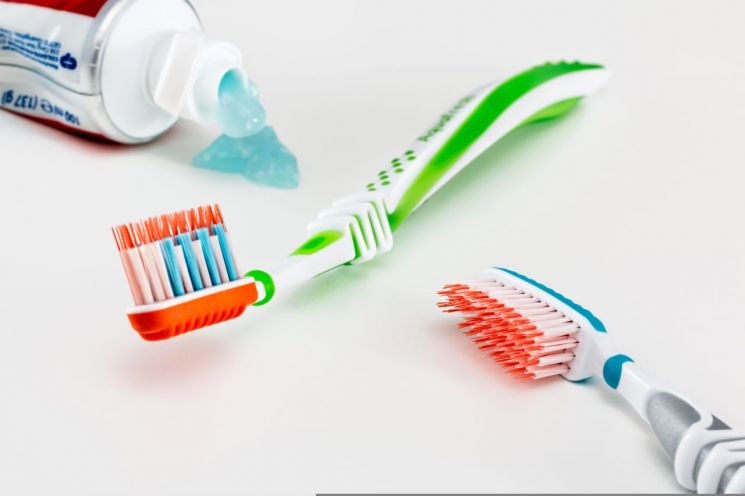
The BBC recently reported that "a typical toothbrush can harbor between 10 and 120 million bacteria and fungi, with hundreds of types of microorganisms and various viruses coexisting." The BBC likened a toothbrush to "a small ecosystem that repeatedly gets wet and dries out every day," explaining that "microorganisms form biofilms between the worn bristles."
Mark-Kevin Jin, a microbiologist at the Rhine-Waal University of Applied Sciences in Germany, identified three main sources of toothbrush contamination: the user's mouth, the skin and hands, and the environment where the toothbrush is kept. He explained, "A toothbrush may already be contaminated with microorganisms even before use," adding, "In fact, a study in Brazil found that about half of new toothbrushes available in the market contained bacteria."
Most of the microorganisms living on toothbrushes are relatively harmless bacteria that naturally exist in our mouths. Streptococcus and Actinomyces, for example, are normal oral flora, and some even help suppress the growth of bacteria that cause cavities. However, the problem arises when 'external microorganisms' are introduced.
According to research, used toothbrushes have been found to contain bacteria associated with food poisoning and gastrointestinal infections, such as Escherichia coli, Pseudomonas aeruginosa, and Enterobacter, as well as Klebsiella pneumoniae, a major cause of hospital-acquired infections, and yeast that causes oral candidiasis. These microorganisms are mainly transferred to toothbrushes through water, hands, and the bathroom environment.
The bathroom is the most dangerous... especially avoid placing toothbrushes near the toilet
The bathroom is considered the optimal environment for toothbrush contamination. It is warm and humid, and every time the toilet is flushed, tiny droplets containing bacteria and viruses are dispersed into the air. The BBC referred to this as the 'toilet plume' phenomenon. A single flush can send fine droplets up to 1.5 meters high, and these droplets may contain infectious viruses such as influenza, COVID-19, and norovirus.

However, the likelihood of toothbrush contamination from toilet water actually leading to disease is low. Erica Hartmann, a professor at Northwestern University in the United States, explained, "Droplets generated when flushing the toilet are not as big a problem as people might think."
However, the situation is different when it comes to viruses. Citing some studies, the BBC reported that influenza and coronaviruses can survive on toothbrush surfaces for several hours, and the herpes simplex virus can survive for up to 48 hours. For this reason, experts strongly advise against sharing toothbrushes or storing them in a way that allows them to touch each other.
'Air drying' and 'regular replacement' are key
So, what is the best way to care for your toothbrush? Experts agree that after using a toothbrush, it should be thoroughly rinsed with water and then stood upright with the bristles facing up to dry completely in the air. Storing it in a sealed cover or case can trap moisture and actually promote bacterial growth.
Various 'toothbrush sterilization methods' have been introduced, such as using ultraviolet sterilizers, microwaves, or soaking in vinegar or mouthwash, but the BBC noted that "some of these methods are of limited effectiveness or can damage the toothbrush." The most practical and safest approach is thorough rinsing, air drying, and regular replacement. Experts advise that simply moving your toothbrush farther from the toilet and standing it upright so that it does not touch others can significantly reduce the risk.
© The Asia Business Daily(www.asiae.co.kr). All rights reserved.


















