Prepare Winter Gear for Shelter Stays
Know the Evacuation Routes Near Your Accommodation
On December 8, a magnitude 7.5 earthquake struck off the eastern tip of Honshu, near Aomori Prefecture, Japan, fueling widespread fears of a major earthquake among tourists.
Japanese Government Issues 'Aftershock Earthquake Advisory'... Effective Until the 16th
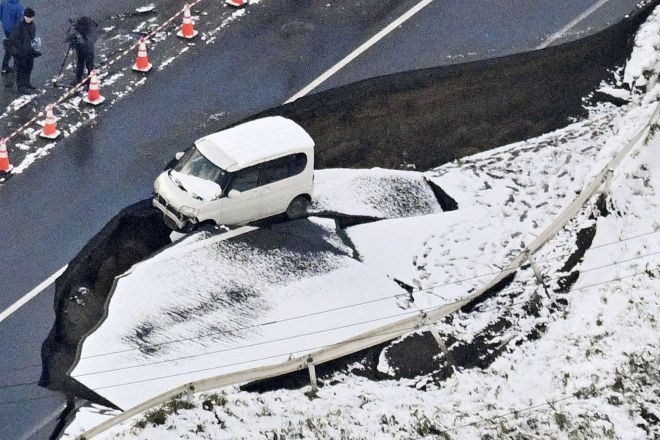 A road in Aomori Prefecture, Japan, collapsed due to the magnitude 7.5 earthquake that occurred the previous day on the 9th. Photo by Reuters Yonhap News
On the 14th, local media including the Yomiuri Shimbun reported that the Japanese government issued the 'Hokkaido and Sanriku Offshore Aftershock Earthquake Advisory' on the 9th. The 'Aftershock Earthquake Advisory' was first introduced in December 2022. It is issued when an earthquake of magnitude 7.0 or greater occurs along the Japan Trench or Kuril Trench, which are known to be the epicenters of major earthquakes in Japan, and when the likelihood of a massive earthquake is deemed to be higher than usual.
The Japan Meteorological Agency estimates that there is about a 1% chance of an earthquake of magnitude 8.0 or higher occurring within a week after a magnitude 7.0 or greater earthquake. This advisory will remain in effect until midnight on the 16th.
Emphasizing the Dangers of 'Wintertime Midnight Earthquakes'... Delayed Evacuations and Building Collapses Due to Snow
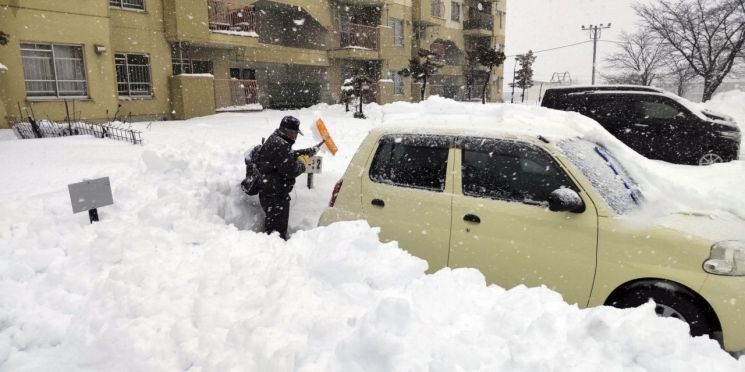 In December 2022, a citizen was clearing snow piled up in a parking lot in Kitami City, Hokkaido, Japan. This photo is not directly related to the content of the article. Photo by Reuters Yonhap News.
With the government's advisory, not only Japanese citizens but also tourists planning to visit Japan are being urged to exercise caution. In particular, Aomori Prefecture, where the recent earthquake occurred, and neighboring Hokkaido are well-known winter tourist destinations famous for their snowy landscapes.
Additionally, the Japanese government is emphasizing the dangers of 'wintertime midnight earthquakes.' When earthquakes occur in winter, evacuation can be delayed due to snow accumulation or icy road conditions, and wooden buildings may collapse under the weight of snow, increasing the extent of damage. The government also warns that dry air increases the risk of fires, and even if people evacuate outdoors, they may face fatal risks such as hypothermia, the common cold, or other infectious diseases. The risk is naturally heightened during late-night hours when most people are asleep.
According to a damage estimate report on the Nankai Trough Earthquake released by the Japanese government on the 3rd, if the 'Nankai Earthquake' were to occur during a winter midnight, the death toll could reach up to 39,000. This is more than 10,000 higher than the estimated 27,000 deaths for a summer daytime or winter evening scenario.
In fact, the recent earthquake first struck at around 11:15 p.m. Residents had to evacuate on snow-covered roads in subzero temperatures, with lows reaching minus 1 to 2 degrees Celsius. Due to tsunami warnings issued for some coastal areas, about 200 residents in Hachinohe City had to take shelter on the rooftop of a tsunami evacuation building, exposed to biting winds.
Tourists Also Need to Prepare With Blankets, Winter Gear, and Personal Hygiene Items
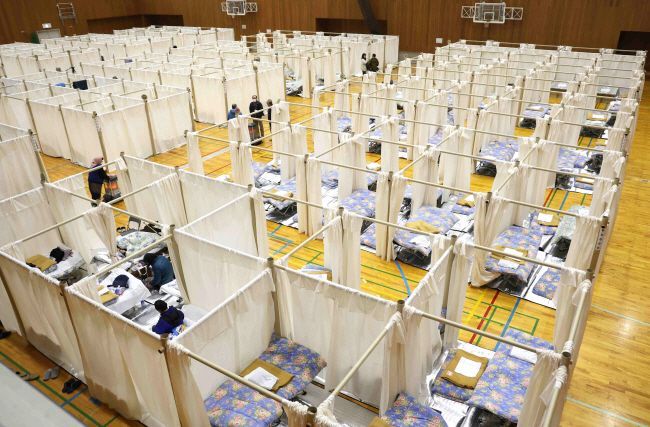 Residents of Kanazawa City who lost their homes due to a strong earthquake in the Noto Peninsula, Ishikawa Prefecture, Japan, in January 2024 are living in shelters. The photo is not directly related to the content of the article. Photo by EPA Yonhap News
Japanese media have also stressed that special precautions are needed for winter earthquakes and urged households to re-examine their disaster preparedness supplies. Tourists should avoid placing flammable items such as paper, plastic bags, clothes, or spray cans near heating appliances in their accommodations. Special caution is advised with shopping bags received after shopping. It is also recommended to prepare a flashlight in case evacuation is needed at night. While a smartphone flashlight can be used, it may quickly drain the battery, making it difficult to receive disaster alerts or request rescue from authorities.
When visiting evacuation shelters or coastal areas near accommodations, it is important to identify the location of 'tsunami evacuation buildings' and familiarize oneself with the evacuation route from the accommodation to the shelter. Since roads may be covered with snow or ice, travelers should pay close attention to road conditions while moving.
To prepare for potentially long stays in shelters, it is advisable to bring winter clothing, gloves, hats, blankets, thermal underwear, and heating packs. Since infectious diseases like COVID-19 may spread in shelters, masks, hand sanitizer, and wet wipes should also be prepared.
If a Magnitude 9.1 or Greater Earthquake Occurs, Up to 200,000 Deaths and 220,000 Buildings Destroyed Are Estimated
Meanwhile, according to estimates released by the Japanese government in December 2022, if a massive earthquake of magnitude 9.1 or greater occurs along the Japan Trench, up to 199,000 deaths and the destruction of 220,000 buildings could occur across seven regions, including Hokkaido, Aomori Prefecture, and Iwate Prefecture, due to the earthquake and resulting tsunami.
If a magnitude 9.3 earthquake occurs along the Kuril Trench, it is estimated that up to 100,000 deaths and the destruction of 84,000 buildings could occur in these regions.
© The Asia Business Daily(www.asiae.co.kr). All rights reserved.
![Clutching a Stolen Dior Bag, Saying "I Hate Being Poor but Real"... The Grotesque Con of a "Human Knockoff" [Slate]](https://cwcontent.asiae.co.kr/asiaresize/183/2026021902243444107_1771435474.jpg)


















