Published 22 North Korean Novels in South Korea via China
Violation of the Inter-Korean Exchange and Cooperation Act Acknowledged
Sentence Reduced Compared to First Trial
The chairman of a private organization who was put on trial for importing and publishing North Korean literary works in South Korea without government approval has again been sentenced to a fine in his appeal. However, the appellate court reduced the sentence, stating that intent was not proven for some of the actions.
According to Yonhap News on December 14, citing legal sources, the Seoul Central District Court Criminal Appeals Division 8-3 (Presiding Judges Choi Jin-sook, Cha Seung-hwan, and Choi Hae-il) sentenced Jeong Ik-hyun, chairman of the South-North Economic Cooperation Unification Agricultural Cooperative (Unification Agricultural Cooperative), to a fine of 2 million won for violating the Inter-Korean Exchange and Cooperation Act. This is a reduced sentence from the 3 million won fine imposed in the first trial.
Jeong was indicted for bringing North Korean novels and USB drives containing North Korean novel files into South Korea on three occasions between 2018 and 2020 without approval from the Minister of Unification, and for publishing and selling some of these works.
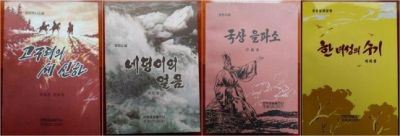 Works brought from North Korea by the South-North Economic Cooperation Unification Agricultural Cooperative. Yonhap News
The Inter-Korean Exchange and Cooperation Act stipulates that prior approval from the Minister of Unification is required for the import or export of goods between the two Koreas, including specification of items, transaction types, and payment methods.
According to prosecutors, Jeong brought a total of 22 North Korean novels, including "Donguibogam" and "Three Ministers of Goguryeo," into South Korea. In January 2020, he also held a press conference and sold copies of "Donguibogam" for 25,000 won each without approval. It was found that he used a Chinese company as an intermediary to avoid direct transactions while signing contracts with the North Korean Copyright Office.
Jeong argued that books received through the Chinese company were not North Korean goods. However, the court found him guilty, stating that China was merely a transit point. The court ruled, "The defendant was aware that approval was required, but proceeded with publication without it due to delays in the process."
On the other hand, the appellate court acquitted Jeong of the charge related to receiving nine North Korean novels from the head of a Chinese intermediary company at a cafe in Jongno-gu, Seoul, in July 2018. The court found that the books had already been lawfully imported into South Korea, and Jeong subsequently applied for approval from the Ministry of Unification, so intent to violate the law was not sufficiently proven. However, the court maintained the guilty verdict for the two subsequent imports and publication activities.
© The Asia Business Daily(www.asiae.co.kr). All rights reserved.

















