Broadcasting, Media and Communications Committee Reports to President Lee on December 12
Strengthening Ban on In-App Payments and Raising Fines
Supporting AI Technology Development in the Broadcasting and Media Industry
The government will strengthen measures to block false and illegal information circulating online and introduce new regulations on dark patterns that inconvenience users, thereby increasing the accountability of platform operators.

On December 12, the Broadcasting, Media and Communications Committee held its first work report to President Lee Jaemyung at the Government Sejong Convention Center in Sejong City and announced these plans. The committee has set three main directions for its work: creating a safe environment, promoting industrial innovation, and strengthening media sovereignty.
First, the committee has declared a strong response to false and manipulated information online. To this end, it will expand the operation of a self-regulatory consultative body to strengthen platform operators' accountability and will seek to amend the Information and Communications Network Act to introduce punitive damages.
The committee also plans to establish a Transparency Center (tentative name) under its umbrella to support fact-checking organizations and help develop voluntary fact-checking systems and work in the private sector.
From the second half of this year, the committee will also pursue the enactment of a special law requiring platform operators to take measures to block illegal information. This bill is expected to include provisions such as preventing overdependence among children and adolescents, imposing sanctions on service abusers, mandating the management and blocking of illegal information, and requiring the disclosure of information search and exposure standards.
However, the committee plans to carefully review and gather opinions during the legislative process to ensure there is no discrimination between domestic and foreign businesses.
The committee is also preparing an amendment to the Information and Communications Network Act to enhance the transparency of algorithm-based recommendation services and guarantee user choice. The amendment will require that terms of service clearly specify whether algorithmic recommendations are used and any major changes, making it easy for users to understand.
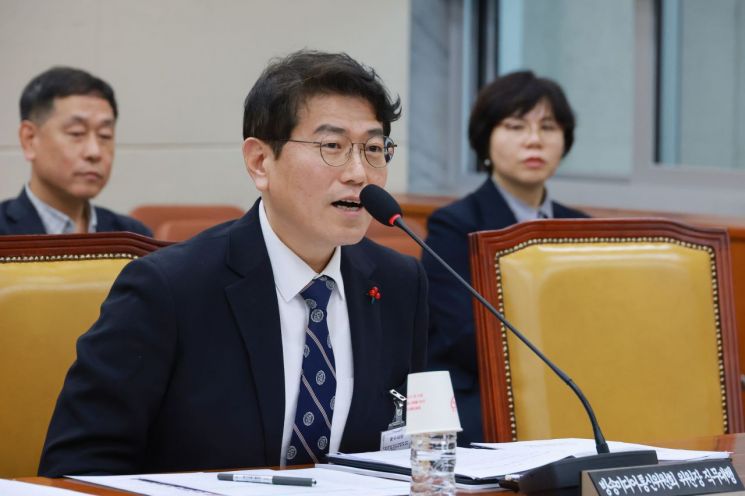 Ryu Sinhwan, Acting Chairman of the Broadcasting, Media and Communications Committee, Yonhap News Agency
Additionally, the committee will pursue an amendment to the Telecommunications Business Act, targeting the second half of next year, to regulate deceptive practices on online platforms, such as dark patterns.
Dark patterns refer to deceptive tactics that manipulate screens or menus to mislead users, distort their choices, or hide important information, as seen in the recent controversy over the cumbersome process of unsubscribing from Coupang.
New types of online disruptive advertisements that use artificial intelligence (AI) technology to inconvenience users against their will have also been identified as targets for regulation. However, recognizing that there may be differing opinions within the platform industry regarding these new regulations, the committee plans to gather sufficient feedback during the process.
Furthermore, the committee will enhance the effectiveness of regulations by revising Article 50 of the Telecommunications Business Act, which prohibits mandatory in-app payments. The proposed amendment is expected to allow the installation and operation of third-party app markets beyond those of Google and Apple, permit the guidance and promotion of external payment options, and raise the upper limit for fines from the current 3% to 6%.
With the rapid expansion of online video services (OTT) such as Netflix, global competition is intensifying, leading to a decline in advertising revenue for the domestic broadcasting industry and an urgent need for transformation through AI innovation.
Reflecting the rapidly changing media environment, the committee plans to enact an integrated legal framework next year that will cover both broadcasting and OTT services. This will unify and streamline the fragmented media regulatory system, which is currently divided among the Broadcasting Act, IPTV Act, and Telecommunications Business Act, and enhance regulatory fairness across services.
In addition, the committee aims to revitalize the broadcasting and media industry by strengthening global competitiveness through initiatives such as developing AI technologies for media production and editing, improving production efficiency with AI and digital technologies, and supporting overseas expansion.
To increase the adoption rate of AI in the broadcasting and media industry from the current 10% to 30% by 2028, the committee will promote the construction and utilization of high-quality broadcast video AI training data.
Ryu Sinhwan, Acting Chairman of the Broadcasting, Media and Communications Committee, stated, "I believe there will be many roles for the committee to play as the overseeing body for broadcasting, media, and communications in the integrated media and communications environment," adding, "Creating a safe and stress-free environment within the information and communications network is an important task."
He continued, "Terrestrial broadcasters are in a relatively difficult situation compared to OTT and new media," and said, "We will work to restore the ecosystem and enhance public value by easing regulations on broadcast advertising and other measures."
© The Asia Business Daily(www.asiae.co.kr). All rights reserved.













