Senate and House Pass Tariff Hike Bill for Non-FTA Countries
Move Seen as Leverage for Trade Negotiations with the United States
Mexico is expected to raise tariffs on certain items, such as automobiles and machinery parts, from 2026 for countries that do not have a Free Trade Agreement (FTA) with Mexico, including South Korea and China.
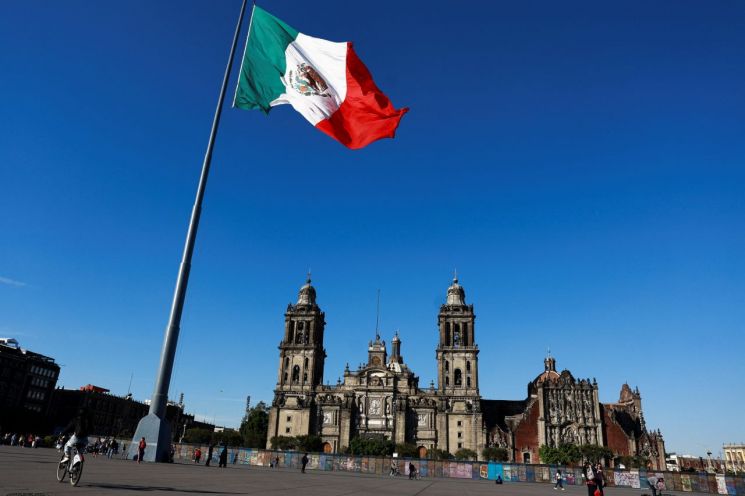
On December 10 (local time), the Mexican Senate passed the government’s amendment to the General Import and Export Tax Law (LIGIE) in a plenary session with 76 votes in favor, 5 against, and 35 abstentions. Led by the Mexican executive branch, the bill is expected to take effect as early as next month after being signed by President Claudia Sheinbaum.
Previously, in September, the Sheinbaum administration announced a plan to apply differentiated maximum tariffs-within the limits of World Trade Organization (WTO) regulations-on 1,463 items across 17 strategic sectors, including auto parts, steel and aluminum, plastics, home appliances, and textiles.
The final version of the amendment reportedly imposes tariffs of 20% to 35% on most items, with a minimum of 5% and a maximum of 50% on a very limited number of products. The specific items and tariff rates are expected to be confirmed once they are published in the official gazette.
The countries subject to these tariffs are those without an FTA with Mexico. Among them, China is expected to be most affected if the tariffs are implemented. Trade volume between China and Mexico has more than doubled over the past decade up to last year, but Mexico has consistently run a trade deficit, which has reached approximately 120 billion dollars.
South Korea, which is Mexico’s largest trading partner in Latin America, will also inevitably be impacted. Major Korean exports include machinery and automobile parts, as well as electronic components, which accounted for around 30% of total exports to Mexico last year. Although South Korea and Mexico have signed a basic framework agreement on investment protection, this does not provide grounds to defend against tariffs.
Other countries expected to be affected include India, Vietnam, Thailand, Indonesia, Taiwan, the United Arab Emirates (UAE), and South Africa. In contrast, countries that have an FTA with Mexico-such as the United States, Canada, the European Union (EU), Japan, Chile, Panama, and Uruguay-will not be significantly affected.
This move to raise tariffs by Mexico is seen as a strategy to secure leverage in negotiations with the United States ahead of discussions related to the United States-Mexico-Canada Agreement (USMCA). Analysts suggest that Mexico, seeking to maintain a bloc economic order with the United States, has no choice but to distance itself from China, which was involved in trade disputes with the Trump administration.
© The Asia Business Daily(www.asiae.co.kr). All rights reserved.
![Clutching a Stolen Dior Bag, Saying "I Hate Being Poor but Real"... The Grotesque Con of a "Human Knockoff" [Slate]](https://cwcontent.asiae.co.kr/asiaresize/183/2026021902243444107_1771435474.jpg)
















