Up to 50% Tariff May Be Announced This Year
1,463 Items Including Automobiles, Components, and Steel Targeted
IMMEX and PROSEC Programs Not Included
Korean Companies Closely Monitoring Amid Limited Impact Expectations
As Mexico moves to revise its laws to allow the imposition of tariffs of up to 50% on countries without a free trade agreement (FTA), whether the tariff reduction programs for components will be maintained has emerged as a key factor determining the burden on South Korean companies. If the IMMEX and PROSEC programs-which many Korean companies have utilized to continue production and exports in Mexico-are maintained, it is expected that the impact of the tariff hikes can be largely mitigated.
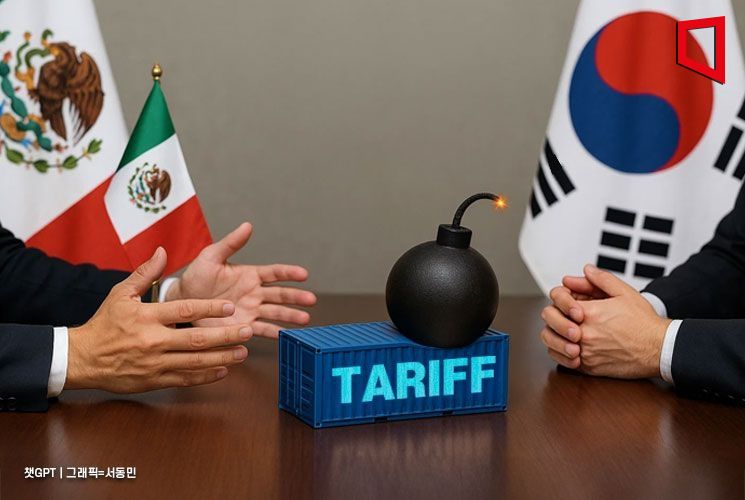
According to foreign media and industry sources on December 11, the Mexican lower house passed the government’s amendment to the General Import and Export Tax Law the previous day, with 281 votes in favor, 24 against, and 149 abstentions. The amendment allows tariff rates to be adjusted up to a maximum of 50%. If it passes the Senate review and receives the president’s signature, it is likely to take effect within this year.
The Mexican government has proposed raising tariffs on 1,463 items-including automobiles, auto parts, steel, aluminum, plastics, home appliances, and textiles-within the limits allowed by World Trade Organization regulations. The current item-specific tariffs, which range from 0% to 35%, could be raised up to 50%.
Lee Yujin, Senior Researcher at the Korea International Trade Association’s International Trade and Commerce Research Institute, said, “The approach of raising tariffs across various items, particularly steel, is similar to what Mexico has done in the past, such as in 2023. While there will certainly be an impact on us due to the tariff increases, since many items are eligible for preferential treatment, we need to monitor the situation further.”
The key measures that Korean companies have utilized in Mexico are the IMMEX and PROSEC programs. IMMEX allows raw materials, machinery, equipment, and components used in the production of export goods to be temporarily imported, deferring payment of tariffs and value-added tax. PROSEC provides lower tariff benefits for export products used in local production processes in Mexico. This applies to 22 industries, including steel, automobiles, components, electrical, electronics, and chemicals. The fact that the current amendment does not include the abolition of these two programs is considered favorable for Korean companies.
The steel industry is a major beneficiary of these two programs. POSCO and Hyundai Steel have actively utilized both programs to reduce tariff burdens when moving components to Mexico. A Hyundai Steel official stated, “We are exporting products using the tariff exemption programs, so the impact is limited. However, given the rapid policy changes, we will closely monitor the situation and respond accordingly going forward.”
© The Asia Business Daily(www.asiae.co.kr). All rights reserved.
![Clutching a Stolen Dior Bag, Saying "I Hate Being Poor but Real"... The Grotesque Con of a "Human Knockoff" [Slate]](https://cwcontent.asiae.co.kr/asiaresize/183/2026021902243444107_1771435474.jpg)
















