Strengthening Infrastructure and Enhancing Agricultural Competitiveness
Visible Progress in County Administration Through Expanded Welfare Services
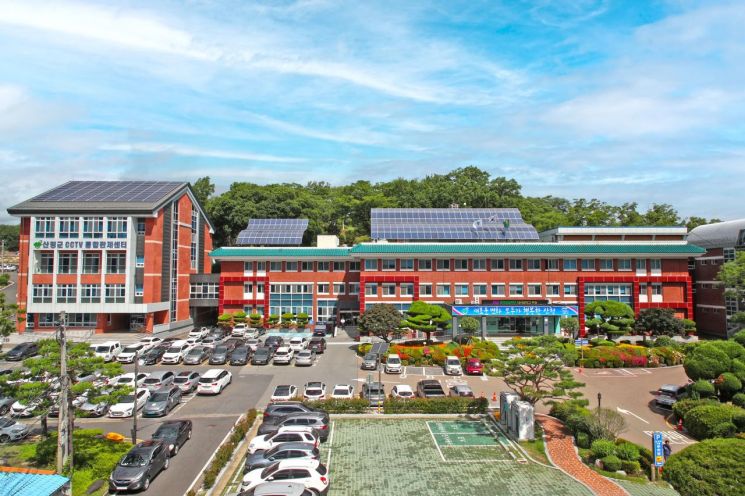
Sancheong County in South Gyeongsang Province announced on December 9, 2025, that it has finalized its third supplementary budget for the year at 929.9 billion won, marking the largest budget in the county's history.
This budget represents an increase of 279.6 billion won (31.9%) compared to the original budget, with 871 billion won allocated to the general account and 58.9 billion won to the special account. Of this, 151 billion won has been earmarked for recovery from heavy rain damage.
The county explained that this budget will accelerate the implementation of key local projects and that resources have been intensively allocated for recovery from natural disasters such as heavy rainfall.
By sector, the main expenditure allocations are as follows: 239 billion won (25.7%) for agriculture, forestry, maritime, and fisheries; 120.2 billion won (12.9%) for social welfare; and 117.7 billion won (12.7%) for public order and safety. The county highlighted that it has significantly strengthened investments in expanding agricultural and rural infrastructure, as well as in disaster response and prevention.
Despite challenging conditions this year, including wildfires and heavy rainfall, Sancheong County stated that it has been steadily implementing the county administration plan established at the beginning of the year without setbacks.
Among the pledges of the 8th popularly elected administration, Sancheong County has been focusing on the comprehensive improvement of water supply and sewage infrastructure, achieving tangible results.
To establish a stable water supply system, major projects in the water supply sector have commenced in earnest, including: the expansion of the Chahwang water supply area local waterworks (22.5 billion won); the expansion of the Danseong Ipseok water supply area local waterworks (17 billion won); the Orinae local waterworks connection project (1 billion won); the expansion of the Sancheong-Saengcho integrated water purification plant and local waterworks (24.4 billion won); and the construction of an emergency supply network for the Sancheong Saengcho water supply area (10.2 billion won).
In the sewage sector, to improve the environment and strengthen the capacity to treat domestic wastewater, the county has greatly expanded sewage maintenance projects, including: new and expanded rural village sewage systems in eight areas (Deokgyo 4.4 billion won, Daepo 7.4 billion won, Wolpyeong 6.5 billion won, Morae 10 billion won, Noeun 10 billion won, Sijang 18.2 billion won, Jeoho 15.7 billion won, Ipseok 27.7 billion won); new and expanded public sewage treatment facilities (Seokdae 12.7 billion won, Sicheon 6 billion won); and sewage pipeline maintenance projects (Seokdae 13.4 billion won, Cheolsu 3.3 billion won).
These projects are expected to greatly expand the areas benefiting from public sewage systems, while also contributing to improved living environments and enhanced water quality management.
In addition, the county is actively promoting projects to improve residential environments and the convenience of residents, including: the Sancheong Ungok and Obu Daehyeon rural vulnerable area renovation project (3.7 billion won); township-level (Sicheon-myeon, Saengcho-myeon) LPG pipeline network construction project (10.3 billion won); new and renewable energy convergence support project (1 billion won); construction of the Danseong Cultural Complex Center (7 billion won); construction of the Sicheon Community Life Complex Center (9.5 billion won); and construction of the Haengbok Cultural Center (6.4 billion won).
The county is also working to establish a broad and robust welfare system to realize "A Happy Sancheong for All."
To this end, it is promoting various new welfare programs to enhance residents' living convenience and improve education and welfare, such as: making rural bus fares completely free; operating a residential complaint response team to address inconveniences in the homes of county residents aged 65 or older and vulnerable groups; providing entrance congratulatory funds for elementary school students; and offering happiness growth support funds for elementary, middle, and high school students.
The county has also implemented a variety of policies to increase farm household income and establish a stable farming foundation, including fostering sustainable future agriculture.
These measures include: supporting the cultivation of new income crops; securing collective hibernation technology for honeybees to strengthen the beekeeping industry; fully operating a food integration support center to enhance the functions of the local food platform; expanding the agricultural machinery delivery service; and increasing support for agricultural subsidies.
Furthermore, to support the income of farms affected by large-scale wildfires and heavy rainfall and to expand sales channels for local agricultural specialties, the county has actively promoted both online and offline special sales events, such as the Haengbok Market, Masil Market, Sanen Cheong online shopping mall special sales, and nationwide direct transaction market events.
Lee Seunghwa, Governor of Sancheong County, stated, "Despite difficult conditions due to disasters this year, we have done our utmost to protect the lives of our residents and firmly lay the foundation for future growth. Going forward, we will continue to appropriately reflect the budget in all sectors, including agriculture, welfare, safety, and infrastructure, to deliver tangible results that residents can feel, and we will steadfastly pursue county administration to realize a happy Sancheong for all."
He added, "We will listen attentively to each and every resident and do our best to achieve sustainable development and balanced regional growth for Sancheong."
© The Asia Business Daily(www.asiae.co.kr). All rights reserved.
![Clutching a Stolen Dior Bag, Saying "I Hate Being Poor but Real"... The Grotesque Con of a "Human Knockoff" [Slate]](https://cwcontent.asiae.co.kr/asiaresize/183/2026021902243444107_1771435474.jpg)
















