Utilizing Sections 301 and 232 of the Trade Act...
"Tariff Measures Should Be Permanent"
"Regional Fed Presidents Need New Residency Requirement"
Scott Bessent, U.S. Secretary of the Treasury, stated on December 3 (local time) that even if reciprocal tariffs are ruled illegal by the Supreme Court, the administration will utilize alternative measures to maintain a tariff policy structure identical to the current one.
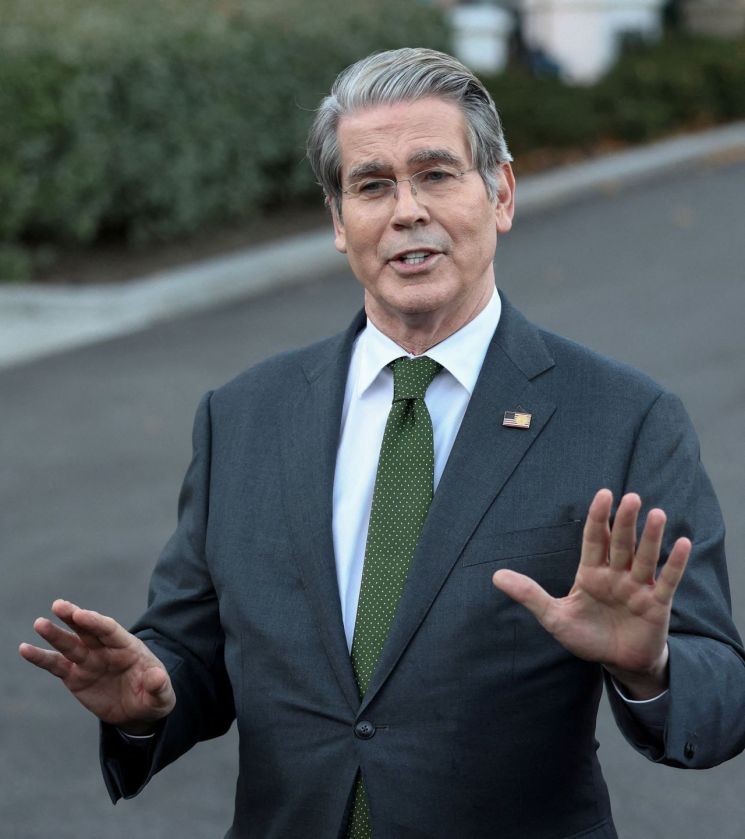
According to The New York Times (NYT), Secretary Bessent said at the "2025 DealBook Summit" hosted by the NYT in New York that day, "We can recreate the same tariff structure (as the current reciprocal tariffs) by utilizing Section 301 and Section 122 of the Trade Act, as well as Section 232 of the Trade Expansion Act." When asked whether the federal government should implement these tariff measures permanently, he replied, "It should be permanent."
Section 301 of the Trade Act, which Secretary Bessent mentioned, allows the United States to impose broad retaliatory measures such as tariffs, following a period of notification and public comment, against trading partners that engage in unfair and discriminatory trade practices. Section 122 allows the United States to impose tariffs of up to 15% for 150 days to address a serious trade deficit. In addition, Section 232 of the Trade Expansion Act grants the President the authority to restrict imports through appropriate measures, including tariffs, if a relevant department's investigation determines that imports of certain items threaten national security.
Meanwhile, Secretary Bessent declined to comment on President Trump's nomination for the next Federal Reserve (Fed) Chair. He is overseeing the selection process for the next Fed Chair candidate. While major U.S. media outlets have reported that Kevin Hassett, Chairman of the White House National Economic Council (NEC), is a leading candidate for the next Fed Chair, President Trump, at a White House event the previous day, referred to Chairman Hassett and remarked, "Perhaps the potential Fed Chair is here."
Secretary Bessent also stated that a new residency requirement should be established to strengthen regional representation when appointing the presidents of the 12 regional Federal Reserve Banks that make up the current Fed system. He said, "The regional Fed presidents were originally intended to be filled by individuals from those regions," and announced plans to introduce a requirement that candidates for regional Fed president must have resided in the jurisdiction of the respective regional Fed for more than three years.
© The Asia Business Daily(www.asiae.co.kr). All rights reserved.

















