Achieving Full Accreditation in the 2025 Evaluation
The College of Pharmacy at Sahmyook University announced on December 2 that it has received the highest rating, a "5-year full accreditation," in the "2025 Pharmacy Education Accreditation" recently conducted by the Korean Institute of Pharmaceutical Education and Evaluation. The accreditation period runs from January 1, 2026, to February 28, 2031.
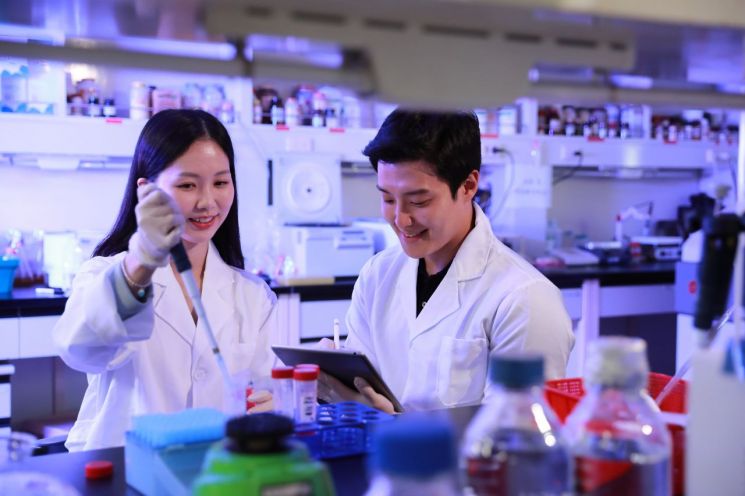 Students from the College of Pharmacy at Sahmyook University are conducting research in the laboratory. Sahmyook University
The pharmacy education accreditation is a system that verifies the standards and quality of pharmacist training programs based on the Pharmaceutical Affairs Act, the Higher Education Act, and the regulations of the accreditation institute. Starting this year, only graduates from accredited pharmacy schools are eligible to take the national pharmacist licensing examination, which has further increased the importance of accreditation.
The College of Pharmacy at Sahmyook University achieved full accreditation after completing the entire process, from submitting a self-assessment report to document and on-site evaluations, as well as review by the accreditation committee. This signifies that the college has reliably met evaluation standards in all areas, including its educational philosophy and management system, curriculum, faculty competence, laboratory and practical training environment, and student support systems.
In particular, the holistic education system based on Christian educational philosophy and the clear presentation of the university’s mission and desired student qualities were recognized as strengths that clearly demonstrate the college's educational philosophy. Efforts to enhance professionalism, such as curricula that closely link theory with laboratory and practical training, and continuous faculty development programs for full-time professors, also received positive evaluations.
In the area of student support, the systematic welfare and support system-including academic advisor counseling, operation of a human rights center, and support for student self-governance activities-was highly rated. The active research and community service activities of full-time faculty, the operation of an achievement-based reward system, and the well-equipped, practice-oriented educational environment-including multimedia classrooms, practice pharmacies, and pharmaceutical training labs-were also cited as key factors in achieving accreditation.
Kang Taejin, Dean of the College of Pharmacy, stated, "Thanks to the generous support from each department, we were able to achieve accreditation despite challenging circumstances," adding, "As the standards will become even more rigorous in the next evaluation, we will continue to enhance the quality of education by addressing any shortcomings."
© The Asia Business Daily(www.asiae.co.kr). All rights reserved.

















