Consumer Prices Rise 2.4% in November
Weather Changes and Exchange Rate Drive Increases
Cost of Living Index Sees Notable Climb
Petroleum Products Up 5.9%, Highest in Nine Months
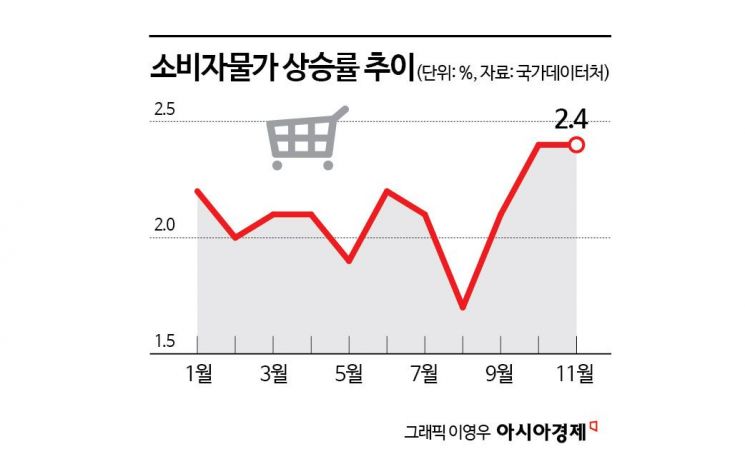
Living costs, composed of items with high public sensitivity, rose by 2.9% last month, marking the highest level in one year and four months. While the overall consumer price index increased by 2.4% for the second consecutive month and the core inflation rate remained in the low-to-mid 2% range at 2.3%, the living cost index nearly reached 3%. It was found that food and petroleum product prices increased, influenced by frequent rainfall during the autumn season and a rise in exchange rates.
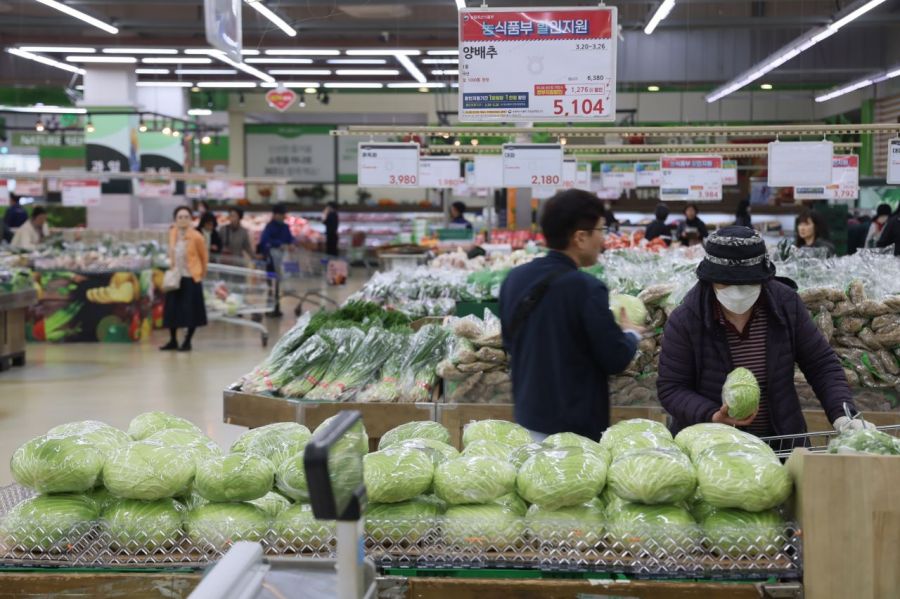
Perceived Living Costs Rise 2.9% Due to Higher Food Prices
According to the "Consumer Price Trends for November 2025" released by the National Data Agency on December 2, the consumer price index last month rose by 2.4% year-on-year, the same as the previous month. The 2.4% increase in the previous month was the highest since July of last year (2.6%), marking a 13-month high. Except for May (1.9%) and August (1.7%), the annual increase has remained in the low 2% range throughout this year.
However, when looking solely at perceived living costs, the rate of increase was more pronounced, approaching 3%. The living cost index, which consists of items with high purchase frequency and expenditure share, rose by 2.9%. This is the highest increase since July of last year (3.0%), marking a one year and four month high. It is 0.4 percentage points higher than the previous month (2.5%). Food prices rose by 3.7%, outpacing the 2.3% increase in non-food items. The living cost index is calculated based on 144 items out of a total of 458, focusing on those with high purchase frequency and expenditure share, making price changes more noticeable to consumers.
This is why the government has emphasized stabilizing perceived living costs. Deputy Prime Minister and Minister of Economy and Finance Koo Yoon Cheol stated at the Economic Ministers' Meeting and Price Ministers' Meeting held at the Government Complex Seoul on this day, "We will approach price management with the determination that it is both the beginning and end of stabilizing people's livelihoods, and we will make every effort to control food prices." In particular, the government plans to closely monitor the situation of individual items closely related to people's daily lives, such as food and petroleum products, and respond to factors causing price fluctuations.
Core inflation, which excludes volatile items and better reflects the underlying trend, showed a relatively moderate increase, remaining in the low 2% range. The index excluding food and energy, based on the Organization for Economic Cooperation and Development (OECD) standard, rose by 2.0%, down 0.2 percentage points from the previous month (2.2%). The index excluding agricultural products and petroleum products, based on Korea's standard, also rose by 2.3%, 0.2 percentage points lower than the previous month (2.5%).
Agricultural, Livestock, and Fishery Products Up 5.6%, Petroleum Products Up 5.9%
By item, agricultural, livestock, and fishery products rose by 5.6%, marking the highest increase in one year and five months since June of last year (6.5%). While vegetables (-4.7%) declined, the overall rise in agricultural products (5.4%), as well as relatively high increases in livestock products (5.3%) and fishery products (6.8%), contributed to the overall increase. In particular, the price increases for rice (18.6%), tangerines (26.5%), apples (21.0%), mackerel (13.2%), and eggs (7.3%) were especially notable.
For apples and tangerines, frequent rainfall during the autumn delayed shipment periods, affecting prices. In the case of apples, there was a base effect last year due to a high rate of increase two years ago, and the drop in prices at that time also influenced the base this year, amplifying the increase. For tangerines, higher product quality this year led to higher prices. Additionally, the exchange rate also had some impact on imported items.
Lee Dowon, Director of Economic Trends Statistics at the Data Agency, explained, "For agricultural, livestock, and fishery products, not only imported beef and pork but also imported fruits such as mangoes and kiwis experienced some price increases due to exchange rates. Factors such as crop conditions in exporting countries and a decrease in the number of animals slaughtered can also have an impact." He added, "For fishery products, imports of hairtail, mackerel, and croaker are significant, and there is a combined effect of crop conditions and exchange rates."
Industrial products recorded a 2.3% increase, the same as the previous month, marking the highest rise this year. Processed foods (3.3%) have maintained an increase in the 3% range after a significant rise since December of last year.However, the increases in bread (6.5%) and coffee (15.4%) were relatively large. Lee noted, "Not only exchange rates but also rising labor and raw material costs likely contributed to these increases."
Petroleum products rose by 5.9%, the highest in nine months since February (6.3%). Despite a decline in international oil prices, such as a drop of 11.1% in Dubai crude, the recent rise in exchange rates and a reduction in the fuel tax cut due to government policy changes have collectively contributed to this increase.
Service prices rose by 2.3%. Rents (0.9%) and public services (1.4%) saw relatively low increases, while personal services (3.0%) continued to rise in the 3% range for the second consecutive month (previously 3.3%). Among these, the increase in personal services excluding dining out was 3.1%. Lee explained, "Due to the Chuseok holiday, travel-related products saw a significant increase of 3.6% in the previous month, but the rate of increase slowed last month, resulting in a 0.5 percentage point drop."
© The Asia Business Daily(www.asiae.co.kr). All rights reserved.












