Mortality Rate in Hiroshima Prefecture Reaches 60-90%
Subsidies Provided to Aquaculture Operators
Asahi: "High Water Temperature and Salinity May Be the Cause"
Hiroshima University Professor Claims "Oxygen Deficiency Underwater"
In the western Seto Inland Sea of Japan, the mortality rate of farmed oysters has been reported to reach as high as 90%.
On November 30, Asahi Shimbun reported that the mortality rate of farmed oysters in the western Seto Inland Sea has risen significantly compared to previous years. The Seto Inland Sea, which is surrounded by Honshu, Shikoku, and other regions, accounts for about 80% of Japan's farmed oyster production. Typically, the mortality rate for farmed oysters is between 30% and 50%, but in the central and eastern parts of Hiroshima Prefecture, where production is high, this year's mortality rate has reached 60% to 90%. In another part of the Seto Inland Sea, Hyogo Prefecture, the mortality rate has also reached 80%.
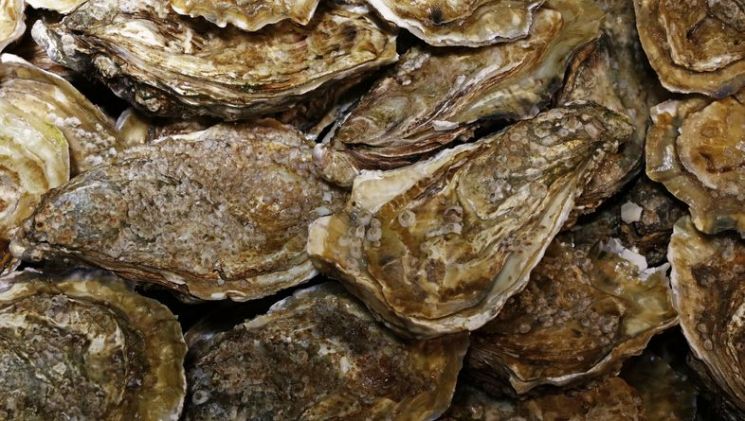 In the western Seto Inland Sea of Japan, the mortality rate of farmed oysters has been reported to reach up to 90%. Photo by Getty Images
An official from an oyster farm in Kure City, Hiroshima Prefecture, stated on November 20, "An abnormally large number have died. It's to the point where all 10 out of 10 have died," adding, "It would be a relief if even one survived." He explained that this scale of mortality is the first in 60 years since the business was established.
In response, Kure City in Hiroshima Prefecture has decided to provide subsidies to oyster farmers. A Kure City official expressed concern, saying, "When a local specialty is hit this hard, it has a serious impact on the regional economy and tourism."
Asahi cited high water temperatures and salinity as the main causes of the increased mortality rate of farmed oysters in the Seto Inland Sea. This summer, the average sea surface temperature along the coast of Hiroshima Prefecture was 1.5 to 2 degrees Celsius higher than usual, leading even improved oyster varieties to experience mass die-offs. The report also explained that the early end of the rainy season and reduced rainfall caused the salinity in some areas to rise, which may have resulted in oysters showing symptoms of dehydration.
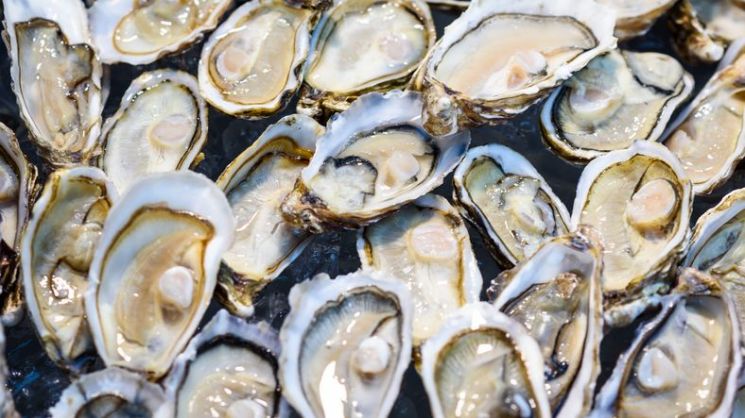 "All 10 out of 10 died," said a representative of the fish farm, prompting Kure City in Hiroshima Prefecture to decide to provide subsidies. Getty Images
Tamiji Yamamoto, Emeritus Professor at Hiroshima University, focused on changes in oxygen concentration in the sea. He argued, "Due to the influence of winds blowing from the north, surface water flows southward, and oxygen-poor bottom seawater rises close to the sea surface, which may have caused oysters to experience oxygen deficiency."
Recently, Norikazu Suzuki, Minister of Agriculture, Forestry and Fisheries, pledged to conduct research and investigations into the causes, stating, "The national, prefectural, and city governments will work closely together to support the industry as a whole."
However, in Miyagi Prefecture, another major oyster farming region in northeastern Honshu, no unusual phenomena have been observed.
© The Asia Business Daily(www.asiae.co.kr). All rights reserved.


















