Concerns Rise Over China-Japan Conflict Escalating Into a U.S.-Japan Issue
Donald Trump, President of the United States, reportedly emphasized the need to ease the escalating conflict between China and Japan during a phone call with Japanese Prime Minister Sanae Takaichi on November 25. The Asahi Shimbun reported on November 28 that the Japanese government is concerned that, with President Trump directly intervening, the China-Japan conflict could further deteriorate and potentially escalate into a U.S.-Japan dispute.
President Trump spoke with Chinese President Xi Jinping on the night of November 24, and then, in the early hours of November 25, conveyed his intention to speak with Prime Minister Takaichi to the Japanese side. Prime Minister Takaichi is currently in conflict with China due to her remarks suggesting possible intervention in the event of a Taiwan contingency.
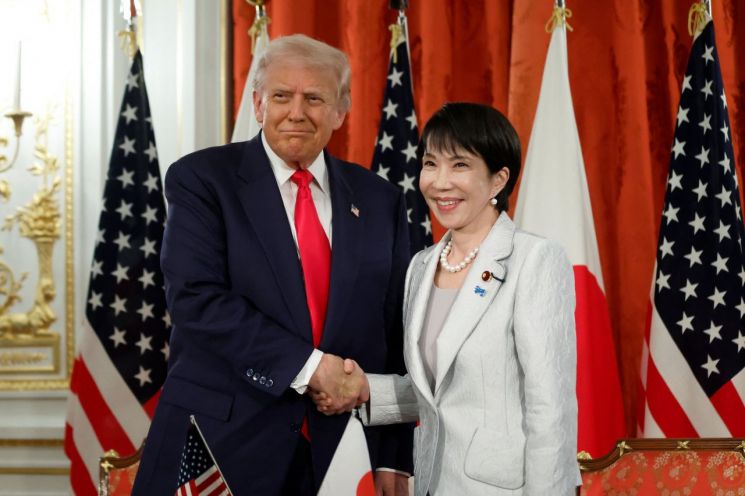 Donald Trump, President of the United States, and Sanae Takaichi, Prime Minister of Japan. Photo by Reuters Yonhap News
On the morning of the same day, President Trump spoke with Prime Minister Takaichi and explained the Taiwan issue, which he had discussed with President Xi.
According to a government official, President Trump expressed the view that China was "stirred up" by Prime Minister Takaichi's remarks and stated that Japan should not react to China's provocations, emphasizing the need for the United States and Japan to cooperate to calm the situation.
Another Japanese government official told the Asahi Shimbun, "(President Trump) did not demand any specific actions from Japan, and confirmed that Japan should respond calmly." It was reported that there were no requests to retract or modify any statements.
However, it was also reported that President Trump, while expressing concern about the escalation of tensions, did not explicitly state his support for Japan, the U.S. ally, in the China-Japan conflict.
The Wall Street Journal (WSJ) reported on November 26 (local time) that President Trump mentioned during the call with Prime Minister Takaichi that it would be necessary to lower the tone of remarks related to Taiwan. While it appears that President Trump did not pressure Japan to provoke China or to retract related statements, as reported, he did convey his opposition to the escalation of the China-Japan conflict and the need to stabilize the situation.
The Nihon Keizai Shimbun (Nikkei) noted that, during a debate between ruling and opposition party leaders on November 26, Prime Minister Takaichi expressed her intention to restore China-Japan relations, stating, "It is our responsibility to maximize national interests by building better relations through dialogue with China." Nikkei suggested that this may have been influenced by her call with President Trump.
President Trump is scheduled to visit Beijing, China, in April next year. The Asahi Shimbun explained that President Trump appears unwilling to let the China-Japan conflict affect U.S.-China relations and disrupt trade negotiations. The paper noted, "If the China-Japan confrontation intensifies without following President Trump's intentions, it could develop into a U.S.-Japan issue, putting the administration in a precarious position."
A Japanese government official expressed concern, stating, "If the situation becomes serious, the strong U.S.-Japan relationship built since the Shinzo Abe administration could collapse."
However, the Asahi Shimbun also reported that within the Japanese government, there is a view that Prime Minister Takaichi, known for her anti-China and pro-Taiwan stance, and Chief Cabinet Secretary Minoru Kihara do not feel a strong sense of crisis over President Trump's involvement.
Nikkei stated, "The approval rating of the Takaichi administration, which has been in power for just over a month, remains high. It does not appear easy for both sides to find a compromise, and there are concerns that the situation could be prolonged."
© The Asia Business Daily(www.asiae.co.kr). All rights reserved.

















