"We Don't Sell Loneliness": Backlash Against Outdated Practices
42% of Koreans Eat at Least One Meal Alone Every Day
As the number of single-person households continues to rise in South Korea, several restaurants that refuse solo diners-by enforcing rules such as banning YouTube viewing during meals or requiring customers to pay for at least two servings-have drawn attention from foreign media. On November 26 (local time), the Hong Kong-based South China Morning Post (SCMP) published an article titled "We Don't Sell Loneliness," reporting, "Although the number of people living alone in South Korea has recently increased, some restaurants are refusing to serve solo diners, sparking controversy."
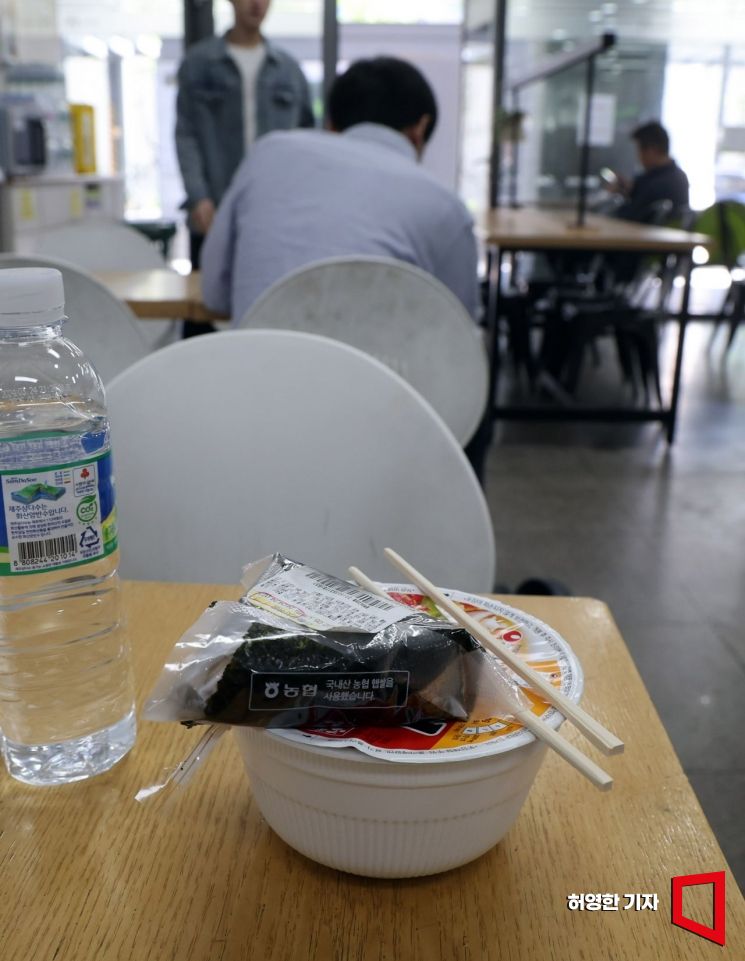
Through this article, SCMP highlighted the increase in single-person households in South Korea over the past few years. The report noted that the proportion of single-person homes in Seoul is expected to rise from 29.5% in 2015 to 39.3% in 2023, emphasizing, "More than 42% of Koreans eat at least one meal alone every day." However, despite the rapid growth in single-person households, controversy has arisen due to restaurants that are increasingly shunning solo dining culture.
The article also introduced several domestic cases, including a restaurant in Yeosu that became controversial for refusing solo diners. SCMP analyzed these refusals as "not merely a matter of business policy, but a representative example of the clash between the rising number of single-person households and traditional social customs in South Korea," diagnosing that "rules such as 'minimum two-person order required' are out of step with the times."
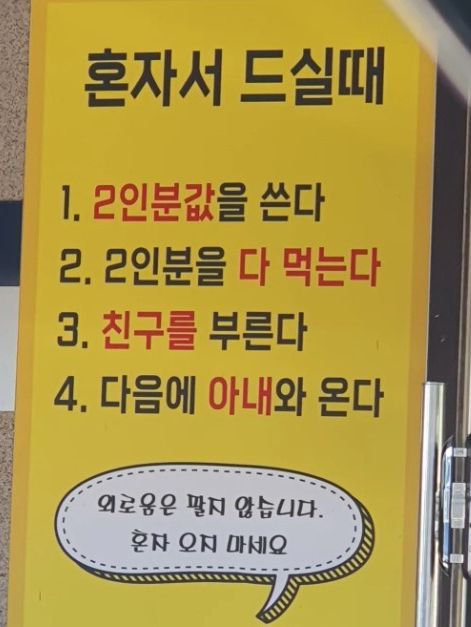
Experiences of consumers being refused solo dining continue to be frequently shared online. Examples include, "At a soup restaurant, I was told to leave because I didn't have a companion, with the excuse that they had run out of ingredients," "After waiting in line for over an hour, I was told solo dining was not allowed," and "Even though there were empty seats, I was refused service as a solo diner."
Two Attitudes Toward Solo Diners... Still Unwelcome Offline
As SCMP pointed out, the number of 'honbapjok'-people who eat alone-is rapidly increasing in South Korea. However, the attitudes toward solo diners differ sharply between online and offline establishments. The spread of solo dining is driven by the increase in single-person households and the rise of personalized and budget-friendly dining trends. The food service industry is adapting to this shift toward solo dining demand. There are already barbecue restaurants where you can order just one serving, and franchise restaurants now offer single-serving pizzas and fried chicken. The food delivery app Baemin introduced a "One Bowl" service with no minimum order requirement, which surpassed 1 million users in just over two months.
Nevertheless, many offline restaurants still do not sell single servings. The food service industry is struggling to keep pace with the spread of solo dining culture. Some point out that this not only inconveniences consumers but could also undermine the competitiveness of the restaurant industry. However, the number of offline restaurants that accommodate solo diners still falls short of demand. According to big data company NICE Genie Data, only about 10.4% of the 170,000 restaurants nationwide offered single-person menu options as of March this year, up just 0.7 percentage points from about 9.7% in March last year.
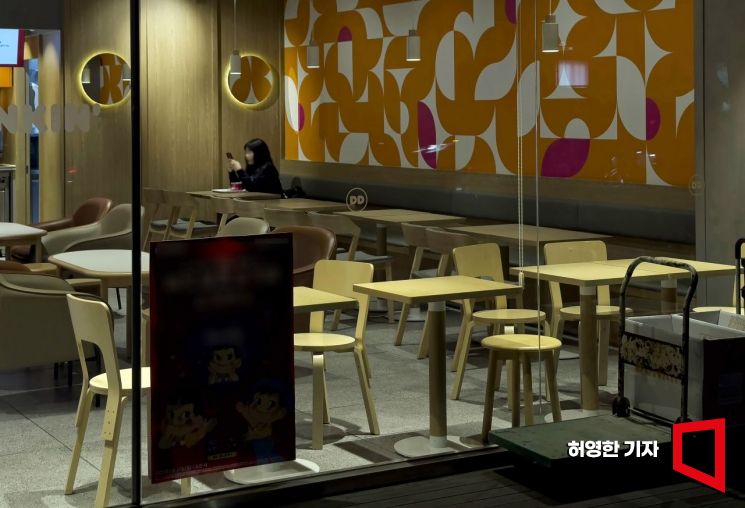
Some restaurant owners have reasons for not welcoming solo customers. During peak hours, they need to maximize sales by filling four-person tables to cover rising costs of ingredients, labor, and rent. In contrast, if they accept solo diners during these times, table turnover and revenue per table decrease, leading some to refuse solo customers.
Meanwhile, according to data from the Ministry of the Interior and Safety at the end of August, the number of single-person households in South Korea surpassed 10 million for the first time, accounting for 42% of all households. In Statistics Korea's "2024 Time Use Survey" released in July (covering 25,000 household members aged 10 and over nationwide), the proportion of solo meals for breakfast, lunch, and dinner all rose by 1.4 to 2.9 percentage points compared to 2019. The rates of eating lunch and dinner alone reached 26.9% and 25.7%, respectively.
© The Asia Business Daily(www.asiae.co.kr). All rights reserved.
![Clutching a Stolen Dior Bag, Saying "I Hate Being Poor but Real"... The Grotesque Con of a "Human Knockoff" [Slate]](https://cwcontent.asiae.co.kr/asiaresize/183/2026021902243444107_1771435474.jpg)


















