Film Industry Crisis Response Alliance Issues Statement
"Facility Lacking Storage and Dedicated Screening Rooms Is Functionally Deficient"
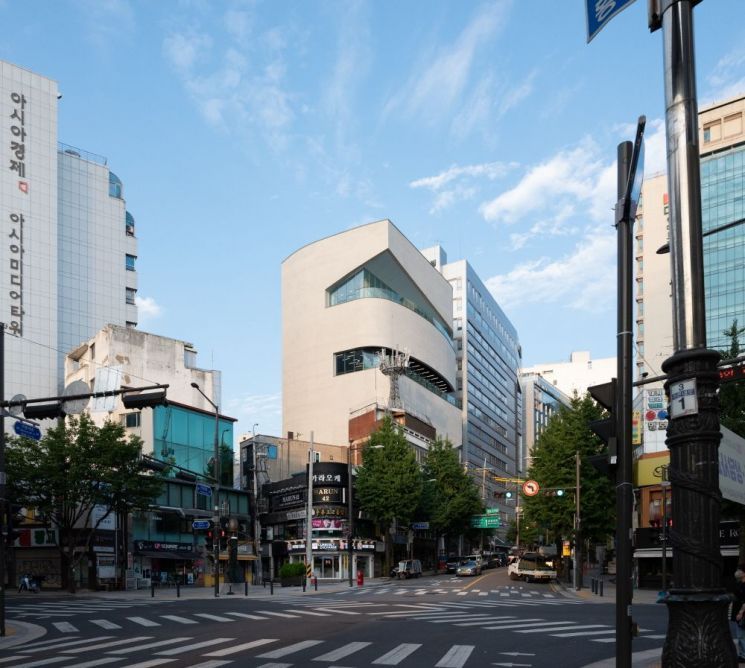
Opposition within the film industry is growing over the opening of the Seoul Film Center.
On November 28, the Film Industry Crisis Response Alliance issued a statement, urging a complete reassessment, stating, "The Seoul Metropolitan Government is rushing to open the center while weakening the core functions of the cinematheque and undermining its identity."
The alliance argued that this is not merely an issue with a single facility, but a crisis where a public cultural facility, into which hundreds of billions of won have been invested, is at risk of falling into a state of 'functional failure.' They criticized the Seoul Metropolitan Government for unilaterally changing the consensus structure built over the past 15 years, leaving only the shell of a cinematheque that citizens should be able to enjoy.
The Film Industry Crisis Response Alliance stated, "The center lacks even the basic infrastructure of a cinematheque, such as storage, reading rooms, dedicated screening rooms, and research functions," and compared it to "a library without books or an art museum without paintings."
Regarding the city’s claim that "film screenings are possible," they countered, "Without masking facilities, even the basic viewing environment cannot be met," and pointed out, "The facility falls short of international standards, making it difficult to display vertical subtitles."
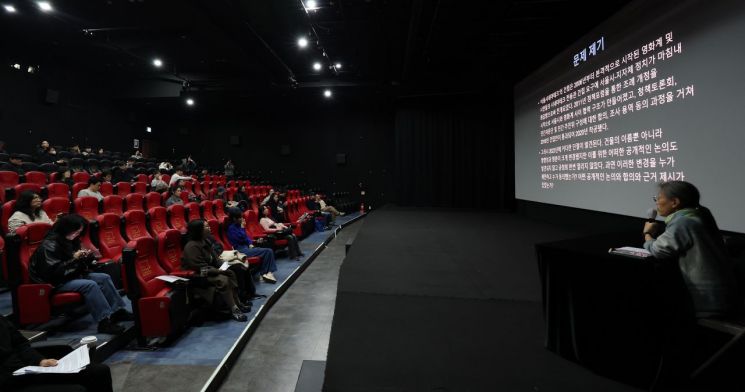
They also raised concerns about the absence of archiving, a core function for preserving film heritage. They stated, "A cinematheque without storage has no reason to exist," and added, "The Seoul Metropolitan Government has effectively given up the opportunity to build a unique film archive."
They called for the restoration of cinematheque functions to meet international standards, the immediate reorganization of a public-private consultative body with participation from the film industry and civil society, a halt to the reduction of existing public film culture projects, and the establishment of a long-term public operation system rather than short-term performance-based outsourcing.
Nineteen organizations participated in the statement, including the Women in Film Korea, the Association of Korean Independent Film & Video, the Korean Film Workers’ Union, and the Directors Guild of Korea.
© The Asia Business Daily(www.asiae.co.kr). All rights reserved.


















