Seoul National University Hospital Analyzes Ultrafine Dust and Mortality Rates in Seoul
Research has found that ultrafine particulate matter (PM2.5) negatively affects not only the respiratory system but also the heart, increasing deaths from ischemic heart disease such as myocardial infarction.

According to the medical community on November 27, a research team led by Professor Hong Yoonchul at the Public Healthcare Center of Seoul National University Hospital conducted a health impact assessment of air pollution based on data on ultrafine dust concentrations in Seoul and mortality rates among adults aged 25 and older from 2016 to 2020, and announced these findings.
During the study period, the annual average concentration of PM2.5 in Seoul was 23.5 micrograms (μg, one-millionth of a gram) per cubic meter, exceeding the Ministry of Environment's standard of 15 μg/m³. During this period, 10,971 people aged 25 and older died from ischemic heart disease.
The research team estimated that, among these, 2,861 deaths over five years were 'excess' deaths from ischemic heart disease attributable to exposure to PM2.5. The excess mortality rate per 100,000 people was 38.6 for those aged 25 and older, 56.2 for those aged 45 and older, and 139.8 for those aged 65 and older, indicating that older adults are more vulnerable to air pollution.
The team further analyzed that if the concentration of PM2.5 could be reduced to the air quality standard of 15 μg/m³, it would be possible to prevent 837 deaths from ischemic heart disease among those aged 25 and older over five years.
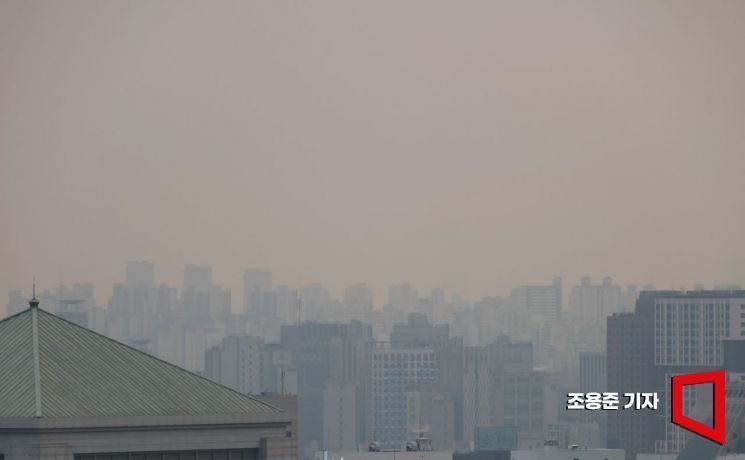
Ischemic heart disease is a condition in which the coronary arteries, which supply blood to the heart, become narrowed or blocked, damaging the heart muscle. Angina and myocardial infarction are representative examples.
The research team explained, "Our results suggest that reducing ambient PM2.5 concentrations to the standard could lower deaths from ischemic heart disease, including myocardial infarction, by about 8%. In particular, proactive air quality improvement in an aging society could bring greater benefits to public health."
These findings were published last month in the international journal 'BMC Public Health.'
© The Asia Business Daily(www.asiae.co.kr). All rights reserved.

![Clutching a Stolen Dior Bag, Saying "I Hate Being Poor but Real"... The Grotesque Con of a "Human Knockoff" [Slate]](https://cwcontent.asiae.co.kr/asiaresize/183/2026021902243444107_1771435474.jpg)















