Sunha Park, a member of the Gyeongbuk Provincial Assembly (People Power Party, Proportional Representation), raised concerns over vacant commercial properties in Gimcheon Innovation City during the 2026 budget review of the Planning and Coordination Office held on November 26. She urged the development of comprehensive measures, emphasizing that the smart city development project must serve as a practical solution for regional recovery.
Park highlighted the severity of the situation in the province, stating, "According to statistics from the Korea Real Estate Board, the commercial vacancy rate in North Gyeongsang Province stands at 19%, significantly higher than the national average of 13.4%, ranking third highest in the country."
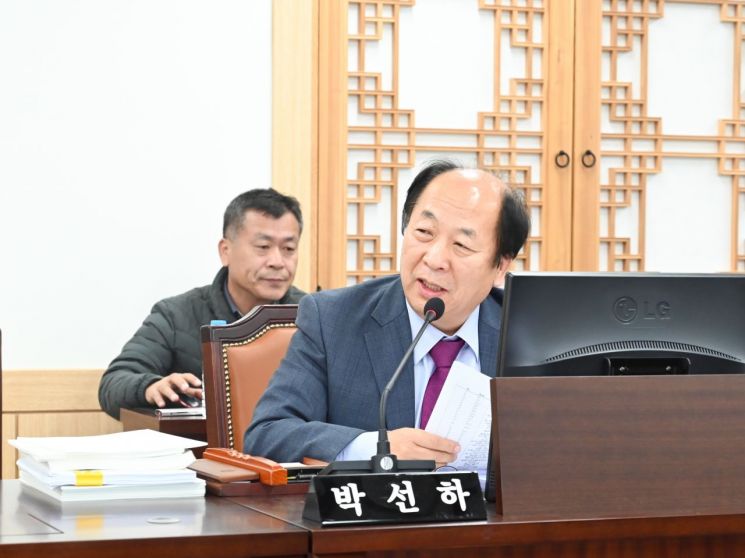
She further emphasized, "While major cities and counties such as Gumi (26%), Pohang (24.2%), and Andong (16%) also have high vacancy rates, Gimcheon Innovation City is at 42.13%, the worst in the province, clearly signaling a risk to the local economy."
She pointed out that the vacancy issue in Gimcheon Innovation City is not solely due to the economic downturn, but is a structural problem resulting from a combination of factors, including population outflow, the spread of non-face-to-face consumption, and excessive initial allocation of commercial land. She stressed the necessity of an urban recovery strategy linked to the second phase of public institution relocations under the new administration.
Regarding the newly included 'Small-Scale Smart City Development Project' for next year, Park expressed regret, saying, "This is a matching project funded by the national government (49%), the province (15%), and local governments (34%). Although it represents a crucial opportunity for Gimcheon Innovation City's resurgence, the disbursement of national subsidies was delayed from the originally planned September to November, hindering smooth project preparation."
Park emphasized, "A smart city is not just about installing facilities; the core is establishing an intelligent management system that solves problems based on urban data." She then presented the following supplementary measures.
Park proposed the operation of practical governance to expand participation by Gimcheon citizens and local experts, the establishment of a system to enhance the utility of smart city data, the strengthening of administrative and technical support systems beyond local government funding matches, and the identification and response planning for risk factors throughout the project implementation process.
Finally, Park pointed out, "Although the provincial budget accounts for only 15%, a smart city is a long-term strategic project that determines the future competitiveness of a city. Therefore, an administrative and technical support system that goes beyond mere financial contributions is essential."
She also stressed, "To fundamentally resolve the issues in the innovation city, a transparent management structure that incorporates real-time feedback from residents and experts into policy is indispensable. The province must use this project to present a new model for regional development."
As Park has requested, attention is now focused on whether this smart city development project can go beyond being a one-off infrastructure initiative to address the structural problems of Gimcheon Innovation City and establish itself as a sustainable model for regional growth.
© The Asia Business Daily(www.asiae.co.kr). All rights reserved.

















