"Insulation Effect" Exists, But Structural Limitations Are Clear
Wired Glass Prohibited... Risk of Thermal Breakage Increases
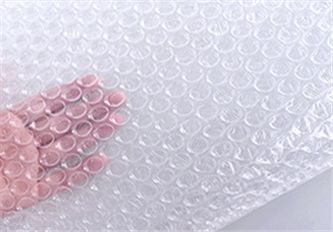 ▲Triple insulation air cap. [Photo by The Asia Business Daily DB]
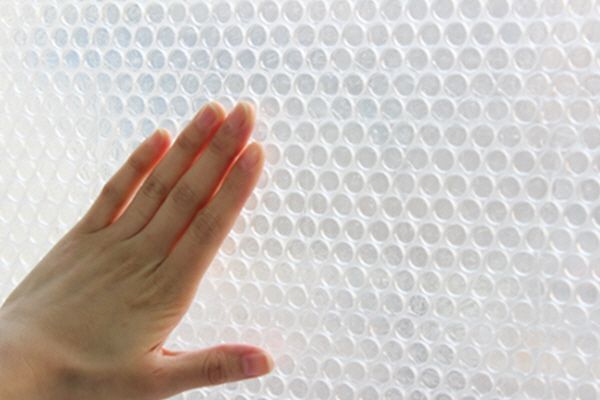
As heating costs rise during the winter, more households are applying bubble wrap (air cap) to their windows to improve insulation. However, experts caution that improper use may result in minimal insulation benefits, and can also lead to condensation, mold growth, and even thermal breakage of certain types of glass.
According to an article contributed by housing expert Maki Ito to the Japanese lifestyle and health media outlet HintPot on the 26th, directly attaching air cap to window glass "not only has limited insulation effects, but also poses a risk of glass breakage depending on the situation." She explained, "Since only one side of the glass is insulated, a significant temperature difference can put stress on the glass structure."
In particular, 'wired glass' containing metal wire is much more hazardous. Ito emphasized, "If heat becomes trapped, the metal and glass expand at different rates, causing internal stress to rise rapidly. During this process, the glass can shatter with a cracking sound in a spiderweb pattern-a phenomenon known as thermal breakage-so it should never be used." Wired glass is designed with metal to prevent shattering during a fire, but the metal retains heat and expands before the glass does, increasing the destructive force.
International experts have expressed similar concerns. The U.S. lifestyle media outlet The Cool Down cited HVAC (Heating, Ventilation, and Air Conditioning) expert Randy Huckstadt, who said, "The biggest issue with air cap insulation is its structural limitation-it cannot create a perfect seal." He pointed out, "If cold air continues to seep in through gaps, the effect on reducing heating costs will inevitably be limited." He also warned that attaching air cap using water spray in subzero temperatures increases the risk of glass cracking.
Basic Effect, But Not a Long-Term Solution
That does not mean air cap is entirely ineffective. According to a study titled "Evaluation of Window Insulation Performance by Type and Attachment Location of Insulation Sheets," published by Professor Ahn Youngcheol and his research team from the Department of Architectural Engineering at Pusan National University, attaching air cap to single-pane windows significantly reduced heat loss, with greater improvements seen in windows with lower initial insulation performance.
However, experts point out that relying on air cap as the primary insulation method over the long term is not appropriate. Polycarbonate hollow panels that cover the entire window to create an air layer, or thick vinyl sheets, demonstrate higher insulation efficiency. Ultimately, reinforcing airtightness through measures such as sealing gaps with silicone or installing weatherstripping is the key to effectively reducing heating costs.
© The Asia Business Daily(www.asiae.co.kr). All rights reserved.
![Clutching a Stolen Dior Bag, Saying "I Hate Being Poor but Real"... The Grotesque Con of a "Human Knockoff" [Slate]](https://cwcontent.asiae.co.kr/asiaresize/183/2026021902243444107_1771435474.jpg)
















