Operated for Over a Century Since 1900
Original Structure Preserved Even After the 1934 Great Flood

The National Heritage Administration announced on November 27 that it has designated the 'Yecheon Samgangnaru Tavern' in Pungyang-myeon, Yecheon-gun, North Gyeongsang Province, as a National Folk Cultural Heritage.
This tavern operated for over 100 years, from around 1900 until 2005, against the backdrop of a ferry dock where the Nakdong River, Geumcheon, and Naeseongcheon converge.
The structure is a thatched-roof house with two rooms at the front and two rooms on the side. There is one room for the tavern owner, known as the jumobang, and one room for guests. At the back, there is one kitchen and one wooden-floored room (maru). Remarkably, it survived the great flood of 1934 (Gap-sul year) and has retained its original form.
In the attic above the kitchen, accessible from the jumobang, sits a Seongju earthenware jar, reflecting household deity beliefs and symbolizing wishes for protection from floods and fires as well as the safety of the tavern.
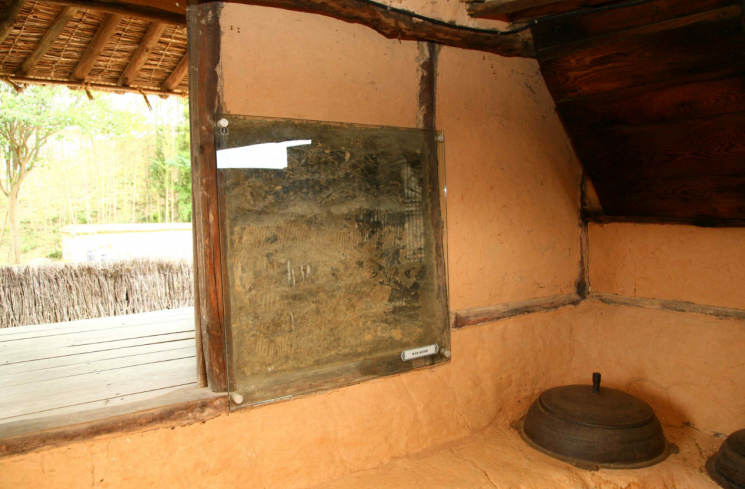
On the earthen wall inside the kitchen, tally marks remain, indicating records of credit transactions. This is considered a rare and valuable example among tavern cultural heritages.
The tavern is located at the entrance leading from the ferry dock to the village, and on the embankment, the sacred tree (Dongshinmok) and phallic stone (Nanggeunseok) used in village rituals (Dongje) still remain. The 'Dongshingyechaek,' a ledger recording the 130-year history of these village rituals, is also preserved. Previously, the National Heritage Administration confirmed that ritual papers were offered to the river deity of Samgangnaru and the tavern guardian deity of Samgang Tavern.
Documents showing the formation and operation of the 'Samgang Doseon-gye' association by the villagers also remain here. The site is highly valued for comprehensively illustrating the history and folk traditions of the ferry and tavern.
The National Heritage Administration plans to collaborate with local governments to ensure systematic preservation and management so that this tavern can be utilized as a historical and cultural tourism resource.
© The Asia Business Daily(www.asiae.co.kr). All rights reserved.
![Clutching a Stolen Dior Bag, Saying "I Hate Being Poor but Real"... The Grotesque Con of a "Human Knockoff" [Slate]](https://cwcontent.asiae.co.kr/asiaresize/183/2026021902243444107_1771435474.jpg)

















