Stripping the Chief Justice of Concentrated Powers
Ruling Party Unveils Draft of "Judicial Reform Bill"
Judge Assignment, Appointment, and Case Allocation
To Be Decided by Judicial Administration Committee
9 Out of 13 Members Are Non-J
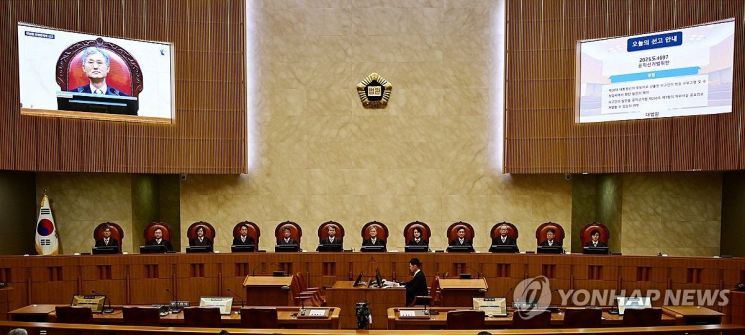
The "judicial reform bill" proposed by the ruling party centers on stripping the Chief Justice of the Supreme Court of key powers over personnel, budgeting, and disciplinary actions, and transferring them wholesale to a Judicial Administration Committee that includes external members.
If this bill passes, a 13-member external committee, composed of a majority of non-judges, will make decisions on all matters of judicial administration, including the assignment, appointment, and case allocation of judges. Both inside and outside the legal community, there is growing criticism that this amounts to "taming the judiciary" and concerns about potential unconstitutionality are mounting.
According to the legal community on November 26, the draft prepared by the Democratic Party of Korea's Judicial Administration Task Force, which was unveiled the previous day, calls for abolishing the current National Court Administration and instead establishing a Judicial Administration Committee. This committee would consist of 13 members, including 9 non-judges. Of the remaining 4 judge members, one would be appointed by the Chief Justice, while the others would be recommended by the National Conference of Court Presidents (one member) and the National Conference of Judges’ Representatives (two members). Non-judge members would be recommended by organizations such as the Korean Bar Association, local bar associations, and the Minister of Justice, provided the candidates have been out of public office for at least two years. The Judicial Administration Committee would review and decide on court budgets and accounting in place of the National Court Administration, and would also have the authority to transfer judges.
Court presidents would also be selected from among judges recommended by the judges’ meeting at each court, effectively introducing an election system. This revives a system previously pushed by the "Kim Myeongsoo judiciary" but scrapped under the "Cho Heedae judiciary" due to controversy over electing court presidents. The Judicial Administration Committee would delegate court administration to the presidents of each court, while major administrative matters would require review and approval by each court’s judges’ meeting.
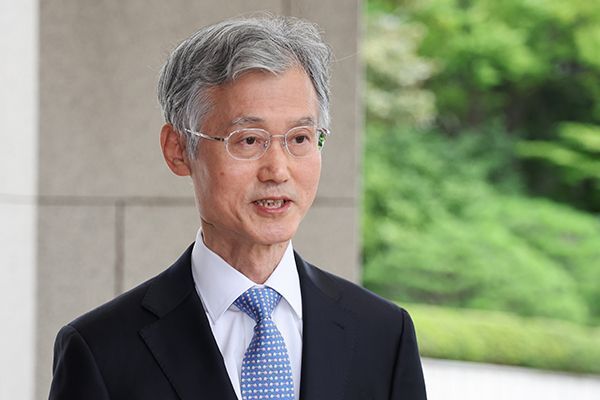
The legal community has responded strongly to this proposal, criticizing it as an attempt to tame the judiciary. In particular, there are concerns that if this bill passes the National Assembly, politically sensitive cases-such as the trials of President Lee Jaemyung, former President Yoon Sukyeol, and the special prosecutor cases involving Kim Keonhee-could see the assignment of presiding judges or warrant judges fall under political influence.
A sitting judge stated, "Control over personnel is closely tied to judicial independence," and added, "If external bodies with political influence-especially individuals recommended by ministers from the executive branch-participate in personnel decisions and case assignments for judges handling specific trials and warrants, there is a risk that, in extreme cases, judges could be demoted or excluded from reappointment in an attempt to influence trial outcomes."
There is also a heated debate over the bill’s constitutionality. Article 103 of the Constitution guarantees the independence of judges in accordance with their conscience, while Article 101 states that "judicial power is vested in courts composed of judges." A judge from the Seoul High Court remarked, "The Chief Justice is the last bulwark for judicial independence. If that role is eliminated, it would effectively allow the executive branch to control the courts." It is also rare in major foreign countries for an external committee to decide on the assignment of judicial panels through a collegial system. One legal expert commented, "In a situation where key cases involving the administration are being processed one after another, transferring judicial administrative authority to an external body is not judicial reform, but rather an attempt to tame the judiciary."
© The Asia Business Daily(www.asiae.co.kr). All rights reserved.


















