Establishing Future Strategies for Gwangyang Port in the Arctic Shipping Route Era
Promoting Cargo Volume Expansion Linked to Industrial Complexes
Gwangyang City in South Jeolla Province is accelerating its efforts to establish a foundation for growth as a logistics hub in Northeast Asia in response to changes in the global logistics environment and the opening of the Arctic shipping route era.
This is in line with the current administration's policy direction of pioneering the Arctic shipping route, and is also part of a strategy to accommodate the trend of larger vessels and transition to smart, eco-friendly ports. The city is now actively formulating a development strategy for a new leap forward for Gwangyang Port.
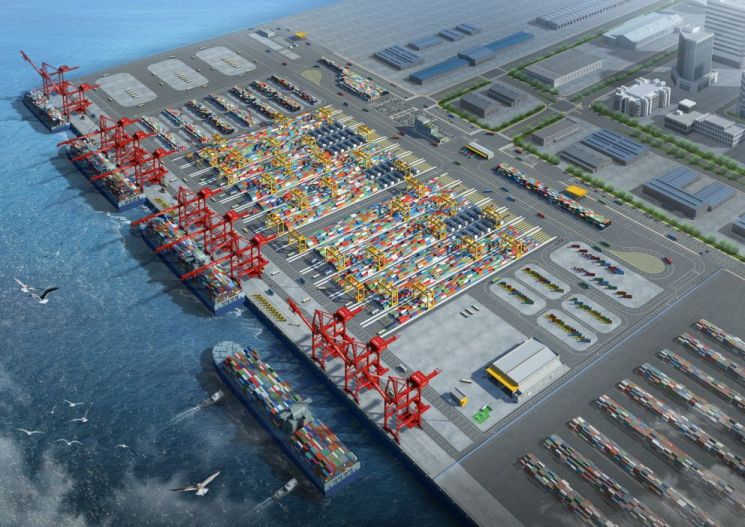
◇ Strengthening Northeast Asia's Energy and Integrated Port Functions for the Arctic Shipping Route Era
Gwangyang Port is the only port in Korea equipped with both an LNG terminal and bunkering facilities, and it is home to manufacturing companies that can directly consume Arctic resources such as LNG, iron ore, and crude oil.
Furthermore, as the only comprehensive port in Korea capable of handling almost all types of cargo-including containers, steel, petrochemicals, automobiles, and bulk cargo-Gwangyang Port has secured competitiveness by complementing the limitations of other ports that are mainly container-focused.
This structure is expected to provide a strong foundation for Gwangyang Port to emerge as an energy hub port in Northeast Asia once the Arctic shipping route is commercialized and Arctic resource development gains momentum. In this context, Gwangyang City plans to launch a “Strategy for Fostering a Hub Port for the Arctic Shipping Route” research project in December, in cooperation with South Jeolla Province, to identify relevant projects and make proposals to the central government.
Jeong Seungjae, Head of the Steel and Port Division, stated, "We believe this is a golden opportunity for Gwangyang Port to take a leap forward, and we will do our utmost to discover related projects and secure national funding. We will also listen carefully to experts' opinions to establish effective strategies."
◇ Expanding Port Infrastructure to Increase Cargo Volume
As global shipping companies accelerate the trend toward larger vessels, securing sufficient channel depth has become a key factor in port competitiveness. Currently, the channel depth at Gwangyang Port is 16 meters, which means that even if large container ships are attracted, they can only enter and depart during high tide after waiting for the tide, thus limiting the port's ability to attract major shipping lines.
Reflecting these on-site demands, Gwangyang City has been working in cooperation with South Jeolla Province and the Yeosu Gwangyang Port Authority, and has continued to make multifaceted proposals to secure national funding. As a result, the design budget for deepening the channel in front of the product pier is currently under review by the National Assembly. In addition, after making proposals to the Ministry of Oceans and Fisheries and the Ministry of Economy and Finance, a feasibility study for deepening the channel in front of the container pier is currently under discussion.
In addition, the city is strengthening collaboration with central government ministries to ensure the smooth progress of key initiatives such as the "Gwangyang Port-Yulchon Industrial Complex Connecting Road," the "National Smart Port MRO Training Center," and the "Port Automation Testbed (Phase 3-2) Construction Project."
Despite being the port with the second-largest cargo throughput in Korea, Gwangyang Port has faced difficulties in systematically formulating port development plans due to the absence of a research institute dedicated to port and logistics policy. To address this, the city plans to propose to the government the establishment of a KMI Gwangyang Port Branch and the attraction of related research institutions to support policy development for the port.
◇ Generating Cargo Volume in the Hinterland
The sustainable growth of Gwangyang Port requires not only strengthening the port's own competitiveness but also generating cargo volume through industrial complexes. To this end, the city is focusing on attracting manufacturing companies to expand cargo volume generated in the port's hinterland.
Over the past three years, the city has signed investment agreements with 47 companies totaling 6.3 trillion won, laying the foundation for increased cargo volume. Regulatory improvements such as the resolution of restrictions on the East Port, designation as a Special Opportunity Zone for Secondary Batteries, and designation as a Preemptive Response Area for the Steel Industry Crisis, along with large-scale national funding, have significantly improved the investment and business environment for companies.
Going forward, Gwangyang City plans to further strengthen the attraction and support of manufacturing companies to establish a robust structure for generating cargo volume through the linkage between industry and port.
◇ Strengthening Communication with Port Workers and Citizens
Until now, Gwangyang Port lacked an official channel to collect and discuss the opinions of port organizations and logistics companies, making it difficult to address the challenges faced by port workers. To resolve this, the city established and has been operating the "Gwangyang Port Win-Win Cooperation Council" as a key pledge of the 8th popularly elected administration since 2024.
The council has held three regular meetings so far, listening to the opinions of port organizations and companies, and, in cooperation with related agencies, has provided support for eco-friendly cargo handling equipment and secured alternative sites for automobile yards, thereby minimizing difficulties for stevedoring and inspection companies.
Reflecting the council's suggestions, December 5 has been designated as "Gwangyang Port Day" (the anniversary of the port's opening). This aims to enhance citizens' understanding and interest in the port industry, and the city plans to hold the first-ever Gwangyang Port Day commemorative event this year.
The commemorative event will be held at 2 p.m. on December 5 at the Citizens' Hall of Gwangyang City Hall. To help citizens easily understand the changes and opportunities ahead for Gwangyang Port, Dr. Kim Jiyoon (host of MBC's 100-Minute Debate and YouTube channel with 1.3 million subscribers) will be invited for a special lecture. There will also be various side events such as SNS events and a children's Gwangyang Port tour to increase public engagement.
Gwangyang Mayor Jung Inhwa emphasized, "For Gwangyang Port to develop, close cooperation is needed among local governments, political circles, public institutions, companies, organizations, academia, and civic groups. If all members join forces and speak with one voice, Gwangyang Port will look completely different in ten years."
He added, "The current administration's efforts to pioneer the Arctic shipping route will be an important opportunity to increase cargo volume and build infrastructure at Gwangyang Port. We will take the lead in the port's development and spare no necessary support."
© The Asia Business Daily(www.asiae.co.kr). All rights reserved.

















