Chinese Tourists Longing for Seoul
"Korean Entertainment Industry, the Best in Asia"
Some Argue "Seoul Syndrome Cannot Be Generalized"
A new term, "Seoul Syndrome," is spreading among young people in China. Literally, it means "a longing for and admiration of Seoul has become as deep as an illness," and it is a word that frequently appears on Chinese social networking services (SNS) such as Xiaohongshu and Douyin. It initially became popular among Chinese fans who visited Seoul to attend K-pop concerts, but now its meaning has expanded to express a general fondness for the city of Seoul itself.
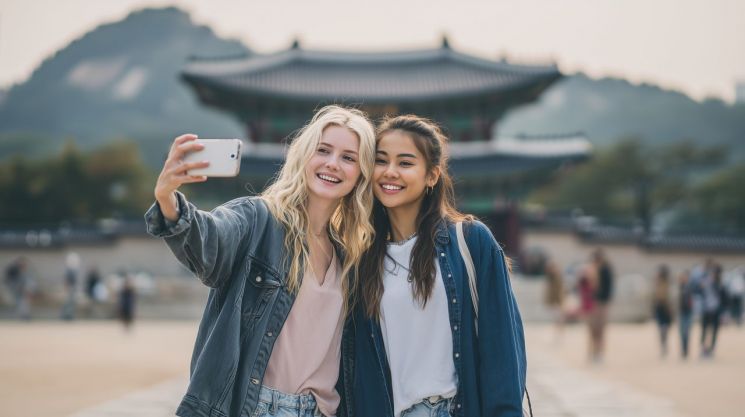
'Seoul Syndrome' Differs from 'Paris Syndrome'... Related Videos Flood SNS
On November 22, a Chinese influencer with 330,000 followers posted on Douyin about Seoul, stating, "K-pop, movies, TV, games, and other sectors of the Korean entertainment industry are at the highest level in Asia," and added, "Korea's aesthetic sense and values are more easily accepted by the Asian public than those of Europe or the United States." Comments on the post included, "People in Seoul abide by the law and live honest lives," "A true powerhouse of entertainment," "It's undeniable that Korean dramas are entertaining, and I'm addicted to K-dramas," and "I want to go back to Korea and feel the excitement again."
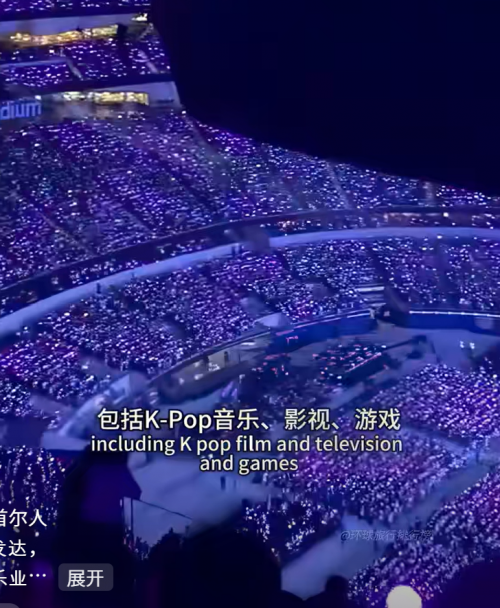 Videos related to Korea are continuously being uploaded on Douyin, the Chinese version of TikTok. Douyin
This phenomenon, known as "Seoul Syndrome," began to spread as Chinese people who had visited Seoul for K-pop concerts posted after returning home that "their Seoul Syndrome had relapsed." In particular, the prolonged "Korean Wave ban" (Hallyu restriction order) has meant that no K-pop concerts have been held in China for nine years. During this time, K-pop has actively expanded its influence in overseas markets such as Japan, the United States, and Europe. After offline concerts, which had been suspended due to the COVID-19 pandemic, resumed, the number of Chinese fans visiting Korea increased.
In addition, factors such as convenient public transportation, safe public security, and 24-hour convenience stores have contributed to forming a positive image of Seoul. The combination of high satisfaction with the city's infrastructure and growing interest in K-culture has made Seoul more than just a tourist destination; it has established itself among Chinese people as a "city they want to visit again."
This trend is the complete opposite of the "Paris Syndrome," which was once discussed mainly among Japanese tourists. Paris Syndrome refers to the psychological stress experienced by visitors who, after harboring excessive fantasies about Paris, are confronted with the gap between expectation and reality. Unlike Seoul Syndrome, which leads to "longing" and a "desire to revisit" due to experiences that exceed expectations, Paris Syndrome results from disappointment.
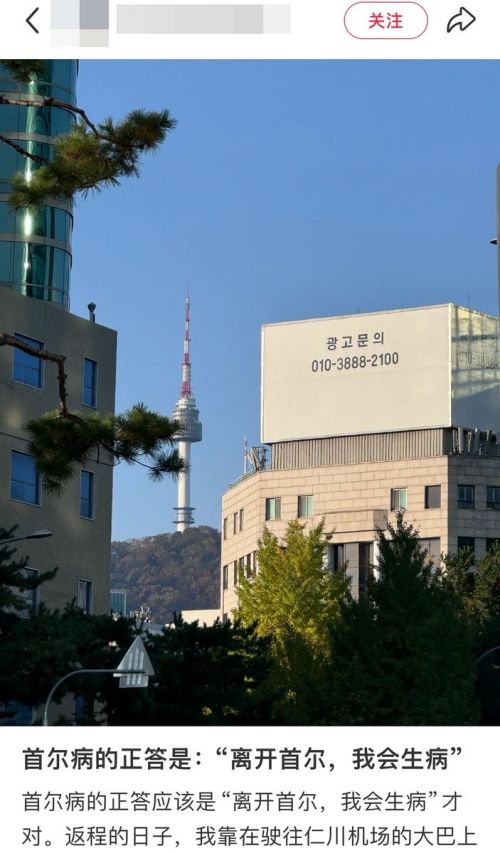
This trend is also evident in the growing demand among Chinese people to travel to Korea. According to the Korea Tourism Organization, China was the country with the most visitors to Korea this year. From January to September, there were 14.08 million visitors to Korea, a 16% increase compared to the same period last year. By country, the numbers were: ▲China (4.24 million) ▲Japan (2.67 million) ▲Taiwan (1.41 million) ▲United States (1.1 million) ▲Hong Kong (460,000).
'No China Zone' Emerges Amid Seoul Syndrome Craze
However, some point out that it is difficult to generalize "Seoul Syndrome" as a universal sentiment among all Chinese tourists. Some Chinese tourists have reported experiencing discomfort in Korea due to language barriers or racial discrimination.
Recently, a cafe in Seongsu-dong, Seoul sparked controversy after posting an English message on its official SNS stating, "Sorry, but we do not accept Chinese customers." The cafe owner explained in an interview with some media outlets that this was a temporary measure to avoid conflicts between Chinese and Korean customers during a period of heightened anti-China sentiment.The cafe has since deleted the controversial message.
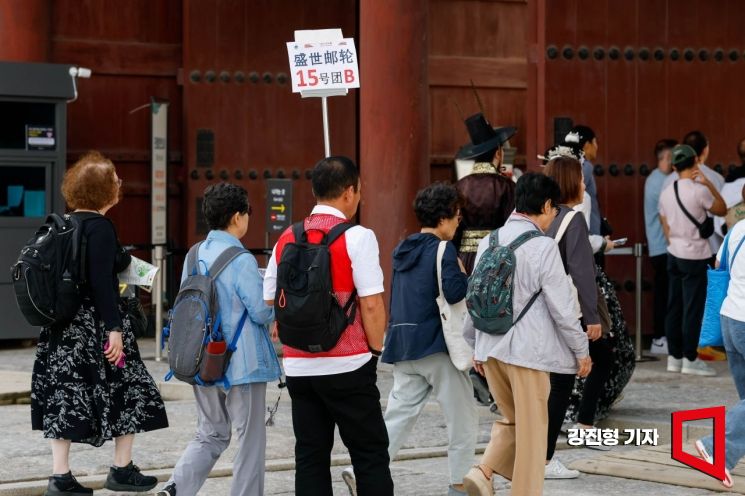 A Chinese group tour guide is leading the way at Gyeongbokgung Palace in Jongno-gu, Seoul. Photo by Kang Jinhyung
Similarly, a restaurant in Buk-gu, Daegu recently announced on SNS that it would refuse Chinese customers. The restaurant stated, "We do not accept Chinese customers," adding, "We don't mind Korean customers being noisy in the store, but we don't want Chinese customers to be noisy." The post also included the phrase, "Only No China restaurant."
Public opinion in Korea toward China is also not favorable. According to a survey conducted in June by the East Asia Institute (EAI) of 1,509 Korean adults, 66.3% of respondents had a negative impression of China, more than twice the percentage of those with a positive impression (25.6%). The main reasons cited for negative impressions of China were: ▲an unfavorable national character and behavior (58.1%) ▲the political system being a one-party rule by the Communist Party (39.5%) ▲China's economic coercion and retaliation (36.9%).
© The Asia Business Daily(www.asiae.co.kr). All rights reserved.



















