The Korea Employers Federation (hereinafter referred to as KEF) announced on November 21 that it had identified a total of 238 regulatory reform tasks across five key areas-including administrative convenience regulations, labor, environment, and safety-to enhance the global competitiveness of advanced industries such as robotics and artificial intelligence (AI). KEF has submitted proposals for improvement to relevant government bodies, including the Office for Government Policy Coordination and the Ministry of Trade, Industry and Energy.
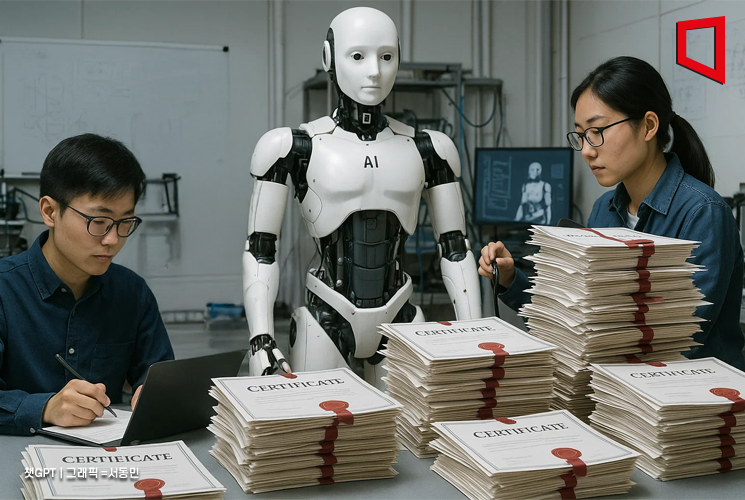
Among the administrative convenience regulations in need of improvement, the complex and overlapping certification procedures in the robotics industry are a prime example. According to KEF, even if a robot obtains international certification for elevator boarding or outdoor operational safety, it must still undergo similar certification again to receive KS certification domestically. Additionally, when components are upgraded, new safety certification must be obtained from scratch.
KEF stated, "To foster and develop the robotics industry, which is emerging as a promising sector for the future, certification procedures should be streamlined, and a dedicated control tower for robotics should be established within the government to promote technological convergence and innovation between AI and robotics."
In the labor sector, KEF proposed that special extended work be permitted for AI research and development (R&D) personnel, similar to the allowances for semiconductor workers, so that AI researchers can fully immerse themselves in their work. There are periods when AI researchers must focus intensively, such as during large-scale AI model training, urgent bug fixes, or service stabilization. However, AI is not currently included among the R&D industries eligible for special extended work. KEF also suggested that, in order to nurture talent in advanced industries, the current alternative military service system-currently limited to small and medium-sized enterprises and mid-sized companies-should be expanded to include large corporations.
KEF also discussed regulatory relief measures to support the transition to eco-friendly practices. Some urban buildings face locational and spatial constraints that make it difficult to install solar power facilities. KEF argued that relaxing the ban on underground installation of hydrogen equipment for buildings could expand the use of eco-friendly energy. Additionally, to minimize unnecessary resource waste, KEF requested that the government allow the digitalization of vehicle manuals and the conversion of shareholder meeting postal notifications to electronic documents.
Kim Jaehyun, head of KEF's Regulatory Reform Team, stated, "As global competition for technological supremacy intensifies and Korean companies face difficulties due to US-imposed tariffs, it is essential for the government to swiftly improve unnecessary and unreasonable regulations. This will enable companies to continuously challenge themselves and innovate, thereby securing competitiveness in advanced industries."
© The Asia Business Daily(www.asiae.co.kr). All rights reserved.


















