It has been identified that Hyundai Motor Group has established a new control tower to respond to cyber threats. This move is seen as a measure to prevent similar incidents following a series of large-scale hacking cases this year, and to prepare for the era of the "Connected Car," which links vehicles to external networks.
According to industry sources on November 18, Hyundai Motor Group has established a "Group Cyber Threat Response Team" to prevent and respond to cyberattacks such as hacking and ransomware. The team is headed by Yang Kichang, Head of the Integrated Security Center at Hyundai Motor Company.
Until now, Hyundai Motor Group had responded to cyberattacks at the affiliate level, but this is the first time a separate organization has been formed at the group level. The Group Cyber Threat Response Team will inspect and analyze threat factors within the group, such as vulnerabilities to cyberattacks, and will be responsible for situation monitoring, process improvement, and strengthening governance.
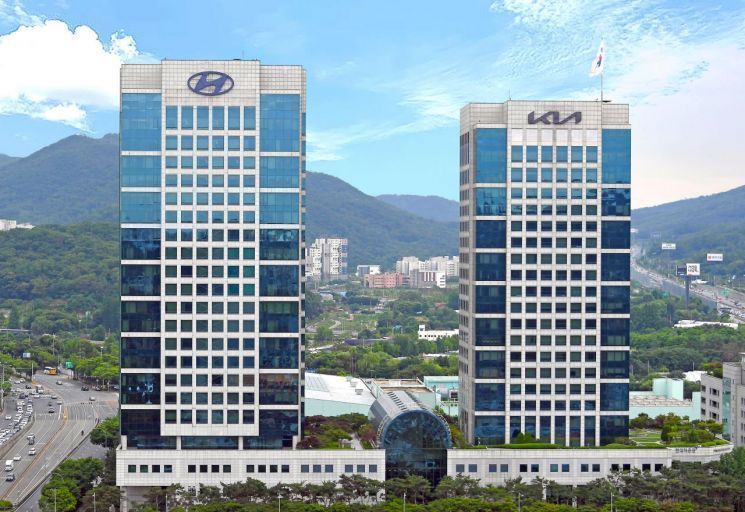
In addition, Hyundai Motor Company and Kia have significantly increased their investments in information security for cyber protection over the past three years. According to the Korea Internet & Security Agency (KISA), this year, Hyundai Motor Company and Kia invested 62.14 billion won in information security. This represents a 46.1% increase from last year’s 42.53 billion won, and a 168.9% increase compared to 23.1 billion won in 2022.
The number of dedicated information security personnel at Hyundai Motor Company and Kia reached 262.2 this year, up by about 77 from last year’s 185.4. There were 105 such personnel in 2022 and 164.2 in 2023.
This strengthening of cyber security is interpreted as an effort to prevent the recent wave of hacking incidents from spreading to the automotive industry and, in the long term, to reinforce security for connected cars.
In April, SK Telecom suffered a hacking incident in which the personal information of more than 20 million subscribers was leaked. In September, KT experienced an incident involving illegal micro base stations (femtocells) being exploited for unauthorized small payments. Lotte Card saw the personal information of 2.97 million members leaked, and Yes24 was hit by ransomware, resulting in its website and application becoming paralyzed. In the case of Hyundai Motor Group, although customer or technical information was not involved, there was an incident in March where some employees' personal information was leaked.
Furthermore, Hyundai Motor Group appears to be strengthening its cyber security in preparation for the era of connected cars. Connected cars are vehicles that exchange information in real time with external networks, including drivers, vehicles, surrounding environments, and infrastructure. As connected cars become more widespread, there is a risk that vehicle control could be hijacked through communication systems or that various types of personal information collected in the vehicle could be hacked. There is also the possibility that malicious code could be inserted during over-the-air (OTA) software updates.
© The Asia Business Daily(www.asiae.co.kr). All rights reserved.


















