After GM, Even Tesla Says "Let's Exclude Chinese Parts"
Supply Chains Accelerate "Decoupling from China"
Korea Anticipates Positive Spillover Effects
As global automakers reconsider the use of Chinese-made parts amid US-China tensions, Korean automotive parts are expected to benefit as a result. Mercedes-Benz has announced plans to establish an 'Asia Purchasing Hub' in Korea in January next year and to expand cooperation with local parts suppliers, thereby securing its domestic supply chain.
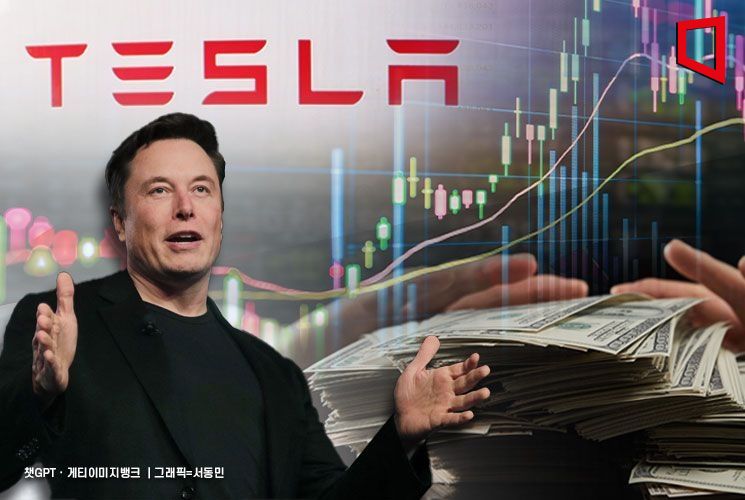
The Wall Street Journal (WSJ) reported on the 14th (local time) that US electric vehicle manufacturer Tesla is making efforts to avoid using Chinese-made parts in electric vehicles produced within the United States. According to the WSJ, Tesla has asked its major suppliers for US electric vehicle factories to completely exclude Chinese-made components.
Tesla's decision to stop using Chinese-made parts in the US was made earlier this year. The WSJ reported that Tesla and its suppliers have already replaced some Chinese-made parts with components produced in other regions. Tesla reportedly aims to replace all remaining parts with those produced outside China within the next one to two years.
In particular, Tesla had sold vehicles equipped with Chinese-made LFP (lithium iron phosphate) batteries in the US until last year. However, due to the exclusion of such vehicles from electric vehicle tax credits and the imposition of high tariffs on Chinese imports, Tesla has stopped using Chinese-made LFP batteries in the US, according to the WSJ.
Instead, Tesla is pursuing domestic production of LFP batteries in the US. Last month, Tesla announced that its battery production facility under construction in Nevada is expected to begin operations in the first quarter of next year.
Previously, General Motors (GM) was also reported to have instructed its partners to remove Chinese-made parts from their supply chains. GM executives have asked partner companies to seek alternative sources for raw materials and parts procurement, aiming ultimately to completely separate their entire supply chain from China.
As global automakers continue to exclude Chinese-made parts from their supply chains, the role of domestic parts suppliers as alternatives is expected to become increasingly important.
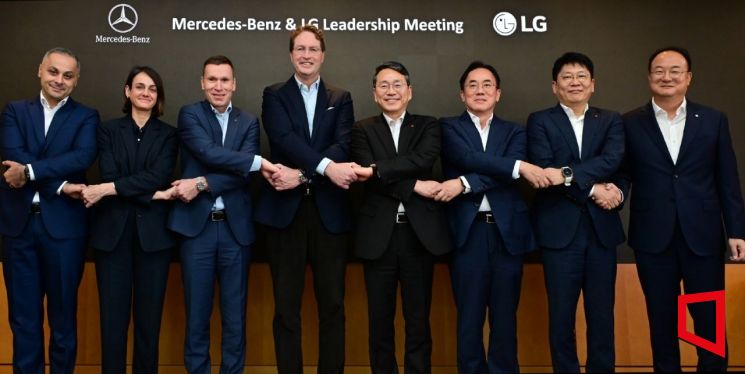
Benz has expressed its intention to strengthen cooperation with Korea through the establishment of a 'purchasing hub.' Ola Kallenius, Chairman of Mercedes-Benz, stated at the 'Mercedes-Benz Future Strategy Meeting' held at Paradise City in Jung-gu, Incheon, on the 14th, "The Asia Purchasing Hub will serve as a strong foundation for long-term growth and partnerships," adding, "We will establish a purchasing hub in Seoul where our German research and development (R&D) and procurement departments can work closely together."
During his visit to Korea, Chairman Kallenius discussed collaboration with companies such as Samsung and LG, emphasizing the importance of ongoing cooperation with Korean firms. He said, "We had very productive meetings with Samsung and LG," and added, "Through our long-standing partnerships, we utilize their technology across our entire lineup. (Yesterday) we discussed what's next and how we can expand our boundaries and make further leaps. Collaboration with Korean companies provides us with a very valuable innovation ecosystem."
© The Asia Business Daily(www.asiae.co.kr). All rights reserved.


















