Court: "Property Owners May Bear Costs if Usage Increases"
Victory in Three Cases Saves 1.1 Billion Won... Similar Rulings Draw Attention
A court in Gwangju has issued the nation's first ruling allowing the city to impose waterworks development charges on property owners. The decision establishes that even if decades have passed since development and water usage has far exceeded initial estimates, the property owner can still be considered the "substantial cause" of the increased demand. This precedent is expected to influence similar lawsuits by local governments across the country.
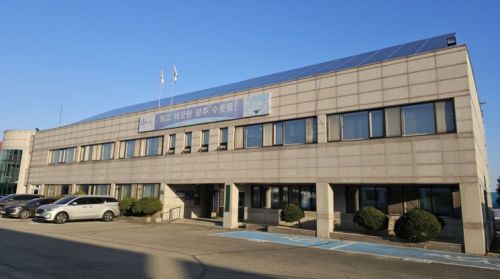
The Gwangju Waterworks Headquarters announced on the 14th that "the Gwangju District Court ruled in favor of the headquarters on November 6 in a lawsuit seeking to nullify the imposition of waterworks development charges." Article 71 of the Water Supply Act stipulates that those responsible for initiating or expanding water supply facilities must bear the associated costs.
The lawsuit began after the construction of a mixed-use residential and commercial apartment complex in a commercial district led to tap water usage surging to 22 times the volume originally predicted at the time of development. The Waterworks Headquarters imposed the development charge on the property owner, who then filed a lawsuit claiming that only the original project developer should be subject to the charge.
Until now, courts have tended to view the initial developer of a large-scale project as the party liable for the development charge. However, the court in this case stated, "While the principle that the original developer is responsible is valid, it is not necessary to treat increased water usage after a significant period in the same way." As a result, the court recognized that the property owner could also be deemed the "substantial cause," setting a nationwide precedent.
The Gwangju Waterworks Headquarters has recently won a series of lawsuits related to development charges for redevelopment associations and housing law projects. Including this case, the headquarters has prevailed in all three lawsuits, avoiding a total refund liability of approximately 1.1 billion won. The headquarters plans to continue its response to two additional cases currently pending at the first trial stage. It also announced that the budget saved will be reinvested in upgrading water infrastructure and improving the stable supply system for tap water.
© The Asia Business Daily(www.asiae.co.kr). All rights reserved.
![Clutching a Stolen Dior Bag, Saying "I Hate Being Poor but Real"... The Grotesque Con of a "Human Knockoff" [Slate]](https://cwcontent.asiae.co.kr/asiaresize/183/2026021902243444107_1771435474.jpg)











