Musalem: "Limited Room for Further Easing"
Kashkari: "Inflation at 3%... Still Too High"
Hawkish Fed Remarks and Data Gaps Deepen Uncertainty
Wall Street Split on Hold or Cut... Rate Path Remains Unclear
Officials from the US Federal Reserve (Fed) are taking a cautious stance regarding a possible rate cut in December. Although recent signs of a slowdown in the labor market have bolstered expectations for an additional cut within the year, statements from hawkish (monetary tightening-leaning) members have cast fresh uncertainty over the future path of interest rates. On top of this, concerns about gaps in key economic data have further dampened market expectations for a rate cut, making the odds of a December hold or cut essentially a coin toss.
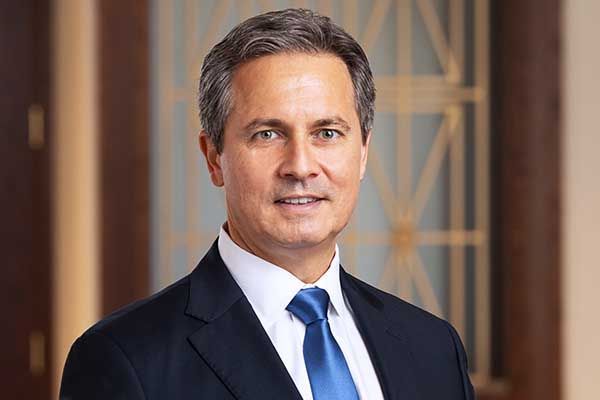
Alberto Musalem, President of the Federal Reserve Bank of St. Louis, said at an event in Indiana on the 13th (local time), "There is limited room for further easing while ensuring that monetary policy does not become overly accommodative," adding, "We must proceed cautiously in our future policy decisions." He assessed that current monetary policy is positioned between being 'moderately restrictive' and 'neutral,' explaining, "We need to suppress inflation that exceeds our target, while at the same time providing some support to the labor market."
President Musalem acknowledged that recent rate cuts have helped the labor market, but reaffirmed his view that a restrictive rate level must be maintained to curb high inflation, effectively supporting the case for holding rates steady in December.
Neel Kashkari, President of the Federal Reserve Bank of Minneapolis, also voiced a hawkish perspective. He stated, "Some parts of the US economy are doing fine, but certain segments of the labor market appear to be under pressure," while also pointing out, "The inflation rate remains at around 3%, which is still too high." Just a few months ago, he had anticipated three rate cuts by the end of the year, but now describes the current economic situation as "mixed" and has withheld his position on the December rate decision.
Some officials have clearly opposed additional cuts within the year. Previously, Susan Collins, President of the Federal Reserve Bank of Boston, said, "Unless there is clear evidence of a significant deterioration in the labor market, I would hesitate to further ease policy when inflation information is limited due to a government shutdown," indicating that holding the policy rate is likely for the time being.
Philip Jefferson, Vice Chair of the Fed, also stated that it is prudent to proceed slowly in the absence of key data. Following Atlanta Fed President Raphael Bostic’s comments the previous day, Beth Hammack, President of the Federal Reserve Bank of Cleveland, also publicly expressed a preference for holding rates steady.
Mary Daly, President of the Federal Reserve Bank of San Francisco, mentioned on the same day that she is approaching the situation with an "open mind," but also noted that it is "premature" to make a decision with four weeks remaining before the Federal Open Market Committee (FOMC) meeting.
In contrast, Fed Governor Stephen Miran, a close associate of former President Donald Trump, continues to call for a 0.5 percentage point cut-a so-called "big cut"-offering a sharply opposing view.
With such divergent opinions among officials regarding the future rate path, uncertainty has only increased, especially as concerns persist over gaps in key economic data despite the recent end of the federal government shutdown (temporary work stoppage). Kevin Hassett, Chairman of the White House National Economic Council (NEC), stated that due to the shutdown, data collection was suspended and the unemployment rate will be omitted from the October jobs report. As divisions within the Fed deepen and even the indicators that could guide monetary policy decisions are missing, the path for December rates remains shrouded in uncertainty.
The Fed will hold its next FOMC meeting next month to decide on the benchmark interest rate. The central bank cut rates twice, in September and November, in response to the labor market slowdown, but inflation remains well above the Fed’s 2% target, increasing the burden of achieving both price stability and full employment. The so-called "policy dilemma" persists: rates must be raised to control inflation, but lowered to support employment. As a result, there is a sharp divide within the Fed between those favoring a rate hold and those advocating for a cut.
Market expectations for a December rate cut are also receding. According to CME FedWatch, the market currently sees a 48.4% chance that the Fed will hold rates steady at the current 3.75-4.0% range in December, and a 51.6% chance of a 0.25 percentage point cut-essentially a 50-50 split.
Krishna Guha, an analyst at Evercore ISI, recently commented that such hawkish remarks "raise concerns about Chair Jerome Powell’s efforts to manage deep divisions within the FOMC," and "further amplify the uncertainty surrounding the future path of interest rates."
© The Asia Business Daily(www.asiae.co.kr). All rights reserved.
![Clutching a Stolen Dior Bag, Saying "I Hate Being Poor but Real"... The Grotesque Con of a "Human Knockoff" [Slate]](https://cwcontent.asiae.co.kr/asiaresize/183/2026021902243444107_1771435474.jpg)
















