Soaring Sale Prices and Loan Regulations Increase Burden on Genuine Homebuyers
Fierce Competition for High Scores Dims Hopes for Subscription Applicants
The perception that subscription savings accounts are no longer the "first step to home ownership" is growing. Over the past three years and three months, the number of subscribers has dropped by more than 2.25 million, fueling skepticism about the effectiveness of the housing subscription system. With soaring sale prices, tightened loan regulations, and fierce competition for high subscription scores, many point out that buying a home through the subscription system has become little more than a pipe dream.
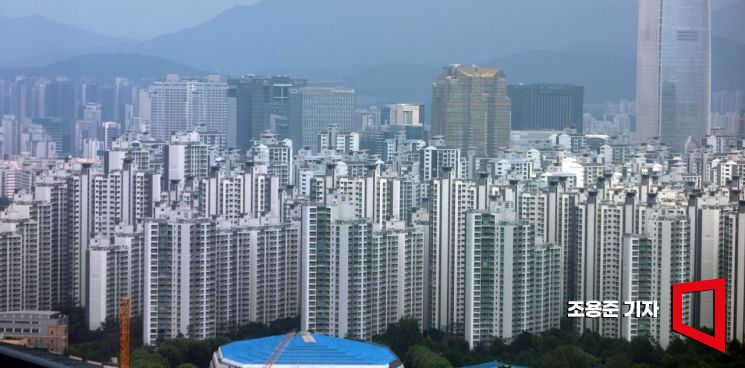
According to Korea Real Estate Board's Cheongyak Home on November 9, as of September, the number of subscribers to the Comprehensive Housing Subscription Savings Account stood at 26,349,934, marking the lowest level this year. This was a decrease of 23,335 from the previous month and a drop of 2,249,354 compared to June 2022 (28,599,279). The number of subscribers has been steadily declining since the second half of 2022, marking a continuous decrease for two years and eight months through this year.
To prevent subscribers from leaving the system, the government implemented incentives such as raising interest rates three times from January 2022 to September 2024 and increasing the annual income tax deduction limit to 3 million won. As a result, there was a temporary increase in subscribers, but the rebound was short-lived. In particular, since July of this year, the number of subscribers has continued to fall each month, once again highlighting the limitations of the system.
The competition rate for subscription applications has also plummeted. According to RealToday, the nationwide average competition rate for first-priority applicants from January to October this year was 7.1 to 1, only a quarter of the 26.8 to 1 rate recorded in 2020.
The primary reasons for the declining appeal of subscription savings accounts are "high sale prices" and "intense competition for high scores." According to Real Estate R114, the average sale price per 3.3 square meters for private apartments nationwide rose approximately 62.5%, from 13.03 million won in 2021 to 21.18 million won as of September this year. This surge is attributed to rising raw material and labor costs, which have driven up sale prices and further increased the burden on genuine homebuyers.
Additionally, the recent tightening of loan regulations has further accelerated the market contraction. Following the June 27 measures, the mortgage loan limit for the Seoul metropolitan area was capped at 600 million won, and the October 15 measures lowered the loan-to-value (LTV) ratio for first-time homebuyers in all of Seoul and parts of Gyeonggi Province from 70% to 40%. Designation of land transaction permission zones has also blocked "gap investment."
Experts analyze that the decline in subscription savings accounts is not simply due to "system fatigue" but is the result of "entry barriers." Park Jimin, head of WolYong Subscription Research Institute, said, "Due to high sale prices, it has become difficult to find affordable new apartments, and only those with high-scoring subscription accounts can win in complexes with significant price gaps, reducing competitiveness." Koo Jamin, a researcher at RealToday, commented, "Unless sale prices are stabilized and the system is improved simultaneously, it will be difficult for the market to recover with a focus on genuine demand."
© The Asia Business Daily(www.asiae.co.kr). All rights reserved.
![Clutching a Stolen Dior Bag, Saying "I Hate Being Poor but Real"... The Grotesque Con of a "Human Knockoff" [Slate]](https://cwcontent.asiae.co.kr/asiaresize/183/2026021902243444107_1771435474.jpg)
















