Both Sellers and Consumers Subject to Fines
Concerns in Tourism and Food Service Industries: "Business Impact Unavoidable"
Thailand has decided to significantly strengthen its alcohol regulations in an effort to minimize social problems caused by drinking. Under the new rules, both sellers and consumers will now face criminal penalties if alcohol is consumed outside of permitted hours in Thailand. As Thailand is a particularly popular destination for Korean travelers, visitors are urged to exercise extra caution.
Consumers Also Subject to Penalties for Drinking Outside Permitted Hours... Maximum Fine of 45,000 Won
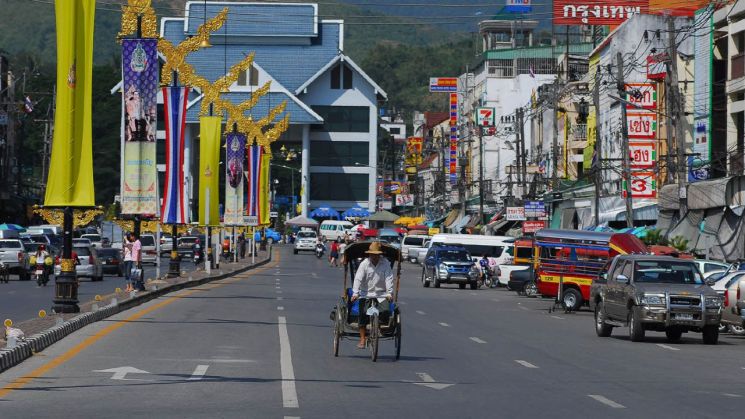
According to the South China Morning Post (SCMP) on November 8 (local time), the amended alcohol regulation law took effect in Thailand on this day. The key change is that, unlike before, consumers who drink alcohol are now also held criminally responsible. Offenders face fines of up to 10,000 baht (approximately 450,000 won), and tourists are not exempt from these penalties.
Under Thailand’s current alcohol control law, the sale of alcoholic beverages at general retail stores or restaurants has been prohibited between 2 p.m. and 5 p.m. This restriction was introduced in 1972 to reduce social side effects caused by excessive drinking. As a result, tourists visiting Thailand have often found themselves unable to purchase alcohol at bars during the afternoon or after midnight, and have encountered convenience stores or supermarkets with refrigerators containing alcohol locked shut during restricted hours.
Concerns Over Impact on Tourism and Food Service Industries
Tourism accounts for about 20% of Thailand’s gross domestic product (GDP), both directly and indirectly, making it a major pillar of the country’s economy. As such, these regulatory changes are having a considerable impact on the travel and food service industries. A Thai restaurant owner told the media, “For example, if alcohol is sold at 1:59 p.m. and the customer continues drinking until 2:05 p.m., both the seller and the consumer could be fined,” adding, “This will hinder the growth of the food service industry.”
The political sphere is also embroiled in controversy. Taopiphop Limjittrakorn, a member of the Move Forward Party who has consistently advocated for alcohol liberalization, stated, “The amended law is intended to achieve the objectives of those opposed to alcohol sales. Alcohol should be available 24 hours a day, seven days a week,” warning, “There is a risk of causing confusion for foreign tourists.”
Era of 30 Million Tourists... Unavoidable Impact
According to Thailand’s Ministry of Tourism and Sports, approximately 29.08 million foreign tourists visited Thailand last year, spending a total of 1.36 trillion baht (about 55.3 trillion won). By nationality, Chinese tourists accounted for the largest group at 5.757 million, followed by Malaysia (4.187 million) and India (1.726 million). South Koreans ranked fourth, with about 1.54 million visitors.
Experts point out, “Implementing regulations that penalize consumers at a time when the number of foreign tourists visiting Thailand is surging runs counter to efforts to revitalize the tourism industry,” and emphasize, “Careful coordination is needed regarding the effectiveness of the law and how it is applied in practice.”
© The Asia Business Daily(www.asiae.co.kr). All rights reserved.
![Clutching a Stolen Dior Bag, Saying "I Hate Being Poor but Real"... The Grotesque Con of a "Human Knockoff" [Slate]](https://cwcontent.asiae.co.kr/asiaresize/183/2026021902243444107_1771435474.jpg)











