Active Through November... Caution Needed for Ticks During Outdoor Activities
The number of patients diagnosed with Severe Fever with Thrombocytopenia Syndrome (SFTS), a tick-borne infectious disease, has surpassed 200 this year, prompting calls for increased caution.
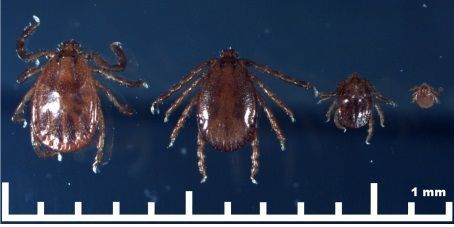 Small Sophi Mite (from left: female, male, nymph, larva). Photo by Korea Disease Control and Prevention Agency
According to the Infectious Disease Portal of the Korea Disease Control and Prevention Agency and other sources on November 9, a total of 220 cases of SFTS have been reported nationwide so far this year (provisional figure). This already exceeds last year’s total of 170 cases and marks the highest number in five years since 2020, when there were 243 cases. The agency believes that the increase in patient numbers is likely due to more active outdoor activities, as there has been no significant change in the tick population.
SFTS occurs when a person is bitten by a Small Sophi Mite. The incubation period is 5 to 14 days. The main symptoms include high fever, fatigue, muscle pain, and headache, and in some cases, gastrointestinal and neurological symptoms may also appear. In severe cases, a decrease in platelets and white blood cells can lead to death. As there is currently no effective vaccine or treatment, preventive measures are crucial.
The fatality rate in Korea is as high as 18.5%. Since SFTS was designated a notifiable infectious disease in 2013, there have been 2,065 reported cases through last year, with 381 resulting in death. The year with the highest number of cases was 2017, with 272 patients. Typically, cases begin to appear in April, peak in October, and can continue through November, so the number of patients may still increase this year.
The majority of cases have occurred after people were bitten by ticks while working in fields, resulting in most patients being elderly. This year as well, 128 out of 220 patients (58.2%) were aged 70 or older. With the increase in multicultural families and foreign seasonal workers in rural areas, cases among foreigners have also risen, leading the agency to produce multilingual prevention materials recently.
To prevent SFTS, it is important to minimize skin exposure during outdoor activities by wearing long clothing, fastening sleeves securely, and tucking pants into socks to block possible entry points for ticks. Wearing light-colored clothes is also recommended to help spot ticks more easily if they attach to clothing.
Additionally, when sitting on grass, it is advisable to use a work mat or picnic blanket, and to apply tick repellent to clothing and exposed skin approximately every four hours. After finishing work, thoroughly shake off work clothes and wash them immediately. While showering, carefully check for any insect bites or wounds.
Another tick-borne infectious disease, scrub typhus, has resulted in 619 cases so far this year. The mites that transmit scrub typhus are most active at temperatures of 10 to 15 degrees Celsius, so cases are concentrated in October and November. The incubation period is within 10 days, and symptoms include fever, chills, muscle pain, rash, and headache.
© The Asia Business Daily(www.asiae.co.kr). All rights reserved.
!["The Woman Who Threw Herself into the Water Clutching a Stolen Dior Bag"...A Grotesque Success Story That Shakes the Korean Psyche [Slate]](https://cwcontent.asiae.co.kr/asiaresize/183/2026021902243444107_1771435474.jpg)
















