The three major indexes on the New York Stock Exchange closed mixed on November 7 (local time). Although a wave of sell-offs spread among some technology stocks due to concerns over an "artificial intelligence (AI) bubble" and a significant decline in the consumer sentiment index, the losses were pared back as signs emerged that the U.S. federal government shutdown might be resolved.
On this day, the blue-chip Dow Jones Industrial Average finished at 46,987.10, up 74.80 points (0.16%) from the previous session. The large-cap S&P 500 Index closed at 6,728.80, rising 8.48 points (0.13%). In contrast, the technology-heavy Nasdaq Index ended the session at 23,004.54, down 49.46 points (0.21%).
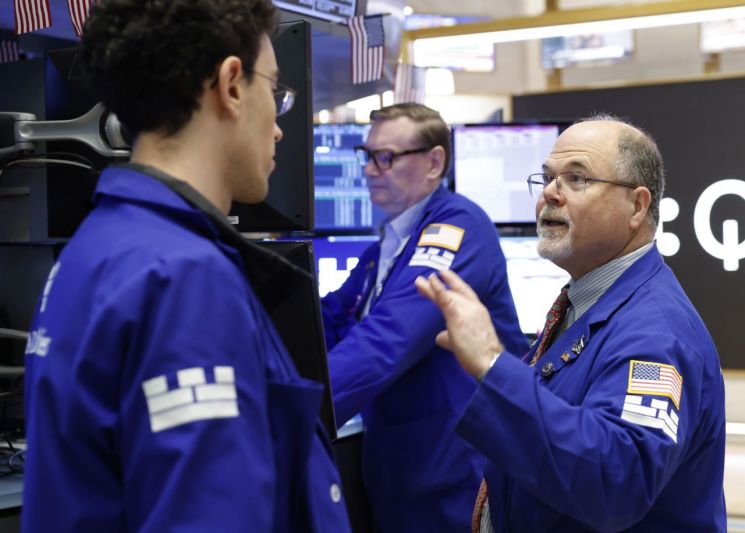
The New York stock market continued to show high volatility throughout the session. While the AI bubble remained a source of market anxiety, the historically low consumer sentiment triggered heavy selling early in the session. However, in the afternoon, the Democratic Party proposed a compromise on a temporary budget, helping the indexes recover much of their losses. Hopes that the U.S. federal government shutdown (temporary suspension of government operations) would be lifted spurred buying sentiment.
Early in the session, sell-offs were concentrated in AI and semiconductor-related stocks. Anxiety spread as controversy arose over reports that OpenAI was seeking government guarantees for infrastructure investments. However, when Meta Platforms announced a large-scale capital expenditure, bargain hunters entered the market in the latter part of the session, reversing the downward trend.
By stock, Intel (+2.39%) rose on news of a chip development partnership with Elon Musk, CEO of Tesla. On the other hand, Tesla (-3.68%) saw profit-taking after the approval of Musk's compensation package cleared up uncertainties. Oklo (+5.53%) rebounded on news of an MOU signed between the governments of Hungary and the United States. Nvidia (+0.04%) briefly fell by nearly 5% during the session after it was reported that the company had no plans to export Blackwell chips to China and that the U.S. government would not permit sales of low-spec chips to China.
According to the University of Michigan, the preliminary consumer sentiment index for November was recorded at 50.3. This is a 3.3-point drop from October's 53.6 and the lowest level since June 2022, when it hit 50.0. The 50.0 mark is the all-time low, indicating that the November figure is near a historic bottom.
In the afternoon, news that the Democratic Party had proposed a temporary budget compromise to the Republican Party helped the indexes quickly recover their losses. The core of the Democratic proposal was to extend Obamacare (ACA) subsidies for one year and establish a committee to discuss long-term reforms at a later date. Although the Republicans rejected the proposal, temporarily dampening investor sentiment, it did not reverse the upward trend in the market. While technology stocks faced downward pressure, blue-chip and industrial stocks supported the market. Coca-Cola rose by more than 2%, and Chevron and others gained over 1%.
Ria Bennett, Chief Investment Strategist at Concurrent Asset Management, said, "The rotation into value stocks alleviates my concerns about the sell-off in the M7," adding, "I expect the AI rally we've experienced so far to resume."
According to the CME FedWatch Tool, the probability of the federal funds rate remaining unchanged in December, as reflected in the federal funds futures market, was 33.4%, up from 30.4% at the previous day's close. The CBOE Volatility Index (VIX) fell 0.42 points (2.15%) from the previous session to 19.08.
© The Asia Business Daily(www.asiae.co.kr). All rights reserved.

















