Number of Street Stalls in Seoul Drops by 22% in Four Years
Two Pieces Now Cost 1,500-2,000 Won
"Flour and Red Bean Prices Have Risen Too Much"
Crackdowns and Complaints Add Pressure... Many Vendors Give Up
The once-ubiquitous street snack, bungeoppang (fish-shaped pastry), is disappearing from the streets. As the prices of raw materials rise and the burden of crackdowns and civil complaints increases, more street vendors are finding it difficult to continue their businesses.
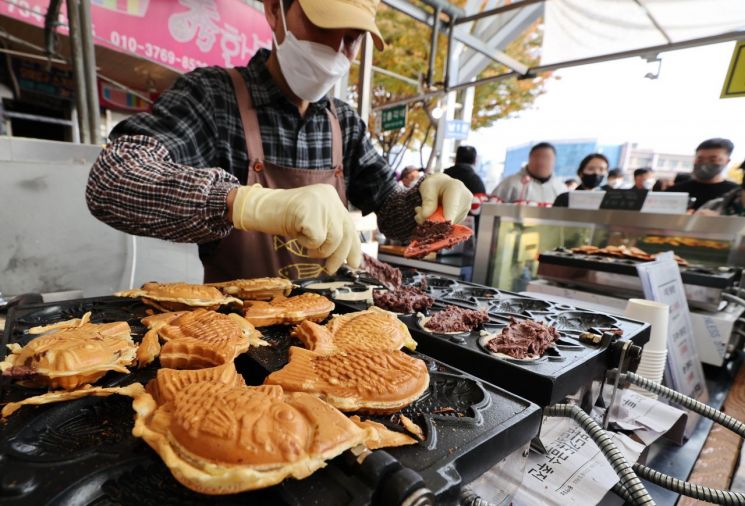
On the afternoon of November 6, a search for bungeoppang street vendors in the Gangbuk-gu, Dobong-gu, Seongbuk-gu, and Jung-gu areas of Seoul using an app that provides vendor locations found that only 3 out of 15 stalls were operating. Most had disappeared or left no trace. Even the “Bungeoppang Map” app, created through collective citizen input, is struggling to keep up with the rapidly dwindling number of vendors.
Clear changes were also evident at the few stalls that could be found. The price of bungeoppang has noticeably increased compared to previous years, now costing 1,500 to 2,000 won for two pieces. According to the Korea Agro-Fisheries & Food Trade Corporation’s “Simple Price Information,” as of November 3, the price of domestic red beans was 13,893 won per 500g, a 34.9% increase from the same period last year. Flour prices also remain high, having surged in 2022 due to the Russia-Ukraine war and not having fallen since. Vendor A (in his 60s) said, “The prices of flour and red beans have risen so much lately that I had no other choice but to raise prices. Customers often say, ‘Even bungeoppang has become a luxury item.’ I might have to close up shop after this winter.”

Not only rising prices but also crackdowns and civil complaints are making it difficult for vendors to operate. A vegetable vendor near a now-closed bungeoppang stall said, “These days, many vendors pack up their stalls immediately after finishing business out of concern for crackdowns or complaints.” Vendor B (age 68) said, “Sometimes even licensed sellers of similar snacks file complaints. The fines for unlicensed vending are a heavy burden, and it’s getting harder to keep going.” According to the Seoul Metropolitan Government, the number of street vendors in Seoul dropped by 22% over four years, from 6,079 in 2020 to 4,741 last year.
As bungeoppang stalls become rare, posts asking “Does anyone know where to buy bungeoppang?” are increasingly common on local online communities. Jang (age 34), a resident of Gangbuk-gu, Seoul, said, “It’s almost impossible to find bungeoppang vendors on the street now, so I order it from a cafe. It’s a shame to see the warm, nostalgic taste of bungeoppang disappearing.”
© The Asia Business Daily(www.asiae.co.kr). All rights reserved.


















