Legitimacy of Global Tariffs Under IEEPA at Center of Supreme Court Debate
Even Conservative Justices Skeptical of Lawfulness
Outcome Expected to Directly Impact South Korea
On November 5 (local time), a heated debate took place at the U.S. Supreme Court over the legality of tariffs imposed under President Donald Trump's emergency powers. The Trump administration argued that the reciprocal tariffs were an unavoidable measure to block the negative impact of chronic trade deficits on the U.S. economy, asserting their legality. However, the plaintiffs countered that the imposition of tariffs is an inherent power of Congress. The outcome of this case is expected to become a turning point for future import costs for U.S. companies, consumer prices, and the overall trade policy promoted by the Trump administration. In particular, it is anticipated to have a significant impact on South Korea, which recently reached a dramatic trade agreement with the United States.
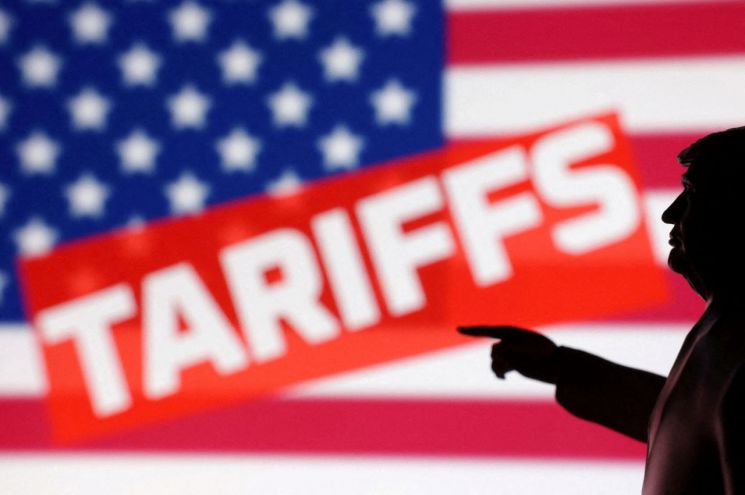
The U.S. Supreme Court held a hearing on this day to determine the legality of the broad tariffs imposed by President Donald Trump on countries around the world, including South Korea. This was the first public hearing to address whether the tariffs imposed by the Trump administration last April on most countries, citing the U.S. trade deficit, were unlawful.
The hearing, held at the Supreme Court building in Washington, D.C., began in the morning and lasted for about three hours. Government representatives, lawyers representing small businesses that filed the lawsuit, and attorneys for 12 Democratic-leaning states took turns presenting their arguments in a tense standoff.
Key members of the Trump administration, such as Treasury Secretary Scott Bessent and Commerce Secretary Howard Lutnick, attended the hearing, but President Trump himself was absent. Although President Trump initially considered attending in person, three days before the hearing he announced his decision not to attend, stating, "I do not want to detract from the gravity of this decision."
The core issue of the hearing was whether the "reciprocal tariffs" imposed by President Trump under the International Emergency Economic Powers Act (IEEPA) were lawful. Enacted in 1977, the IEEPA allows the president to take measures such as restricting imports and exports when a "national emergency" arises due to actions by foreign entities. Last April, President Trump declared a national emergency under this law and imposed reciprocal tariffs on a country-by-country basis.
D. John Sauer, Deputy Assistant Attorney General representing the government, argued that President Trump's invocation of emergency powers was justified by his determination that chronic trade deficits posed a serious crisis to the U.S. economy and national security. He stated, "This case is not about the power to tax, but about the authority to regulate foreign affairs and the external economy," adding that any revenue generated by the tariffs was merely "incidental."
Sauer also asserted, "Such measures have been instrumental in concluding several trade agreements," warning that reversing them would "expose the United States to retaliation from more aggressive countries and cause serious harm to our economy and security."
On the other hand, Neal Katyal, attorney for the small businesses that filed the lawsuit, countered, "Tariffs are essentially taxes, and the power to tax is constitutionally vested solely in Congress." He argued, "It is not plausible to interpret the IEEPA as granting the president the authority to arbitrarily impose or alter tariffs on any country or product at any time," emphasizing, "If the government prevails in this case, congressional authority will become effectively irreversible."
Even the conservative justices expressed skepticism about the president's authority to impose tariffs. Chief Justice John Roberts pointed out, "The power to impose taxes has always been a core authority of Congress."
Conservative justices Neil Gorsuch and Amy Coney Barrett emphasized that the Constitution clearly vests the power to tax in Congress, warning that this case could raise issues of unconstitutional delegation of legislative power to the executive branch. Justice Gorsuch remarked, "If this logic persists, it becomes a one-way ratchet concentrating power in the executive branch," adding, "That would distance power from the Congress elected by the people."
Justices Brett Kavanaugh and Samuel Alito were critical of the plaintiffs' arguments. Justice Kavanaugh questioned, "Isn't it odd to interpret the law as allowing Congress to grant the president the authority to shut down trade completely but not to impose even a 1% tariff?" He described this as an "odd doughnut hole" in the law. Justice Kavanaugh also noted that lower courts had previously allowed former President Nixon to impose tariffs under similar statutes, suggesting that Congress intended to provide the president with "tools to respond appropriately to emergencies."
Previously, both the U.S. Court of International Trade (USCIT) and the U.S. Court of Appeals for the D.C. Circuit ruled that President Trump's comprehensive tariff imposition was unlawful. While major Supreme Court cases typically take more than six months for a final decision, the significance of this tariff lawsuit has raised the possibility of a ruling within a matter of weeks. The Washington Post noted, "Such an expedited schedule suggests that the justices may reach a conclusion within weeks or months, rather than waiting until the usual late June or July timeframe for major decisions."
The Supreme Court currently consists of six conservative and three liberal justices. Although there have been precedents of rulings favorable to President Trump in major cases, observers note that it is difficult to predict the outcome this time, as the case directly pits presidential authority against congressional power to tax.
The upcoming ruling will be the judiciary's final judgment on President Trump's tariff policy and is expected to have far-reaching economic and political consequences not only for the United States but also for countries worldwide affected by the tariffs. Depending on the outcome, tariff collection could be halted, or the Treasury Department could be required to refund approximately 100 billion dollars in already collected tariffs, impacting government finances. The Trump administration's momentum in pursuing its trade policy could also be weakened, and structural changes in the global trade order are anticipated. The Washington Post analyzed, "This decision could affect global trade, the U.S. economy, inflation, businesses, and the wallets of every American."
The day before, President Trump posted on his own social media platform, Truth Social, stating, "This case is a matter of Life or Death for America," warning, "If we win, we will gain a fair and powerful economy and national security, but if we lose, America will be left defenseless before countries that have taken advantage of us for years."
Even if the administration loses this lawsuit, there are alternatives. The White House announced the previous day that even if the Supreme Court rules against the Trump administration, it will activate a Plan B.
Some observers have suggested that if the Trump administration cannot rely on the IEEPA, it may continue imposing tariffs by utilizing Section 232 of the Trade Expansion Act or Section 301 of the Trade Act as alternatives.
Treasury Secretary Bessent also stated in a CNBC interview the previous day that while he expects the Trump administration to prevail in this case, "Even if not, there are many other authorities. They are more complicated but could be even more effective." He specifically cited Section 232 of the Trade Expansion Act and Section 301 of the Trade Act as alternative options.
Meanwhile, as the hearing progressed, betting in prediction markets surged in favor of the Supreme Court not recognizing the Trump administration's authority to impose tariffs. According to Polymarket, the probability of a Trump administration victory dropped to around 20% after Chief Justice Roberts' skeptical questioning, before rebounding to 32%.
© The Asia Business Daily(www.asiae.co.kr). All rights reserved.

















