27 AI-Related Bills Pending in the National Assembly
Progress Stalled Amid Political Standoff
Sharp Party Divides on Energy Legislation
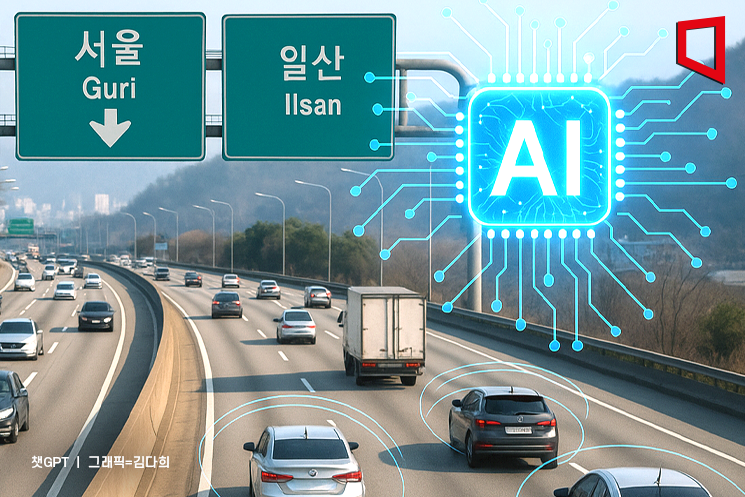
The Lee Jaemyung administration has announced plans to build an "Artificial Intelligence (AI) Highway" through next year's budget proposal, but the legislation needed to support this initiative is not progressing swiftly. Legislative support is urgently needed to avoid missing the golden opportunity for the development of the AI industry.
According to the National Assembly Bill Information System on November 6, a total of 27 AI-related bills proposed by both the ruling and opposition parties since the start of the 22nd National Assembly remain pending. Excluding follow-up bills to the AI Basic Act (the Framework Act on the Promotion of AI Development and Trust), which passed the plenary session late last year and became the world's second such law, only nine bills are currently under review by the relevant standing committee.
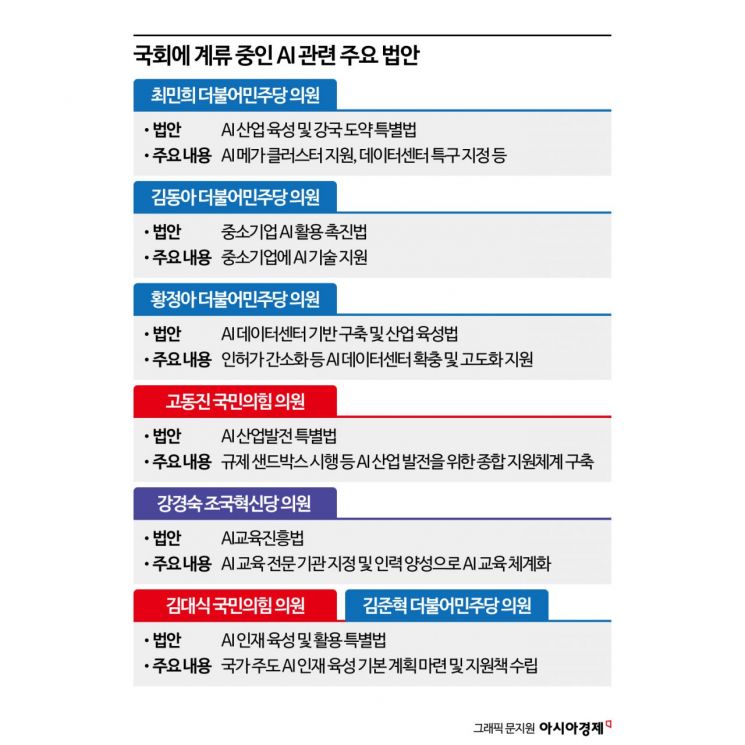
Representative examples include the AI Industry Promotion Act, the AI Data Center Promotion Act, the AI Talent Development Act, and the AI Education Promotion Act. Both the ruling and opposition parties have proposed versions of the AI Industry Promotion Act. The "Special Act on the Promotion of the AI Industry and Leap to a Leading Nation," proposed by Choi Minhee, Chairperson of the Science, ICT, Broadcasting and Communications Committee and a member of the Democratic Party, establishes the legal basis for financial support to expand AI infrastructure, such as designating and supporting data center special zones. The "Special Act on the Development of the AI Industry," proposed by Ko Dongjin of the People Power Party, includes a regulatory sandbox to exempt or ease regulations on the AI industry. The "Special Act on the Development and Utilization of AI Talent," jointly proposed by Kim Daesik of the People Power Party and Kim Junhyuk of the Democratic Party, requires the government to establish plans for fostering AI talent and to support research and development activities by designating specialized universities.
Despite bipartisan agreement on the need to foster the AI industry, some related bills have been pending for nearly a year due to ongoing confrontation between the ruling and opposition parties. The relevant standing committee, the Science, ICT, Broadcasting and Communications Committee, has been deadlocked over the "Three Broadcasting Acts," which focus on restructuring the governance of public broadcasters. Subsequent clashes have also occurred over issues such as the proposed abolition of the Korea Communications Commission.
There are also significant differences between the parties regarding legislation to expand the power supply, which is essential for the development of the AI industry. The Democratic Party, in line with the government's nuclear phase-out policy, has focused on expanding renewable energy and power grids, while the People Power Party believes securing power sources through nuclear energy should be the priority. Accordingly, the Democratic Party has proposed numerous bills to expand power grids and promote renewable energy, supporting the Lee Jaemyung administration's policy goals of establishing an "Energy Highway" and transitioning to renewable energy. Meanwhile, the People Power Party, through the Nuclear Industry Development Support Act (proposed by Ko), aims to provide support to semiconductor businesses and others that obtain certification for using nuclear energy.
The business community is urging the swift passage of these bills. The Korea Chamber of Commerce and Industry recently submitted key legislative proposals to the National Assembly, emphasizing the need for prompt action during this regular session on issues such as AI industry and talent development and support for the semiconductor industry. An industry official stated, "Speed is crucial in the AI industry, so it is important to support it with relevant legislation," adding, "Bills with little disagreement between the parties should be processed quickly."
© The Asia Business Daily(www.asiae.co.kr). All rights reserved.
![Clutching a Stolen Dior Bag, Saying "I Hate Being Poor but Real"... The Grotesque Con of a "Human Knockoff" [Slate]](https://cwcontent.asiae.co.kr/asiaresize/183/2026021902243444107_1771435474.jpg)

















