Economically Inactive Population Reaches 3,301,000
35.4% of Population Aged 15 and Over Are Economically Inactive
Increase in Break-Takers Among People in Their 30s and Those Aged 70 and Over
Number of Self-Employed Declines Regardless of Emp
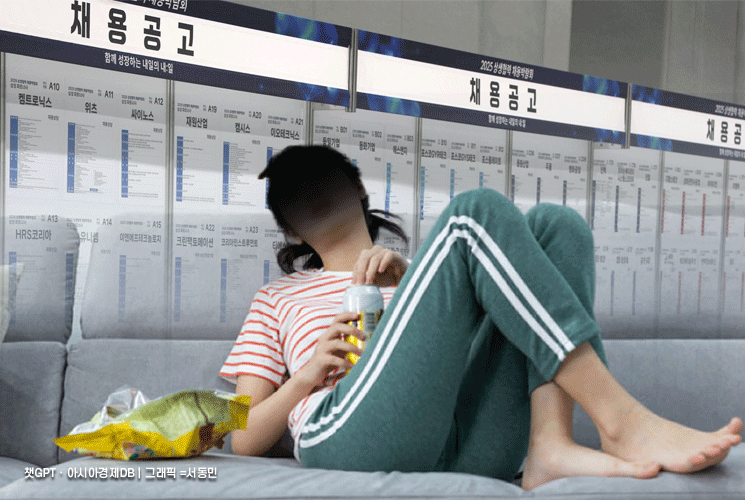
The number of people who reported “taking a break” this year reached 2,641,000, an increase of more than 70,000 in just one year. This is the highest figure since such statistics began to be compiled in 2003. While many respondents cited health issues as the reason for taking a break, among young people, the main reason was the lack of desired job opportunities.
Reasons for Taking a Break Vary by Age... Young People Say "No Desired Jobs"
According to the “Supplementary Survey on the Economically Inactive Population and Non-Wage Workers” released by the National Data Office on November 5, the economically inactive population as of August this year stood at 16.22 million, an increase of 9,000 compared to the same month last year. The proportion of the economically inactive among those aged 15 and older was 35.4%, down by 0.2 percentage points. The economically inactive population refers to people aged 15 or older who are neither employed nor seeking work.
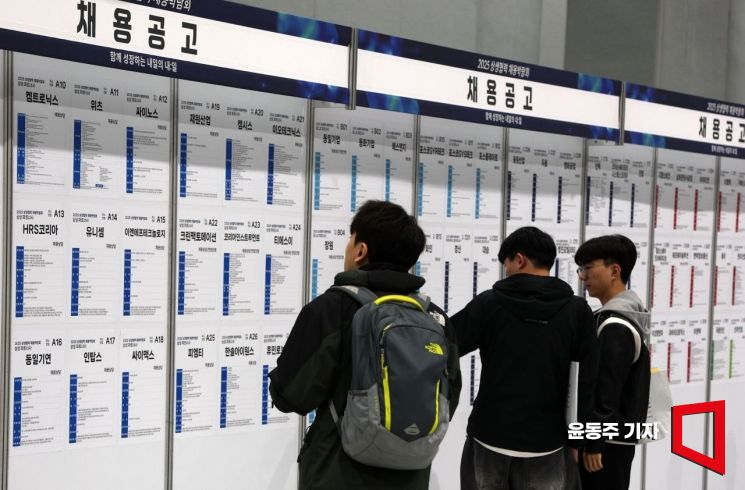 Job seekers attending the '2025 Win-Win Cooperation Job Fair' held last month at COEX Magok in Gangseo-gu, Seoul, are checking the job postings.
The number of economically inactive individuals who intend to seek employment or start a business within the next year is 3,301,000. This represents 20.4% of the total economically inactive population, a decrease of 0.3 percentage points. Among the reasons for wanting to find a job or start a business, the most common was “to earn living expenses or pocket money” (75.3%). Those hoping for wage employment primarily cited working conditions (31.0%) as the most important factor, while those wishing to start a business pointed to income or profit (47.2%) as their main consideration.
When broken down by activity status, the largest groups were housework (36.9%), followed by attending school or training (20.2%), and taking a break (16.3%). The number of people taking a break was 2,641,000, an increase of 73,000. This is the highest figure since such statistics began to be compiled in 2003. By age, those aged 70 and over (8.3%) and those in their 30s (12.4%) saw increases of 1.3 and 0.4 percentage points, respectively.
The most common reason for taking a break was “poor health” (34.9%). When looking at the reasons by age group for taking a break last week, all age groups except young people (aged 15-29) cited poor health as the top reason. In contrast, among young people-those entering the job market-the most prominent response was “difficulty finding desired jobs” (34.1%).
Decline in Self-Employed... But Average Business Duration Increases
The number of non-wage workers fell by 103,000 to 6,554,000. The proportion of non-wage workers among all employed people was 22.6%, a decrease of 0.5 percentage points. Non-wage workers include not only self-employed people (employers and own-account workers) but also unpaid family workers. The number of self-employed with employees decreased by 5,000 to 1,435,000, while those without employees declined by 65,000 to 4,241,000.
Comparing the working conditions of non-wage workers, the average business (or affiliation) duration increased by one month to 15 years and 5 months. The average duration for self-employed with employees increased by 10 months, while for those without employees and for unpaid family workers, it decreased by one month and three months, respectively. The national pension subscription rate for self-employed people (including those with pension entitlement) rose by 1.2 percentage points to 81.9%. The industrial accident insurance subscription rate for self-employed with employees was 65.1%.
© The Asia Business Daily(www.asiae.co.kr). All rights reserved.


















