Romania, Bulgaria, and Hungary Follow
U.S. Troop Reductions Across Eastern Europe
Security Crisis Deepens, Fears of Russian Escalation Grow
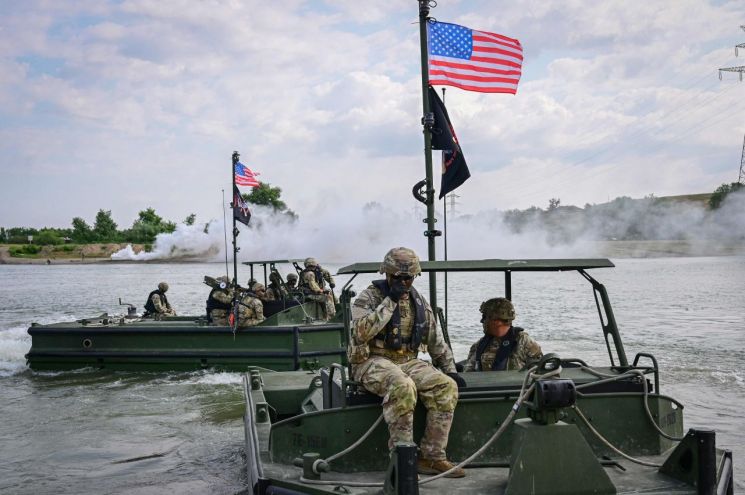 In June, U.S. troops stationed in Romania conducting training around the Danube River. Photo by AFP Yonhap News
The U.S. government has begun reducing its military presence in Eastern European countries, starting with Romania and now including Bulgaria and Hungary, raising alarms over European security. As Russia accelerates the restoration of its conventional military capabilities lost in the Ukraine war, concerns are mounting that the reduction of U.S. troops in Eastern Europe could undermine deterrence against war. Although the U.S. government has explained that this is a redeployment rather than a full withdrawal, it has also emphasized that the defense of the North Atlantic Treaty Organization (NATO) should be led by European countries, further heightening military anxiety within NATO.
U.S. Troop Reductions Continue in Eastern Europe... "Additional Reductions Starting in December"
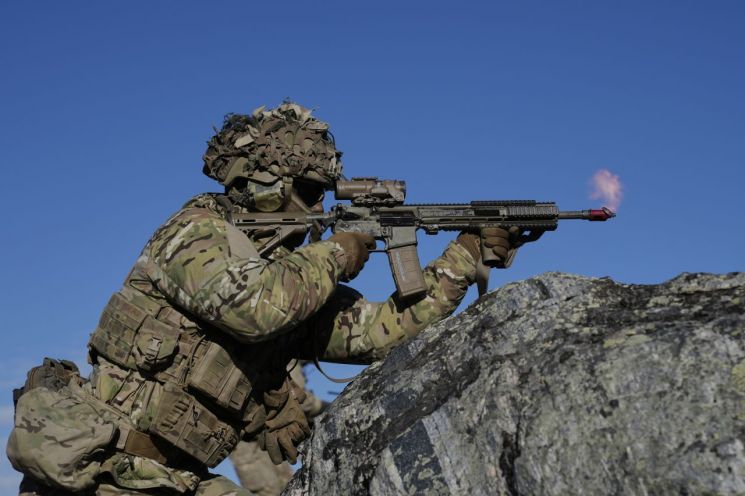
The Ukrainian media outlet Kyiv Post recently cited diplomatic sources, reporting, "Following the reduction of U.S. troops stationed in Romania, further reductions will be made in other Eastern European countries such as Bulgaria, Hungary, and Slovakia starting in mid-December," and added, "Once the current rotational deployments end, there is a possibility of additional adjustments next year." According to Kyiv Post, the U.S. government has notified the Eastern European countries where troop reductions are planned.
On October 29, the U.S. Department of Defense announced that it would reduce the number of U.S. troops stationed in Romania by 1,200, from approximately 2,200. In a statement regarding the withdrawal, the Department of Defense said, "This is a limited realignment resulting from the enhancement of U.S. Army capabilities stationed in Europe, not a withdrawal from the Eastern European region, and the planned reduction is minimal." The statement also emphasized, "We will maintain troop levels in Poland and the three Baltic states (Lithuania, Estonia, and Latvia)."
The U.S. troops reduced in Eastern Europe are expected to be repatriated to the U.S. mainland before being redeployed. CNN analyzed, "It is highly likely that the reduced troops will not be redeployed to Eastern Europe but will instead be sent to Asia after returning to the U.S. mainland," adding, "This troop reduction appears to be part of the U.S. military's Indo-Pacific strategy to strengthen deterrence against China."
U.S. Calls It Redeployment... "NATO Defense Should Be Led by European Countries"
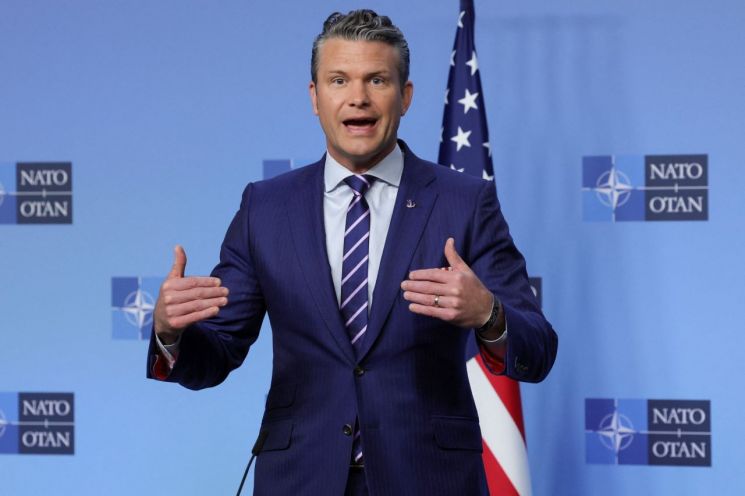 Pete Hegseth, U.S. Secretary of Defense, stated at the North Atlantic Treaty Organization (NATO) meeting held in Brussels, Belgium on the 15th of last month (local time) that "NATO defense should be led primarily by European countries." Photo by Reuters Yonhap News
Despite the U.S. Department of Defense's assertion that this is merely a redeployment, European countries are concerned about the possibility of further large-scale U.S. troop reductions in the future. The Trump administration has consistently argued that European countries should take responsibility for NATO's defense.
On October 15, U.S. Secretary of Defense Pete Hegseth stated at the Ukraine Defense Contact Group (UDCG) meeting held at NATO headquarters in Brussels, Belgium, "To deter Russian aggression, European countries must take the lead in NATO," adding, "The United States will continue to fulfill its obligations to the alliance, but we expect other countries to strengthen their own defense capabilities. There should be no free riders." Approximately two weeks after this statement, the withdrawal from Romania was announced.
Currently, it is estimated that about 84,000 U.S. troops are stationed in Europe. The commander of U.S. forces in Europe concurrently serves as the Supreme Allied Commander Europe (SACEUR), holding operational command over NATO, and the United States provides several strategic assets, including nuclear deterrence. There are concerns that a significant reduction in the number of stationed U.S. troops would greatly weaken military deterrence against Russia.
President Donald Trump stated in March that the United States was considering no longer appointing the Supreme Allied Commander Europe (SACEUR) from the U.S., but reversed this in June after NATO member countries announced increases in their defense budgets. Since then, the European Union has also been working to strengthen its security, keeping in mind the possibility of a U.S. withdrawal from NATO.
Russia Accelerates Rearmament... Concerns Over Weakened Deterrence in Eastern Europe
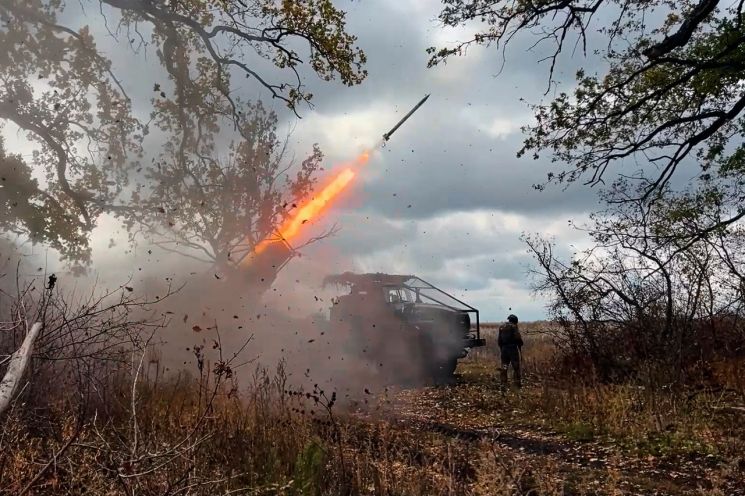 Russian artillery deployed on the Ukrainian front firing 122mm rocket launchers. Photo by AP Yonhap News
Meanwhile, Russia's pace of conventional military rearmament is accelerating rapidly. Dara Massicot, a senior fellow at the Carnegie Endowment for International Peace, recently wrote in the foreign affairs journal Foreign Affairs, "The Russian military is quickly recovering its capabilities based on its early failures in the war," and added, "It has significantly evolved through the tactical integration of drones and artillery, electronic warfare capabilities, and the introduction of new military equipment, and will become a substantial threat to the West in the future."
In the early stages of the Ukraine war, when Russia suffered massive conventional force losses, many analysts believed that the possibility of Russia invading NATO countries would not arise until after 2032. However, recently, claims that Russia could invade a NATO member state within three to five years-around 2029-are gaining traction. Russia is restoring its conventional forces faster than expected, has shifted to a wartime economy, and is recruiting additional troops, increasing its army from 1 million to 1.5 million, which is fueling concerns about further escalation.
Even among Western intelligence agencies, there are cautious suggestions that Russia could escalate before 2029. On October 13, Martin Jaeger, Director of the German Federal Intelligence Service (BND), testified before parliament, warning, "We should not be complacent with the assumption that a Russian invasion could only happen as early as 2029," and added, "At any time, armed conflict could break out in specific regions of Europe."
© The Asia Business Daily(www.asiae.co.kr). All rights reserved.



















