Berkshire Accumulates Cash Instead of Investing
Share Buybacks Halted Despite Stock Decline
Analysis Suggests "Buffett Premium" Fades With Buffett's Retirement
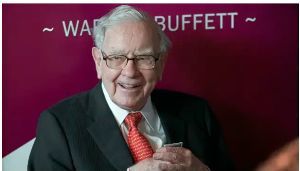
Berkshire Hathaway, led by Warren Buffett, continued its "cautious mode" in the fourth quarter by accumulating a record-high level of cash. Despite the market correction, Berkshire has not conducted a single share buyback so far this year. Instead, the company maintained a selling stance in the stock market, taking a conservative approach.
On November 2 (local time), Berkshire Hathaway announced that its operating profit for the third quarter rose by 34% year-on-year to $13.485 billion. Core subsidiaries in insurance, railroads, energy, and manufacturing drove these results. In particular, the insurance underwriting segment saw profits surge by more than 200%, reaching $2.37 billion.
The company explained that insurance losses decreased due to fewer natural disasters in the third quarter compared to previous years, and both the main insurance and reinsurance segments returned to profitability. On the other hand, the auto insurance subsidiary GEICO saw its pre-tax underwriting profit drop by 13% due to an increase in accident claims, but the number of new customers continued to grow.
Chairman Buffett refrained from share buybacks again, despite the market correction. The company stated, "There has not been a single share buyback in the nine months so far this year." While Berkshire's Class A and B shares have risen by 5% each since the beginning of the year, the S&P 500 index has climbed 16.3%.
Berkshire's cash holdings increased to a record $381.6 billion, far surpassing the $347.7 billion recorded in the first quarter of this year.
Additionally, Berkshire continued to sell stocks rather than buy them in the third quarter, recording a taxable gain of $10.4 billion in the process.
Following this announcement, shares of Berkshire, headquartered in Omaha, dropped by double digits from their all-time high. Berkshire has a shareholder return policy of buying back and retiring its own shares instead of paying cash dividends.
Some analysts say that Buffett's suspension of share buybacks has weakened the so-called "Buffett premium." The Buffett premium refers to the psychological premium investors are willing to pay above intrinsic value due to their faith in Buffett's investment acumen. Interpreted as a signal that he does not view the stock as undervalued, this, along with uncertainty about the succession plan, has increased downward pressure on Berkshire's share price.
In a 2018 letter to shareholders, Chairman Buffett stated that Berkshire would only conduct share buybacks if the company's share price fell below its intrinsic value or if the company retained sufficient cash after the buyback.
Amid these developments, news of Chairman Buffett's retirement also emerged. At age 95, he officially announced in May that he would step down as Chief Executive Officer (CEO) at the end of this year. Vice Chairman Greg Abel, who has overseen non-insurance operations, has been named as his successor, while Buffett will remain as Chairman of the Board. Starting in 2026, Abel will also take over the writing of the annual shareholder letter from Buffett.
Last month, Berkshire announced it would acquire Occidental Petroleum's petrochemical subsidiary, OxyChem, for $9.7 billion in cash. This is the largest acquisition since the company bought insurance firm Alleghany for $11.6 billion in 2022.
As a result, Berkshire Hathaway's total net income (including gains on listed stocks) increased by 17% year-on-year to $30.8 billion.
© The Asia Business Daily(www.asiae.co.kr). All rights reserved.

















