Even Small Damages Can Lead to Criminal Penalties for Obstructing Business
Compensation Requests Dismissed Due to Unclear Scope of Liability
Fair Trade Commission Prepares Revision of Consumer Dispute Resolution Standards
A man in his 60s, who was released from prison after serving time for fraud, has been sentenced to prison for disrupting business operations by placing false orders or eating without paying at snack bars and other eateries.
Eating Without Paying and Large-Scale False Orders Ruled as "Obstruction of Business by Fraudulent Means"... Compensation Claims Denied Due to "Unclear Scope of Liability"
According to the legal community on November 2, Judge Kim Jiyeong of the Daejeon District Court's 4th Criminal Division recently sentenced defendant A to one year in prison on charges of fraud and obstruction of business.
Previously, less than a week after being released from prison for fraud in March, A visited a real estate agency in Daejeon, saying, "I'm looking for a three-room jeonse apartment, let's have dinner together," and received a meal. During the meal, he said, "My grandson is waiting outside and I want to give him some pocket money. If you lend me 50,000 won, I will pay you back immediately," and received 50,000 won. However, A had no steady income or assets and had no intention of repaying the money.
A also ate three bowls of pork bone soup and two bottles of soju (worth about 40,000 won) at one restaurant without paying. A few days later, he ordered and ate shrimp pepper jjambbong and soju (worth about 16,000 won) at another restaurant and then ran away. On the same afternoon, he deceived a chicken restaurant into believing he would pay, ate chicken and alcohol worth 37,500 won, and fled.
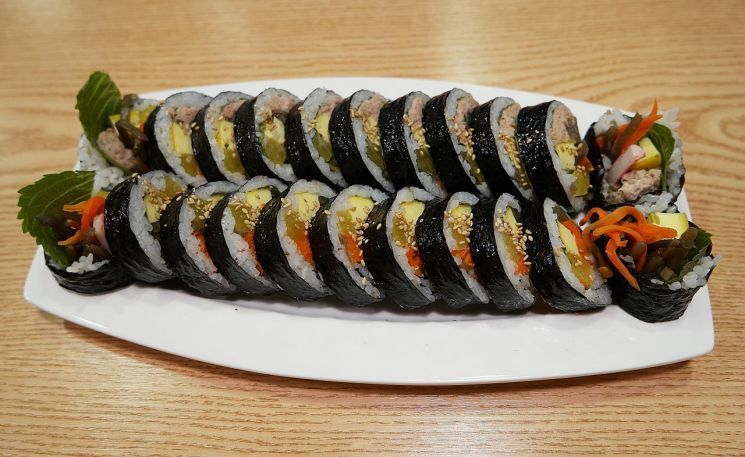
A repeatedly placed false orders at restaurants, disrupting their business for no reason. In March, A called a rice cake shop and ordered "one mal of red bean siru tteok and two mal of honey tteok as opening rice cakes," saying he would pick them up at 11 a.m. the next day, but never showed up. About ten minutes later, he called a snack bar and falsely ordered "100 rolls of gimbap." The owner, who prepared the gimbap according to A's order, had to discard the food.
The court found A's actions to constitute obstruction of business. The court stated, "The defendant caused the victims to prepare food and rice cakes through false orders, resulting in losses. This is a clear case of obstruction of business by fraudulent means." The court added, "Although the defendant is elderly and in poor health and the financial damage is not large, the repeated crimes of eating without paying and false orders are highly blameworthy, and no restitution has been made," and sentenced him to one year in prison. This ruling demonstrates that even small-scale but repeated acts of eating without paying or false orders can be subject to criminal punishment.
However, the victims' applications for compensation were all denied on the grounds that "the scope of liability for compensation is not clearly defined."
Fair Trade Commission Raises No-Show Penalty Cap to 'Up to 40%' for Omakase and Large-Scale Reservations in Dispute Mediation
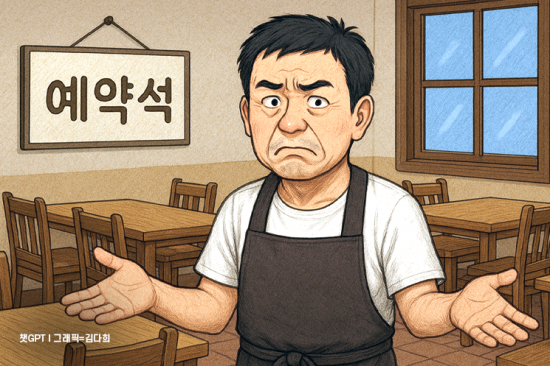
Meanwhile, on October 22, the Fair Trade Commission announced that it would revise the Consumer Dispute Resolution Standards to reflect changing consumer realities and clarify settlement criteria, with the draft open for public comment until November 11.
The revision includes measures to prevent "no-show" damages at restaurants. It separately categorizes "reservation-based restaurants" such as omakase and fine dining establishments, where ingredients and food are prepared in advance based on reservations, and raises the penalty cap for no-shows in dispute mediation from the previous 10% of the total bill to up to 40%. This reflects the fact that the average cost ratio in the food service industry is around 30%. For general restaurants, the penalty cap can be set at up to 20%.
In addition, for large-scale orders or group reservations such as "100 rolls of gimbap," the revision allows reservation-based restaurants to set reservation deposits and penalties, reflecting the significant losses caused by no-shows or cancellations. However, this applies only if the restaurant has provided prior notice to consumers regarding reservation deposits and penalties. If no such notice has been given, the restaurant will be considered a general restaurant under the regulations.
© The Asia Business Daily(www.asiae.co.kr). All rights reserved.













