Washington Post: "Aftermath of the Georgia Worker Detention Incident"
Since the incident in September in which Korean workers were detained in Georgia, USA, it has been revealed that numerous Korean companies have withdrawn or postponed their investment projects in the United States.
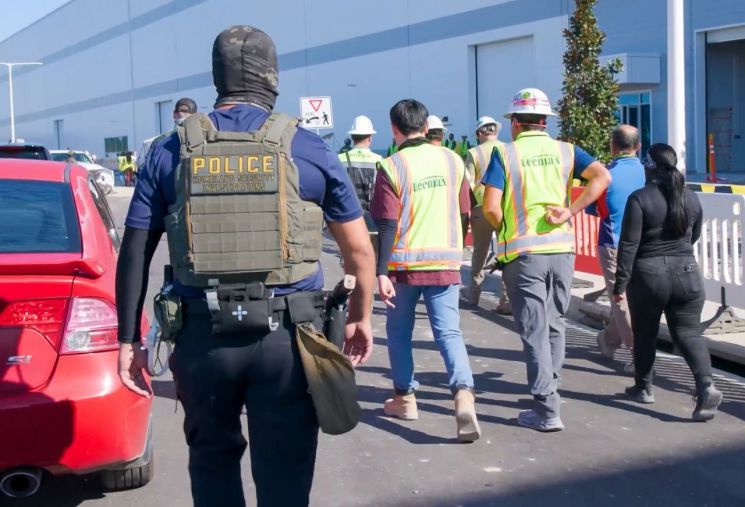
According to the Washington Post (WP) on November 1 (local time), at least two Korean companies have withdrawn their planned investment projects in the United States, and at least four companies have extended the period of postponement for their US investments that had already been temporarily suspended. WP obtained this information through multiple industry sources, including consultants and lawyers based in the United States. These consultants and lawyers did not disclose the names of the companies that withdrew or postponed their US investments, citing concerns that it could negatively affect their business relationships with clients.
WP quoted Tammy Overby, an international business consultant and former chair of the US-Korea Business Council under the US Chamber of Commerce, as saying, "One Korean company was searching for a factory site in the United States, but ultimately decided to expand its factory in Korea instead, due to concerns about uncertainty and risks in the US market."
Previously, in September, US immigration authorities conducted a large-scale crackdown at a battery plant under construction in Georgia by Hyundai Motor and LG Energy Solution, detaining more than 300 Korean workers. The workers were released after seven days of detention following negotiations between the two governments.
This incident, which occurred at a site symbolic of economic cooperation between Korea and the United States, has left critical uncertainty regarding large-scale investments in the US. Although both countries have since agreed to establish measures to prevent a recurrence, the aftereffects of the immigration crackdown have not subsided easily.
WP analyzed that new visa regulations under the Donald Trump administration are also having an impact on the contraction of investment. Previously, the Trump administration had significantly increased the fees for professional visas (H-1B).
Jonathan Cleave, Korea representative of the international business consulting firm Intralink, told WP, "Employees are increasingly reluctant to be dispatched to the United States," adding, "This complicates the decision-making process for companies."
© The Asia Business Daily(www.asiae.co.kr). All rights reserved.
![User Who Sold Erroneously Deposited Bitcoins to Repay Debt and Fund Entertainment... What Did the Supreme Court Decide in 2021? [Legal Issue Check]](https://cwcontent.asiae.co.kr/asiaresize/183/2026020910431234020_1770601391.png)
















